


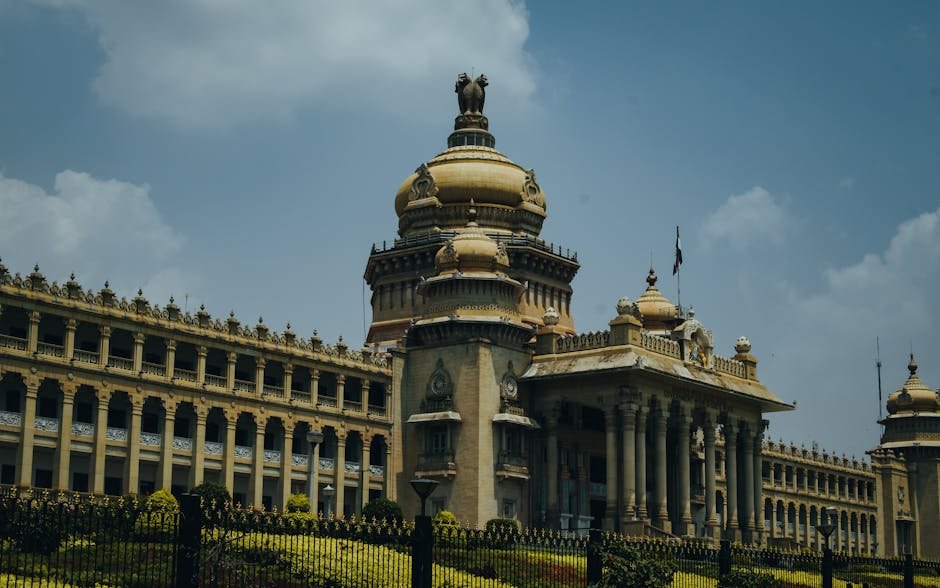
Fresh fissures have appeared within the Karnataka government, with indications of ministerial discontent over portfolio allocations surfacing shortly after Chief Minister Siddaramaiah sought to quell internal disagreements. Two ministers, reportedly dissatisfied with their assigned portfolios, have reportedly travelled to the national capital, Delhi, to engage in discussions with the Congress high command.
The Chenab Times has learned that this development marks a potential resurgence of internal party friction, underscoring the delicate balance of power and influence within the state’s ruling coalition. The move by the ministers to seek dialogue at the party’s central leadership level signals a significant attempt to address their grievances directly, bypassing state-level party mechanisms.
The Karnataka government, formed following the May 2023 assembly elections, has been navigating the complexities of coalition politics and managing the aspirations of various party factions. While Chief Minister D.K. Shivakumar, who also holds the Deputy Chief Minister portfolio, had previously stated that any internal dissent, including a reported rebellion led by senior leader Ramalinga Reddy, had been amicably resolved, this latest turn of events suggests that underlying tensions may persist.
The portfolio allocation process after the formation of the government had been a subject of intense negotiation. Ministerial berths and the distribution of key departments are often sources of contention, reflecting the perceived power and influence associated with specific portfolios. Any perceived imbalance or dissatisfaction can lead to internal party discord, particularly in a coalition government where diverse interests need to be accommodated.
The ministers’ journey to Delhi is interpreted as a strategic move to leverage the influence of the central Congress leadership, which plays a crucial role in mediating and resolving significant internal disputes within state units. Their objective is likely to present their case directly to figures such as AICC President Mallikarjun Kharge and former party chief Rahul Gandhi, seeking a reassessment or modification of their current departmental responsibilities.
This situation echoes broader patterns observed in Indian politics where state-level political dynamics are often influenced by national party leadership. The Congress party, with its history of centralized decision-making, frequently involves its high command in resolving critical internal matters, especially those that could potentially destabilize a state government.
The Karnataka Pradesh Congress Committee (KPCC) and the Chief Minister’s office have yet to issue a formal statement regarding the reported travel of the ministers to Delhi. However, the development has inevitably drawn attention, raising questions about the unity and cohesion within the state’s ruling party as it continues its term.
The allocation of portfolios is a sensitive exercise, aiming to balance the experience and seniority of leaders with the need to ensure efficient governance across various sectors. Ministers who feel they have been assigned portfolios that do not align with their expertise, experience, or political standing may feel sidelined or undervalued. Such sentiments, if not addressed promptly, can fester and create rifts within the party structure.
The efficacy of the state government’s functioning relies heavily on internal harmony and a collective approach towards governance. Any signs of disunity or discontent among key ministers can impact public perception and the overall administrative machinery. The upcoming discussions in Delhi will be closely watched for their potential to either mend the emerging rift or exacerbate it, depending on how the central leadership handles the situation.
The Congress party’s strategy in Karnataka hinges on maintaining a united front to counter political challenges and deliver on its electoral promises. The reported discontent over portfolio allocations serves as a reminder of the inherent difficulties in managing political aspirations and ensuring equitable distribution of power within a diverse party and a coalition government.
The situation underscores the ongoing efforts by the Congress leadership to consolidate its position in Karnataka and ensure smooth governance. The party’s ability to manage these internal challenges effectively will be crucial for its long-term political prospects in the state and for its performance in future electoral cycles.
As the ministers engage with the party high command in Delhi, political observers will be keen to understand the specific nature of their grievances and the potential outcomes of these high-level discussions. The resolution of this discontent could have significant implications for the stability and operational effectiveness of the Karnataka government.


The Chenab Times News Desk