


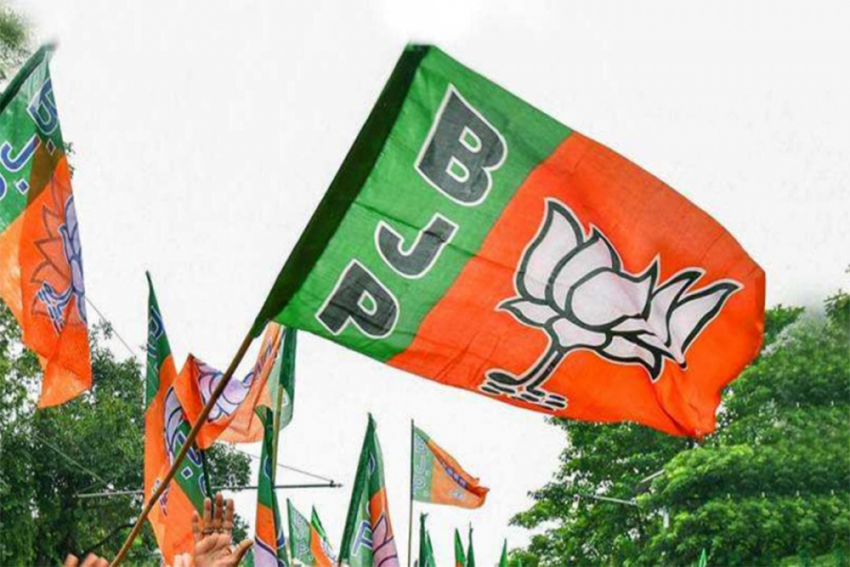
BHOPAL: The Madhya Pradesh Congress party has announced its decision to shift its legislative members to the southern state of Karnataka, citing fears of poaching attempts by the Bharatiya Janata Party (BJP) ahead of the upcoming Rajya Sabha elections scheduled for June 18. The move aims to prevent cross-voting and maintain party unity during the crucial electoral process.
Information was available with The Chenab Times that the Congress Legislature Party (CLP) convened a meeting late Monday night at the residence of the Leader of Opposition, Umang Singhar. During the consultation, a proposal to move the MLAs out of Madhya Pradesh until the polling day was discussed and subsequently agreed upon. Sources indicated that all Congress MLAs are slated to be relocated to Bengaluru, the capital of Congress-ruled Karnataka. Saunsar legislator Vijay Revanath Choure confirmed the plan to PTI, with fellow MLAs Yadavendra Singh and Babu Jandel also corroborating the information.
Allegations of Poaching Attempts
Leader of Opposition Umang Singhar alleged that the BJP is actively attempting to “buy” Congress MLAs and asserted that the party members would be housed in a state governed by the Congress. Singhar further claimed that some party legislators reported being approached by BJP members offering financial inducements, which they purportedly rejected. He expressed confidence that the BJP’s alleged “conspiracies” would ultimately fail on the day of the vote. Yadavendra Singh acknowledged that while some MLAs were initially hesitant about relocating, the decision was made by the party’s high command to safeguard against poaching attempts by the BJP and to ensure the MLAs remained united.
The BJP has been accused by Congress leaders of trying to create a division within the Congress camp. The electoral battle for the three vacant Rajya Sabha seats from Madhya Pradesh is keenly watched, with the BJP in a strong position to secure two seats. The ruling party, with 164 MLAs in the 230-member state assembly, is assured of winning two seats based on the required 58 first-preference votes per candidate. The BJP has nominated Tarun Chugh, national general secretary, and Rajneesh Agrawal, state unit secretary. Subsequently, Mahesh Kewat, chairman of the Madhya Pradesh Fishermen Welfare Board, was also fielded by the BJP as a third candidate, adding complexity to the contest.
Electoral Arithmetic and Legal Challenges
The Congress has nominated former MP Meenakshi Natarajan and expressed optimism about securing her election. The entry of Mahesh Kewat has indeed introduced a new dynamic to the electoral landscape. Out of the three vacant seats, the BJP can comfortably win two, while the Congress holds an advantage in numbers for the third seat. Approximately 60 Congress MLAs were present at the meeting held at Singhar’s residence. One Congress MLA was reported to be in Delhi and could not attend, while senior leader Kamal Nath participated in the discussions virtually.
The effective strength of the Madhya Pradesh assembly currently stands at 229. The BJP holds 164 seats, and the Congress has 64. The Bharat Adivasi Party holds one seat. However, the Congress MLA Rajendra Bharti’s membership from the Datia constituency has been revoked, resulting in one vacant seat. Further complicating the Congress’s numbers, the Madhya Pradesh High Court has placed a restriction on Mukesh Malhotra, a Congress MLA from Vijaypur in Sheopur district, from participating in the voting process. Additionally, a petition has been filed in the High Court seeking the disqualification of Nirmala Sapre, an MLA from Bina in Sagar district, who is reportedly expected to vote for the BJP candidate. Sapre was also seen meeting with Chief Minister Mohan Yadav on Monday.
Despite these legal challenges, the Congress’s effective vote tally might be reduced to 62. However, this number still represents four more votes than the required 58 to secure a Rajya Sabha seat. For the three Rajya Sabha seats, each candidate requires 58 votes. Consequently, the BJP needs 116 votes to win two seats. After allocating 116 votes for its two candidates, the BJP will have 48 remaining votes. The Congress’s cautious strategy appears to be influenced by the 2020 political crisis, which saw the collapse of the Kamal Nath-led government after Jyotiraditya Scindia and 22 other MLAs joined the BJP. Scindia is currently a minister in the Union cabinet.


The Chenab Times News Desk