


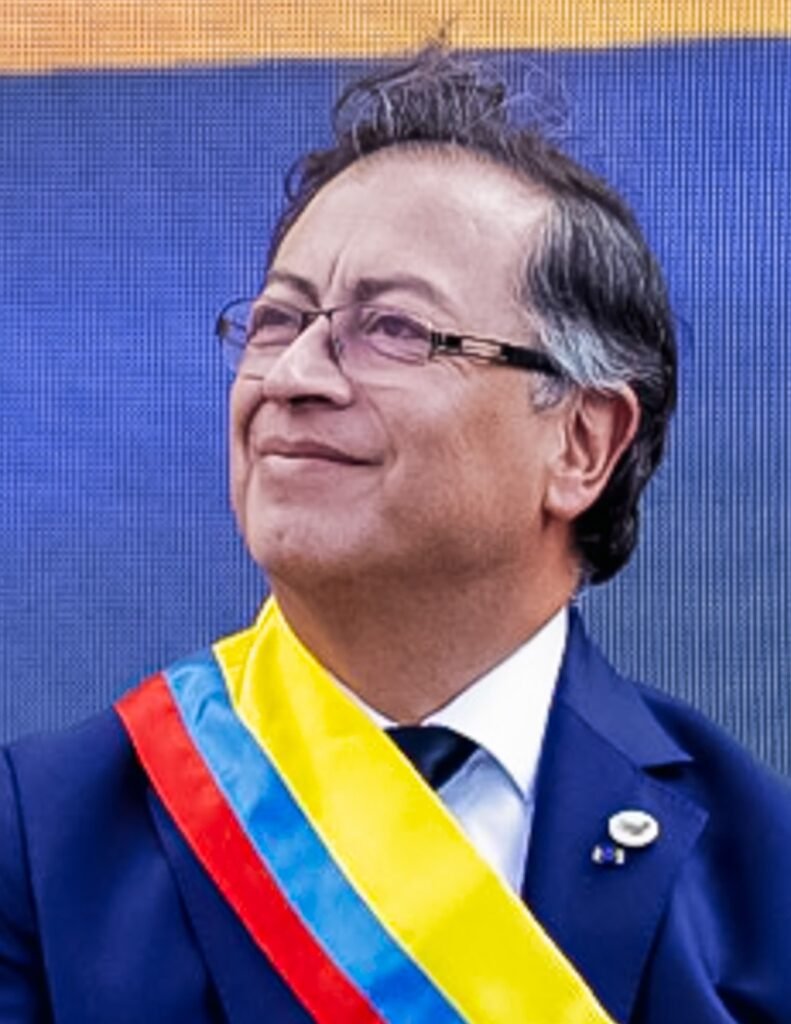
United States officials canceled the visa for Colombian President Gustavo Petro last year, preventing him from attending a forum in New York City led by Mayor Eric Adams, according to recent reports. The State Department’s decision followed President Petro’s participation in a pro-Palestinian rally held in Manhattan.
The Chenab Times has learned that the incident highlights the complex diplomatic considerations and potential political sensitivities that can influence international travel and engagement for heads of state. The cancellation of the visa effectively barred President Petro from a planned engagement in a major global city, underscoring the power of such governmental decisions.
President Petro had been scheduled to participate in a forum organized by Mayor Adams, who has been actively involved in discussions and initiatives within New York City. The specific nature of the forum and the agenda President Petro intended to address were not detailed in the provided information, but the context of his visa cancellation points to a significant diplomatic event.
The pro-Palestinian rally that President Petro attended in Manhattan is understood to be the primary reason cited for the revocation of his visa. Such rallies often draw international attention and can be viewed differently by various governments, leading to diplomatic repercussions. The United States has its own established policies and guidelines regarding the entry of foreign nationals, particularly those whose public activities might be perceived as controversial or conflicting with U.S. foreign policy stances.
The decision by the State Department to revoke a sitting president’s visa is an unusual and significant diplomatic action. It indicates a high level of concern or disagreement from the U.S. side regarding President Petro’s actions or affiliations. While the U.S. government has the sovereign right to control its borders and grant or deny entry, such measures against a head of state can strain bilateral relations and lead to reciprocal actions or strong criticism from the affected nation.
Colombia, a key strategic partner for the United States in South America, has a relationship that involves extensive cooperation on issues ranging from security and counter-narcotics to economic development and environmental protection. Major diplomatic actions like visa cancellations can complicate these ongoing cooperative efforts. The Colombian government, under President Petro, has pursued an independent foreign policy, which has at times led to differing perspectives with Washington on certain international issues, including regional conflicts and alliances.
President Petro, since taking office, has sought to position Colombia on the global stage with a focus on peace-building, environmental diplomacy, and a more assertive stance on human rights and international law. His attendance at the rally in New York, therefore, must be seen within the broader context of his administration’s foreign policy objectives and his public engagements. The incident raises questions about the parameters of free speech and political expression for visiting dignitaries and how these are balanced against national security and foreign policy considerations by host countries.
Mayor Eric Adams, as the organizer of the forum, likely had an agenda focused on issues relevant to New York City, potentially including international relations, urban development, or global challenges. The absence of President Petro would have undoubtedly altered the dynamics and potential outcomes of the forum. Cities like New York often serve as platforms for international dialogue, and the participation of world leaders is crucial for such exchanges.
The diplomatic fallout from such an event can have lingering effects. It could lead to a period of review for future interactions between the two countries’ leaders and officials. For President Petro, it means a missed opportunity to engage with U.S. officials and stakeholders in a significant international hub. For the U.S., it represents a strong statement about its policy enforcement and its perception of President Petro’s recent activities.
The specifics of the rally in question and the exact nature of President Petro’s participation remain key elements in understanding the U.S. decision. Without explicit details on the rally’s message or President Petro’s role, it is challenging to definitively assess the U.S. government’s precise concerns. However, given the geopolitical landscape, particularly concerning Middle Eastern conflicts, rallies supporting any particular side can be highly contentious and subject to intense scrutiny by governments worldwide.
This event also brings attention to the broader challenges faced by diplomats and political leaders when navigating international travel and public forums. The intersection of domestic political events, international relations, and personal travel can create intricate diplomatic situations. The U.S. State Department, in its role of managing international relations and border security, is tasked with making difficult decisions that can have far-reaching consequences.
The U.S. government’s consistent emphasis on its foreign policy objectives and its commitment to certain international principles suggests that its decision was based on an assessment of how President Petro’s actions might align or conflict with those objectives. The revocation of a visa for a head of state is not a routine matter and signals a significant diplomatic statement, potentially impacting the broader relationship between Colombia and the United States.



Global Affairs Desk at The Chenab Times covers international developments, global diplomacy, and foreign policy issues through fact-based reporting, explainers, and analytical pieces. The desk focuses on major geopolitical events, diplomatic engagements, and international trends, with an emphasis on verified information, multiple perspectives, and contextual understanding of global affairs.