


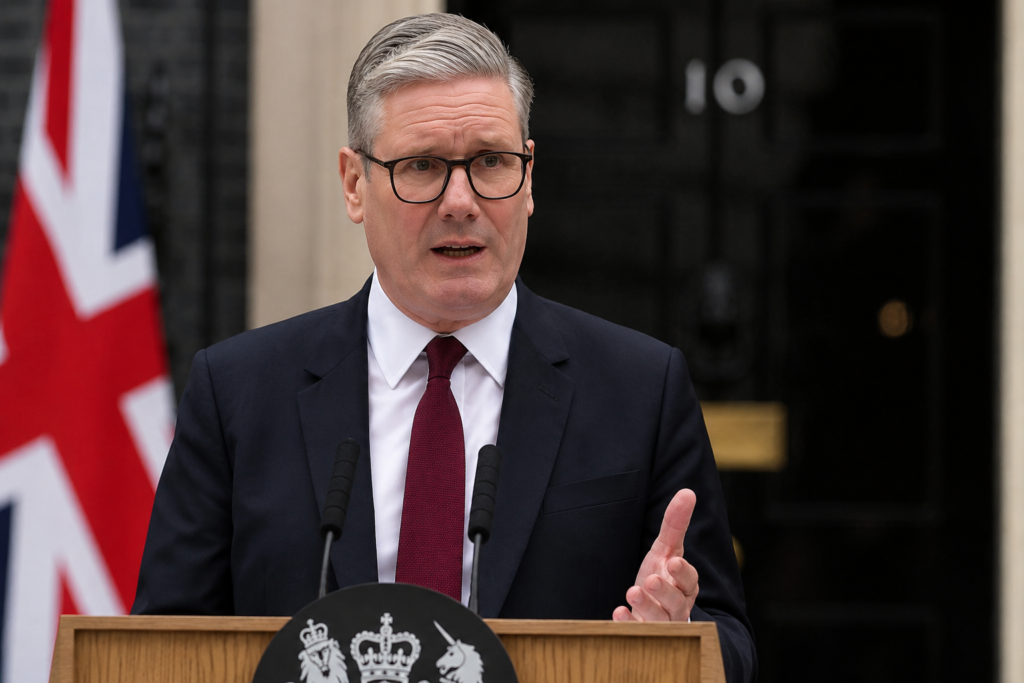
LONDON — Prime Minister Sir Keir Starmer announced on Monday that the United Kingdom will introduce a ban preventing children under the age of 16 from accessing major social media platforms. The measure targets popular services and is set to take effect in spring 2027 after legislation is introduced in Parliament before Christmas.
According to information available to The Chenab Times, the announcement follows a national consultation that showed overwhelming support for tighter restrictions on children’s online activity.
Speaking at Downing Street, Starmer described the policy as essential to restoring childhoods amid growing concerns about the impact of social media on mental health, exposure to harmful content, and excessive screen time. The United Kingdom, with a population of approximately 67 million and high social media usage among teenagers, joins Australia, which implemented a similar ban for under-16s in late 2025.
The government plans to use age-verification technologies already incorporated into existing online safety laws to enforce the ban. The restrictions will apply to platforms such as TikTok, Instagram, Snapchat, YouTube, X, Facebook, and others that enable user-generated content and social interaction. Messaging services, including WhatsApp and Signal, will not be covered by the social media ban.
According to information available to The Chenab Times, the consultation received more than 116,000 responses, with roughly nine in ten parents supporting a minimum age of 16 for social media access. Officials have indicated that the policy is based on evidence linking unrestricted social media use among minors to rising cases of cyberbullying, exploitation, and mental health challenges.
Critics, including some opposition figures, have questioned the practicality of enforcing the ban and raised concerns about its potential impact on privacy, surveillance, and consistency with other rights granted at age 16, such as voting in certain elections and joining the armed forces. Supporters, including many parents and campaigners, have welcomed the move as long-overdue protection.
The announcement comes as governments around the world seek to regulate digital spaces. In the European Union, data protection rules provide safeguards for minors, while countries across Asia and North America continue to debate similar measures. For the UK, where social media use among teenagers exceeds 90 percent, the policy represents a significant regulatory shift.
Implementation details, including penalties for non-compliant platforms and additional restrictions on features such as livestreaming, are expected to be outlined in the coming weeks. Starmer’s Labour government has pledged to advance the legislation swiftly.
The development is being closely monitored by international observers for its potential influence on policy debates in other countries seeking to balance child protection with freedom of expression and technological innovation.


Global Affairs Desk at The Chenab Times covers international developments, global diplomacy, and foreign policy issues through fact-based reporting, explainers, and analytical pieces. The desk focuses on major geopolitical events, diplomatic engagements, and international trends, with an emphasis on verified information, multiple perspectives, and contextual understanding of global affairs.