


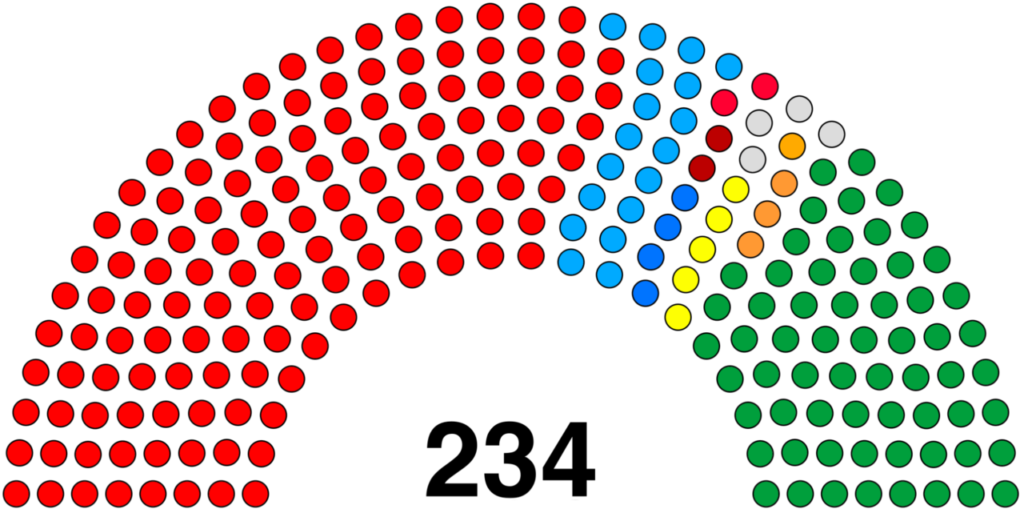
The first session of the 17th Tamil Nadu Legislative Assembly commenced on Monday, marking the beginning of its three-day sitting. The session commenced with the ceremonial rendition of the State song, ‘Tamil Thaai Vazhthu’, followed by the playing of the National Anthem. This sequence represented a departure from the customary protocol, where the National Anthem is typically played only at the conclusion of the Governor’s Address. On this occasion, the anthem was rendered towards the end of the Governor’s speech.
The Chenab Times has learned that the Assembly proceedings began with Governor R N Ravi delivering his customary address to the newly convened House. This marked the formal inauguration of the legislative session, setting the agenda for the discussions and debates scheduled over the coming days. The Governor’s address traditionally outlines the government’s vision, policy priorities, and legislative agenda for the upcoming period.
The playing of the State song and the National Anthem at the commencement of the session is a significant ceremonial event that underscores the spirit of Tamil Nadu and national identity. The deviation in the order of the National Anthem, from its usual placement at the end of the Governor’s address to being played earlier in the proceedings, has drawn attention. This alteration in protocol, while seemingly minor, signifies a potential shift or a specific intention in the ceremonial conduct of the Assembly.
Sources within the Assembly indicated that the three-day session is expected to cover various legislative businesses and discussions. The agenda typically includes the tabling of reports, introduction of new bills, and debates on issues of public importance. The brevity of the session, limited to three days, suggests a focused approach to addressing critical matters or concluding pending legislative actions.
The Governor’s address, a cornerstone of the opening of any new legislative session, provides insights into the administrative and policy direction of the state government. It is an opportunity for the ruling party to communicate its achievements and future plans to the legislature and the public. The smooth conduct of the address and the subsequent proceedings suggests a harmonious start to the Assembly’s functioning.
Following the Governor’s address and the national anthem, the Assembly would have proceeded with its listed business. The significance of the occasion lies not only in the commencement of legislative work but also in the symbolic representation of democratic processes. The presence of elected representatives from across the state signifies their commitment to governance and public service. The careful adherence to protocol, with the noted variation, reflects the evolving dynamics of parliamentary procedure and tradition.
The 17th Tamil Nadu Assembly was constituted following recent state elections, and this session marks the first gathering of its members. The composition of the Assembly includes members from various political parties, and their collective participation is crucial for the legislative process. The Governor’s address serves as a unifying document, often setting a tone for bipartisan cooperation, although political debates and differing viewpoints are inherent to the functioning of a democratic legislature.
The legislative calendar for these three days will be closely watched by political observers and the public alike, as it sets the stage for the legislative actions and policy decisions that will shape Tamil Nadu in the coming months. The playing of the State song and the National Anthem in a specific order is part of the established traditions that lend gravitas to the proceedings, reinforcing the constitutional framework under which the Assembly operates.
The swift conclusion of the Governor’s address and the beginning of legislative deliberations underscored the administrative preparedness for the session. The Assembly’s functioning is a critical component of the state’s governance structure, and its effectiveness is measured by its ability to legislate, scrutinize the executive, and represent the people’s will.


The Chenab Times News Desk