


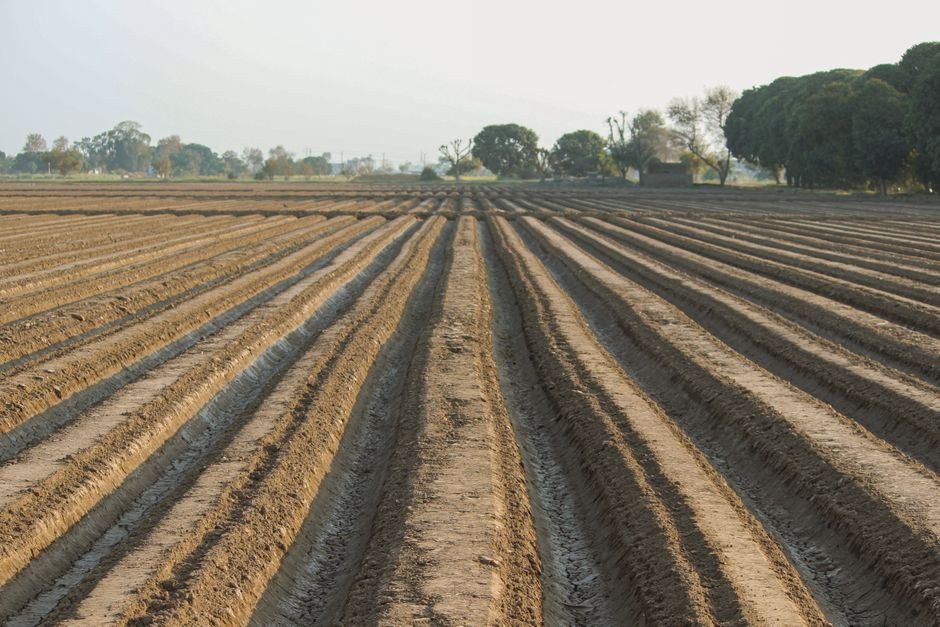
Scientists at Punjab Agriculture University (PAU) are actively promoting spring groundnut cultivation among farmers, advocating for it as a sustainable and water-efficient substitute for the conventionally grown spring/summer maize crop. The initiative aims to address concerns over depleting groundwater resources and improve agricultural economics within the state.
PAU Extends Outreach to Farmers
The Krishi Vigyan Kendra (KVK), located in Sangrur, in collaboration with the Oilseed Section of the Department of Plant Breeding and Genetics at PAU, Ludhiana, has been organizing awareness camps and conducting field visits. These efforts are designed to educate farmers on the multifaceted benefits of adopting spring groundnut in their crop rotation.
Information was available with The Chenab Times that university officials recently hosted a field day at the farm of progressive cultivators Beant Singh and Kewal Singh in Mehlan village, Sunam block, Sangrur. This event served as a platform to showcase the successful demonstration of the J-87 spring groundnut variety.
Dr. Mandeep Singh, Incharge of PAU-KVK Sangrur, explained the primary objective of the field day was to enhance awareness regarding both the environmental and economic advantages associated with cultivating spring groundnut. He highlighted that the crop requires substantially less water and fewer inputs compared to maize, leading to a reduction in overall cultivation costs. Furthermore, as a leguminous plant, groundnut contributes to soil enrichment through natural nitrogen fixation.
Farmer Experiences and Economic Viability
The host farmers shared their positive experiences, noting that following a successful one-acre trial in the spring of 2025, they have expanded their cultivation area to four acres this year. They reported that the cost of cultivating groundnut is approximately 40-50 per cent lower than that of spring maize, rendering it a significantly more economically attractive option.
Technical Guidance and Variety Performance
During a technical session held as part of the initiative, Dr. Gurpreet Singh, Extension Specialist (Oilseeds), provided detailed insights into recommended groundnut varieties and best practices for improved production. He stated that the J-87 variety exhibits a substantial yield potential of 15.8 quintals per acre during the spring season. This figure is notably higher than the average yield of 12.8 quintals per acre typically achieved during the kharif season.
Dr. K.K. Sharma, Oilseed Pathologist, addressed farmers on the critical aspects of disease management specific to groundnut cultivation, offering guidance on preventing and controlling common ailments that can affect the crop.
Government Support and Future Prospects
Dr. Inderjit Singh Bhatti, Block Agriculture Officer, Sunam, emphasized the paramount importance of groundwater conservation within Punjab. He strongly urged farmers to embrace less water-intensive crops like groundnut to mitigate water scarcity. Dr. Bhatti also informed the farmers about existing Punjab government subsidy schemes applicable to Direct Seeded Rice and kharif maize. He advised them to register for a Kisan ID to gain access to these subsidies and other associated benefits and inputs.
The collaborative inspection of the demonstration plot by experts and farmers facilitated discussions on essential aspects such as the availability of suitable machinery and the establishment of robust marketing channels. These elements are considered crucial for the successful scaling up of groundnut cultivation across the region.


The Chenab Times News Desk