


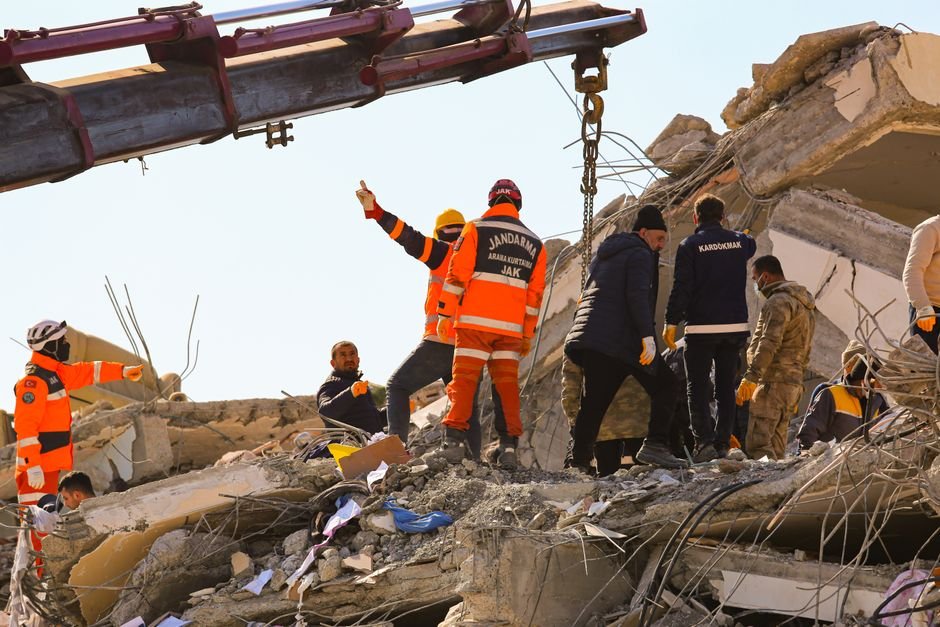
International rescue teams are engaged in a desperate race against time in Venezuela, battling treacherous debris and a critical scarcity of supplies in the wake of devastating twin earthquakes that struck the nation earlier this week. The magnitude 7.2 and 7.5 quakes, which hit on June 24, have resulted in a significant loss of life, with official figures reporting over 1,400 deaths and more than 3,300 injuries as of Saturday, June 27. Thousands remain missing, fueling a growing sense of desperation among families searching for loved ones.
The Venezuelan government has declared a state of emergency, and over 1,600 foreign rescue personnel from numerous countries have arrived to bolster local efforts. These international teams, comprising specialists and search dogs, are working to locate survivors trapped beneath collapsed structures. As of Saturday, 17 flights carrying rescuers had landed, with an additional 25 expected in the coming days. The United Nations Office for the Coordination of Humanitarian Affairs (OCHA) has been instrumental in coordinating the arrival and deployment of these international urban search and rescue (USAR) teams. Countries contributing to this massive international effort include Argentina, Brazil, Canada, Chile, Colombia, Ecuador, El Salvador, Guatemala, Mexico, Panama, Peru, the Dominican Republic, Germany, the Czech Republic, Spain, the United States, France, Italy, Jordan, Lithuania, the Netherlands, Qatar, the United Kingdom, Serbia, Syria, Switzerland, and Turkey.
Despite the influx of international aid, the scale of destruction has presented immense challenges. In the hardest-hit areas, particularly the coastal city of La Guaira, residents and volunteers have been forced to use their hands to sift through rubble due to a severe lack of heavy machinery. Reports indicate that hundreds, possibly thousands, of people may still be buried. The damage is extensive, with the UN Development Programme (UNDP) estimating direct physical damage at approximately $6.7 billion, equivalent to about six percent of Venezuela’s gross domestic product. This figure encompasses damage to homes and economic assets, but does not include the broader impact on infrastructure and economic activity.
The earthquakes have severely impacted critical infrastructure, including the Simón Bolívar International Airport near the capital, Caracas, which sustained significant damage, affecting flight operations. Roads, electricity, water, and telecommunications have also been disrupted across the affected regions. Hospitals are overwhelmed, with many already facing shortages of essential supplies, manpower, and equipment even before the disaster. This has led to situations where patients are often required to provide their own medical necessities.
The Venezuelan government has deployed over 14,000 military and police personnel to the affected areas, partly to manage access and sanitary measures, but the sheer volume of non-government responders and volunteers has, in some instances, contributed to chaos. Authorities have urged citizens to channel their aid through official channels to prevent further road congestion, particularly on the vital Caracas-La Guaira highway. The government has also activated field hospitals capable of supporting emergency surgeries.
The international response has been multifaceted. The European Commission, through its civil protection mechanism, has coordinated assistance from eight member states, including firefighters, rescue dogs, and medical staff. The United States has mobilized $150 million in aid, deploying search-and-rescue teams and medical resources, including specialized teams from the Los Angeles County Fire Department. Other nations, such as Iran, Cuba, and China, have also expressed readiness to provide assistance. The UN has appealed for restrictions to be eased, facilitating the movement of rescue convoys and aid.
The situation remains critical as the first 72 hours, considered the most crucial for rescuing survivors, have passed. The focus is now shifting towards recovery, but the immediate need for medical supplies, clean water, hygiene materials, and basic services remains paramount. International Medical Corps has deployed rapid-response teams and mobile medical units to assess and address the healthcare gaps, distributing essential supplies and providing much-needed medical services to communities grappling with immense loss and devastation.

Global Affairs Desk at The Chenab Times covers international developments, global diplomacy, and foreign policy issues through fact-based reporting, explainers, and analytical pieces. The desk focuses on major geopolitical events, diplomatic engagements, and international trends, with an emphasis on verified information, multiple perspectives, and contextual understanding of global affairs.