


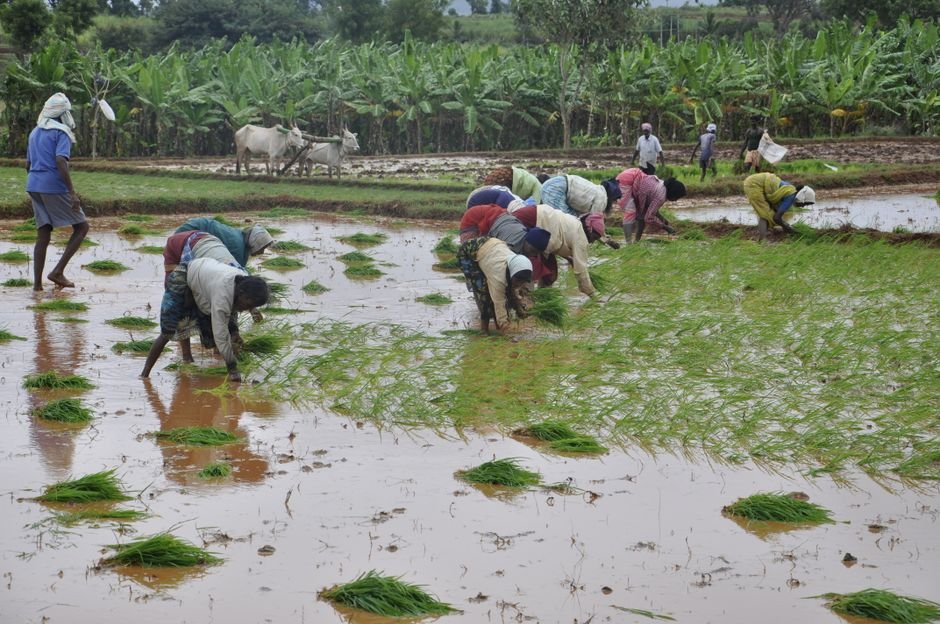
Bengaluru: As the Kharif season nears its end with just over a month remaining, Karnataka has achieved only 43% of its targeted sowing area, planting crops across 36.5 lakh hectares against a goal of 84.1 lakh hectares. Data from the state’s agriculture department, up to July 3, indicates a substantial shortfall, largely attributed to a patchy and delayed monsoon across the state’s rain-fed regions, leading to drought-like conditions.
This uneven start to the season has caused cereal and pulse farmers to fall behind schedule. However, growers of cash crops like cotton and sugarcane are reporting sowing progress ahead of a normal year. The deficit in sowing coverage is not uniform across the state, with Chikkaballapur district showing the lowest coverage at just 9%, followed by Bengaluru Rural at 24%, and surrounding areas of Kolar experiencing similar stress. Bengaluru Urban and Dakshina Kannada districts, which typically have lower acreage, are also reporting poor sowing progress.
In contrast, the irrigated tracts of northern Karnataka are experiencing more favorable conditions. Raichur district leads the state with 157% of its normal sowing coverage, followed by Yadgiri, Haveri, Dharwad, and Gadag districts. Statewide, rainfed areas account for 25.2 lakh hectares of the total sown area so far, compared to 11.2 lakh hectares under irrigation. This year’s progress is nearly 28% behind last year’s 50.6 lakh hectares by the same period, though it remains close to the five-year average, with 94% of the normal area covered. This suggests the current shortfall has not yet escalated to drought-scale collapse.
The deficit is most pronounced in the state’s staple foodgrain crops. Cereals have only achieved 27% of their target, and pulses stand at 44%, bringing the combined foodgrain coverage to 34%. Ragi sowing has been severely impacted, with only 1% of its 8.2 lakh hectare target met, and wheat sowing has not commenced at all. Officials, however, noted that ragi sowing progress, when compared to the five-year average, is at 84%, indicating a 16% deficit, which is not unprecedented.
Maize cultivation has fared comparatively better, reaching 48% of its target and 86% of its normal coverage. While specific figures for the overall national Kharif sowing progress for the current period are not directly available in the provided context, national data from July 2024 indicated a surge in overall Kharif crop sowing by 14.1% compared to the previous year, with pulses soaring by 50%. This national trend contrasts with the localized challenges faced in Karnataka. Cash crops, including cotton and sugarcane, are important components of the Kharif season across India. Generally, cotton is a significant Kharif cash crop, and its sowing progress can be influenced by various factors including monsoon patterns and market demand.
The situation highlights the critical dependence of agricultural activities on consistent monsoon patterns. Farmers in rain-dependent areas face the brunt of erratic weather, impacting food security and rural economies. While some regions in Karnataka are performing well due to irrigation, the overall picture underscores the vulnerability of rainfed agriculture to climatic variations. The upcoming weeks will be crucial in determining the final Kharif output for the state.


The Chenab Times News Desk