


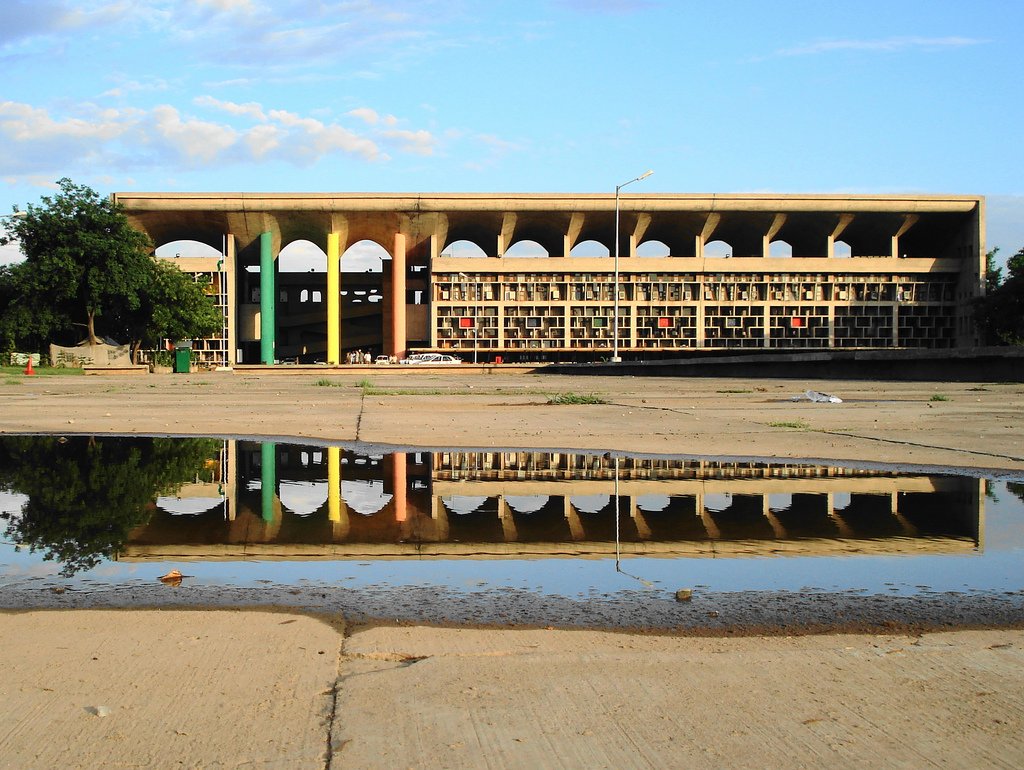
The Punjab and Haryana High Court has ordered a fact-finding inquiry into the disappearance of a document from a judicial file pertaining to a civil case in Ludhiana. The court has directed that responsibility be fixed on the officials involved in the lapse.
Information was available with The Chenab Times that the directive came as the High Court dismissed a revision petition filed against a trial court order. The trial court had permitted the plaintiff to prove a document through secondary evidence or by producing the original.
Justice Harsh Bunger, presiding over the bench, observed that the trial court had not erred in allowing the petitioner to prove the disputed document via secondary evidence or by presenting the original. However, the bench noted that a separate issue remained concerning the disappearance of a photocopy that had been retained on the judicial file after the original was examined and returned. “It would still be a matter of concern as to why the photocopy of the said document is missing from the record,” the bench remarked.
In ordering the inquiry, Justice Bunger directed, “The lapse is required to be inquired into. Therefore, let a fact-finding inquiry be got conducted by the District and Sessions Judge, Ludhiana, so as to fix the responsibility of the official(s) responsible as regards the missing document and submit a report to the Registrar-General of this court within three months.” A copy of the order was directed to be forwarded to the Administrative Judge of the Ludhiana district.
The case originated from a recovery suit amounting to over Rs 32 lakh, filed by a gurdwara against one of its former office-bearers. According to the plaint, a three-member committee established by the gurdwara had submitted a report that allegedly revealed significant embezzlement of funds, prompting the institution of the recovery suit.
During the trial proceedings, the gurdwara submitted an application seeking directions for the “civil ahlmad” to locate the three-member committee report, which had been discovered missing from the judicial file. The trial court disposed of this application by granting the plaintiff the liberty to prove the document using secondary evidence or by producing the original. Simultaneously, it directed that the District and Sessions Judge of Ludhiana be informed about the document’s loss from the judicial file.
In the course of the revision proceedings before the High Court, reports were sought concerning efforts made to trace and reconstruct the missing exhibit. This reconstruction process involved recording statements from the then ahlmad, previous and current ahlmads, the plaintiff’s representative, former counsel, the local commissioner, and other individuals with relevant information.
The District and Sessions Judge forwarded a report dated May 29, submitted by the Judicial Magistrate First Class, Ludhiana. The report, among other findings, indicated that the plaintiff had presented 194 documents as evidence, all in the form of photocopies, with the originals having been examined by the court and returned. Consequently, it concluded that the plaintiff’s assertion that the original of the lost document itself had been exhibited appeared “highly improbable.”
The report further stated that the plaintiff’s previous counsel and the local commissioner had categorically affirmed that the original report had been produced in court, compared with the photocopy submitted as evidence, and subsequently returned to the plaintiff. However, despite these statements and a specific query from the court, the plaintiff failed to produce either the original report or even a photocopy. The members of the committee, whose report was allegedly exhibited, also expressed their inability to provide any copy.
It was added that despite exhaustive efforts by the concerned officers to reconstruct the exhibit from all available sources, “neither the original document (three-member committee report) nor photocopy, draft, duplicate or any other secondary material thereof could be procured for its reconstruction.”
Justice Bunger observed that the petitioner-plaintiff’s counsel responded negatively when asked during the hearing whether it possessed a photocopy of the report. The court found this explanation difficult to accept, remarking: “The stand taken by counsel for the petitioner-plaintiff appears to be doubtful as no prudent person would tender/submit any document to any person/authority, let alone the court, without keeping a copy thereof for his own records.”
Finding no fault with the trial court’s order, the High Court dismissed the revision petition. Nevertheless, it determined that the disappearance of the photocopy retained on the judicial file warranted an independent inquiry to establish accountability for the lapse.


The Chenab Times News Desk