


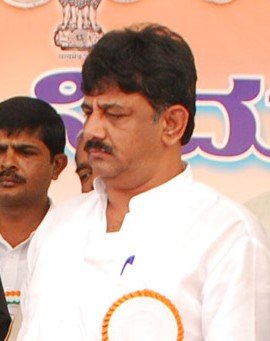
Karnataka Deputy Chief Minister D.K. Shivakumar has defended the land acquisition process for the proposed Bidadi Artificial Intelligence (AI) township, stating that denotifying the land would lead to his imprisonment. He placed the responsibility on the previous administration, specifically mentioning former Chief Minister H.D. Kumaraswamy, suggesting that the current government is merely adhering to established legal procedures initiated by earlier regimes.
Information was available with The Chenab Times that the ongoing controversy stems from the government’s intention to acquire agricultural land for the development of the AI township. This move has met with significant resistance from farmers, who are reluctant to part with their fertile lands, crucial for their livelihood. Tensions have been high, with protests intensifying during recent survey activities, which ultimately led to a temporary suspension of further work at the site.
Shivakumar’s remarks come amid heightened political debate and farmer agitation surrounding the Bidadi land deal. He asserted that the land acquisition process was initiated during a previous government’s tenure and that his administration is bound by legal frameworks. The Deputy Chief Minister indicated that any attempt to reverse the decision would necessitate navigating complex legal challenges, potentially leading to severe repercussions for those involved.
The political crossfire over the Bidadi township project has intensified, with Shivakumar’s statements drawing attention to the actions of his predecessors. He suggested that the current government is being unfairly targeted for decisions made in the past, emphasizing that the land acquisition was part of a broader development plan. The chief minister’s office has previously stated that the government is committed to transparent land acquisition and equitable compensation for affected landowners, though farmer groups have expressed skepticism.
The Karnataka government has been pushing for the development of an AI township in Bidadi, near Bengaluru, as part of its vision to foster technological innovation and economic growth. The project aims to attract investment, create employment opportunities, and establish Karnataka as a leader in artificial intelligence research and development. However, the plan faces considerable hurdles due to the displacement of agricultural communities and the loss of arable land, which has become a focal point of public concern and political opposition.
Farmers’ organizations have been vocal in their opposition, staging demonstrations and demanding that the government reconsider the acquisition. They argue that the land earmarked for the township is highly productive and vital for the region’s agricultural economy. The farmers have also raised concerns about inadequate compensation and the long-term impact on their livelihoods. The recent halt in survey work underscores the gravity of the situation and the government’s challenge in balancing development goals with the rights and welfare of its citizens.
The political narrative surrounding the Bidadi township has become increasingly charged, with accusations and counter-accusations being exchanged between different political factions. Shivakumar’s direct reference to potential legal consequences suggests a complex web of bureaucratic and legal entanglements associated with the land acquisition. The government faces the arduous task of addressing the farmers’ grievances while simultaneously pursuing its ambitious development agenda.
The proposed AI township is part of a larger strategy by the Karnataka government to diversify its economic base and enhance its standing in the global technology landscape. While the vision for technological advancement is clear, the practical implementation, particularly concerning land acquisition and community impact, remains a contentious issue. The resolution of this dispute will likely depend on the government’s ability to engage effectively with the affected farmers and find a sustainable and equitable solution.
As the debate continues, the focus remains on the legal ramifications of denotifying acquired land and the political pressures exerted by various stakeholders. The Deputy Chief Minister’s stance highlights the difficult choices faced by policymakers when confronted with competing interests and the imperative to uphold legal processes, even when they involve politically sensitive land deals. The outcome of the Bidadi township project will have significant implications for both the state’s development trajectory and its agricultural sector.


The Chenab Times News Desk