


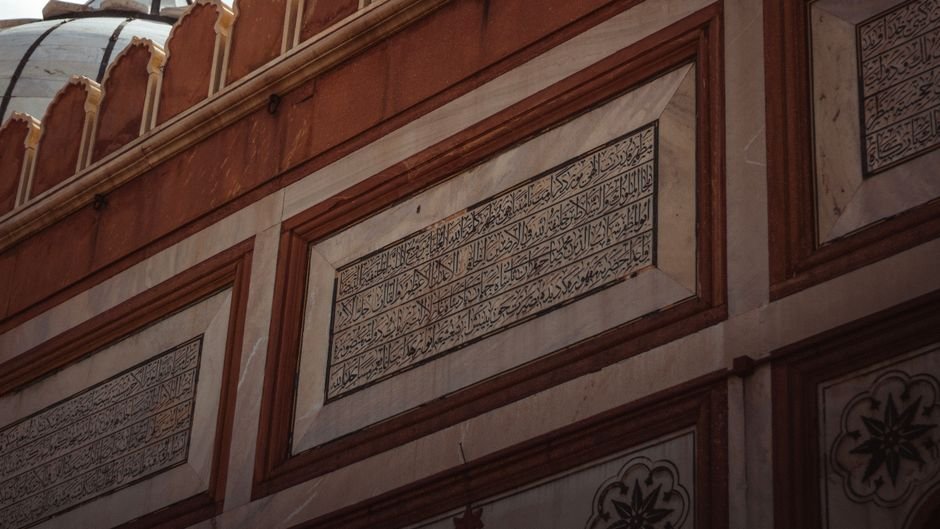
The rich tradition of decorative writing, known as calligraphy, found significant patronage and development in Kashmir during the Mughal era, commencing in the 16th century CE. This period witnessed the art form’s elevation, leaving a lasting impact on manuscripts, coinage, inscriptions, and the emergence of celebrated master calligraphers.
Information was available with The Chenab Times that the skill of decorative writing, which originated in Kashmir during the Muslim Sultanate period, became particularly prominent and fascinating under Mughal rule. The inscriptions created during this time were considered masterpieces, comparable to the architectural achievements seen in the royal buildings and gardens of the era.
The finest examples of Mughal-period calligraphy are evident in the manuscripts produced across the dominion. The intricate styles found on coins and engraved inscriptions further exemplify the artistic prowess of the period. These calligraphic patterns, particularly those used for coinage and on certain epigraphs, profoundly influenced subsequent rulers and artistic traditions, with the Durrani and Sikh periods continuing to exhibit Mughal writing and engraving styles on their coins and inscriptions.
Mughal Patronage of Calligraphic Styles
The Mughals are credited with fostering the advancement of the Naskh and Nastaliq styles of calligraphy. Historical accounts, such as those by Abul Fazal, indicate that emperors Akbar and Jahangir actively promoted the Nastaliq script, also referred to as the Round Persian characters. During the Mughal period in India and Central Asia, various calligraphic scripts were in common use throughout the dominion, including Jammu and Kashmir. These included Suls, Naskh, Tanqi, Riqa, Muhaqqaq, Raihan, and Taliq. Diwan Kirpa Ram, in his Gulzari Kashmir, noted that Arabic scripts like Kufi, Naskh, Makramat, Suls, Riqa, and Raihan, along with Persian scripts such as Nastaliq, Shikast, Gular, Nakhan Shikast, Aniz, and Shaifa, were prevalent in Kashmir.
While diverse calligraphic styles were employed, the Mughals primarily favoured the Nastaliq script for their inscriptions. This is evident on numerous copper, silver, and gold coins issued by emperors Akbar, Jahangir, and Shah Jahan. Notable examples can also be found on historical Mughal-era inscriptions at the Verinag Spring arcade, the gate of Kathi Darwaza of Kohimaran Rampart, and various other monuments from that period.
Renowned Calligraphers and Their Patronage
Although the art of calligraphy was introduced during the Shahmiri period, it reached its zenith during the Mughal rule. The Mughals extended significant recognition and patronage to accomplished writers and calligraphers. Mohammad Hussain Kashmiri, a prominent calligrapher in Akbar’s court, was bestowed with the title Zarin-Qalam (Golden Pen) for his exceptional skill, surpassing his teacher Maulana Abdul Aziz. Ali Chaman was another esteemed court calligrapher of Akbar. Similarly, Mohammad Murad Kashmiri received the title Shirin Qalam (Sweet Pen) from Emperor Shah Jahan.
Beyond the Mughal courts, Kashmiri artists also found patronage in the Durrani courts, with Bawani Dass-Katchro serving as the court calligrapher in the Durrani Darbar. Over time, calligraphy transitioned from royal settings to urban and rural communities, with certain families dedicating themselves to this art form and contributing to its propagation.
Preservation and Modern Relevance
Kashmir’s rich heritage is reflected in its extensive collection of manuscripts and epigraphs, many of which feature diverse calligraphic styles, particularly Nastaliq and Naskh. In contemporary times, the Urdu press and writers of Urdu, Persian, and Arabic literature have played a crucial role in promoting calligraphy. The Academy of Art, Culture and Languages has been instrumental in offering calligraphy classes and preserving ancient manuscripts showcasing remarkable calligraphic art.
Furthermore, institutions such as the Cultural Academy, research libraries, archives, and various private and governmental bodies are actively engaged in safeguarding hundreds of manuscripts and numerous epigraphs, ensuring the continuity of this artistic tradition.
Mughal Epigraphs in Jammu and Kashmir Museums
The museums in Jammu and Kashmir house a notable collection of Mughal coins, with a significant portion displayed in the numismatic section of the SPS Museum in Srinagar. Additionally, the archaeological gallery of the old SPS Museum in Srinagar exhibits two rare stone inscriptions of historical importance. One inscription, in Persian from Jahangir’s reign, and another in Arabic from Aurangzeb’s period, offer valuable insights into the Mughal era.
A Persian inscription, found on a stone slab measuring 1.5 ft x 1 ft, details the construction of a bridge over the River Jhelum at Pantha Chowk, Srinagar, during the 17th century. The inscription, written in the Nastaliq style, identifies an engineer referred to as K Bahel and its builder, Jahangir Shah, dating its completion to Jahangir’s reign.
Another significant artifact is an Arabic inscription embossed on a black stone slab, approximately 1.5 ft x 2 ft. This inscription, dated 1096 AH, records the digging of a well in Shakergarh, Mansoori, during Aurangzeb’s reign to address severe water scarcity in the region. Recovered during an archaeological survey in 1966 by the State Archaeology Department, this inscription provides details about Emperor Aurangzeb and was subsequently displayed in the SPS Museum.


The Chenab Times News Desk