


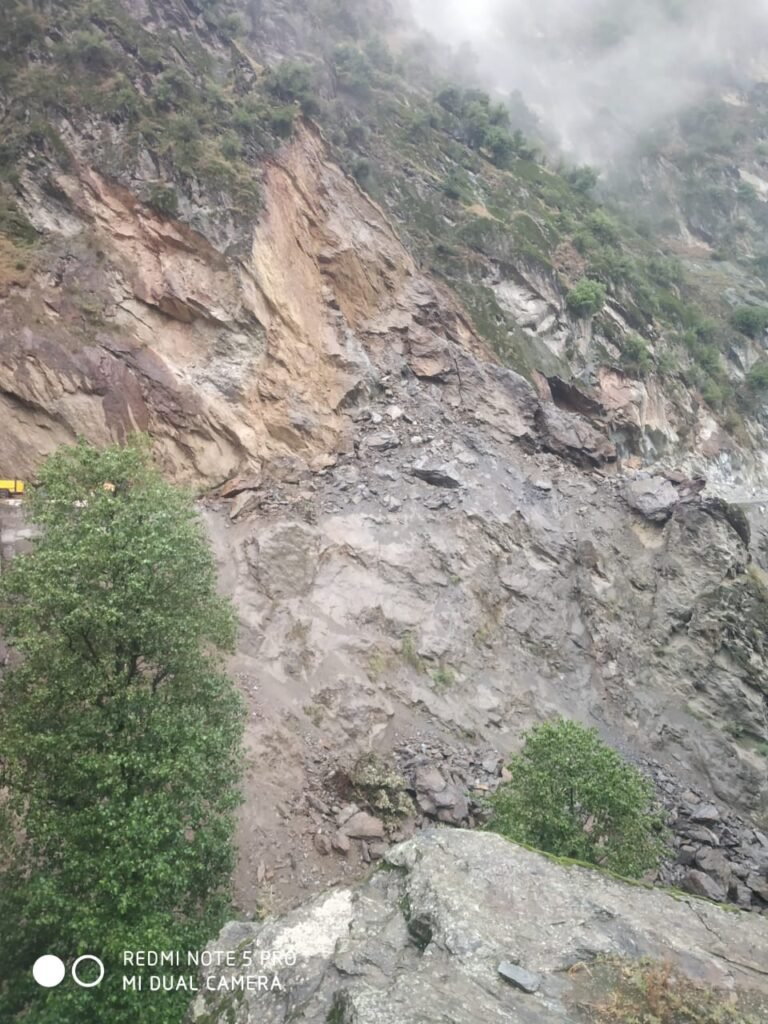
SRINAGAR: The Mughal Road, a critical arterial route linking the twin border districts of Poonch and Rajouri in Jammu with Shopian in South Kashmir, has been closed for vehicular traffic following multiple landslide incidents. The suspension of movement is a precautionary measure to ensure public safety.
According to details received by The Chenab Times, officials from the SO Traffic, Mughal Road division, confirmed the closure. Vehicular movement was halted after reports of debris and landslides emerged from several points along the highway. This action was taken to prevent any untoward incidents involving commuters and transporters.
The administration has promptly deployed resources, including men and machinery, to the affected areas. The primary objective is to clear the debris and stabilize the road stretches impacted by the landslides. The reopening of the Mughal Road will be contingent upon the completion of these clearance operations and a subsequent safety assessment by the authorities, ensuring it is fit for public movement.
Commuters and transporters have been advised to refrain from travelling on the Mughal Road until further notice. They have been urged to stay updated on official announcements regarding traffic status. The advisory aims to prevent inconvenience and potential risks associated with attempting to traverse the road during this period of uncertainty. The Mughal Road, often referred to as an alternative route to the Jammu-Srinagar National Highway, plays a significant role in connecting the otherwise geographically separated regions of Kashmir and the Jammu division, particularly during periods when the main highway faces disruptions.
The Mughal Road spans approximately 84 kilometers and traverses challenging mountainous terrain. Its vulnerability to landslides, especially during periods of heavy rainfall or snowmelt, is a well-documented concern. The closure underscores the persistent challenges faced in maintaining connectivity in the mountainous regions of Jammu and Kashmir, often requiring continuous efforts in landslide mitigation and road maintenance. The timely deployment of machinery and personnel by the traffic authorities is crucial in minimizing the duration of the closure and restoring essential connectivity.
The Roads and Buildings (R&B) department and the National Highways Authority of India (NHAI) are often involved in monitoring and maintaining such vital road networks. The process of clearing landslides typically involves heavy machinery like excavators and bulldozers to remove loose soil, rocks, and debris. In instances where the damage is extensive, further structural assessments and repairs might be necessary before the road can be deemed safe for heavy vehicular traffic. The strategic importance of the Mughal Road in facilitating trade and movement, especially for the local populace, makes its prompt restoration a priority for the administration.
Information was available with The Chenab Times that the route is particularly susceptible to such disruptions during the monsoon season and periods of significant snowfall. The authorities are expected to provide regular updates on the progress of the clearance operations and the eventual reopening of the road. The public is encouraged to utilize official channels for the most accurate and up-to-date information to plan their journeys accordingly.


The Chenab Times News Desk