


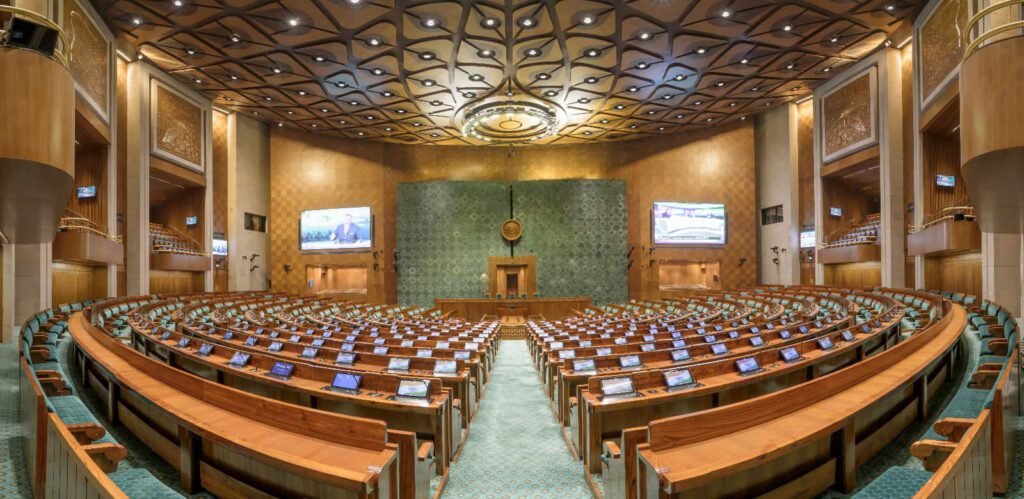
The Lok Sabha has passed the Public Examination (Prevention of Unfair Means) Amendment Bill, 2026, significantly enhancing penalties for those involved in paper leaks and other unfair practices that undermine the integrity of public examinations across India.
The Chenab Times has learned that the legislation, which amends a 2024 law, aims to create a more robust deterrent against individuals, organized groups, and institutions seeking to compromise the sanctity of competitive and recruitment examinations. The amendments introduce stricter punitive measures, including enhanced jail terms and substantial fines, alongside procedural improvements for investigation and trial.
Key Provisions of the Amendment Bill
The newly passed amendment empowers all state governments and Union Territory administrations to designate any sessions court as a special fast-track court for the expedited trial of offenses under this law. These special courts are mandated to conduct proceedings on a day-to-day basis, with the aim of completing trials within a strict three-month period from the filing of the charge sheet. Furthermore, the central government is granted the authority to constitute special task forces specifically for investigating offenses related to unfair means in public examinations.
Under the provisions of the bill, investigations into such offenses are to be concluded within two months. State governments and UT administrations will also be empowered to appoint one or more special public prosecutors to handle cases arising from the legislation. An appellate mechanism has also been established, allowing for appeals against judgments, sentences, or orders to be heard by a bench of two High Court judges, with a stipulated disposal period of three months from the date of appeal admission.
Enhanced Penalties for Offenders
The amendment significantly raises the stakes for individuals found engaging in paper leaks or employing unfair means during public examinations. For individual offenders, the new law prescribes a minimum imprisonment of five years, extending up to a maximum of ten years, coupled with a fine of up to Rs 50 lakh. The penalties are even more severe for organized crimes, with a proposed minimum sentence of seven years and a fine that can reach up to Rs 10 crore.
The original law, enacted in 2024, was introduced in response to a series of high-profile paper leak controversies that had eroded public trust in the examination system. Prior to this, India lacked a specific, substantive legal framework to effectively address unfair means and offenses committed by various entities involved in the conduct of public examinations by central government agencies.
Scope and Objective of the Legislation
The overarching objective of this legislation is to prevent unfair practices in public examinations conducted by major recruitment and examination bodies in the country. This includes examinations administered by the Union Public Service Commission (UPSC), the Staff Selection Commission (SSC), various railway recruitment boards, banking recruitment examinations, and the National Testing Agency (NTA), among others. By strengthening the legal deterrent and streamlining the judicial process, the government aims to safeguard the fairness and credibility of these crucial selection processes, ensuring that opportunities are awarded based on merit and genuine effort.


The Chenab Times News Desk