


Industries operating within the National Capital Region (NCR) have been granted a two-month extension by the Commission for Air Quality Management (CAQM) to adhere to revised particulate matter (PM) emission standards. This reprieve offers rice millers, exporters, and other industrialists additional time to implement the new environmental norms.
The decision follows a recent meeting between a joint delegation representing the Haryana Rice Exporters’ Association (HREA), the Haryana Chamber of Commerce & Industry (HCCI), and the Karnal Rice Millers and Dealers Association with Union Minister for Environment, Forest and Climate Change, Bhupender Yadav. Previously, the delegation had also engaged with Union Minister for Power, Housing and Urban Affairs Manohar Lal Khattar, Haryana Assembly Speaker Harvinder Kalyan, and Karnal MLA Jagmohan Anand to articulate the challenges faced by the sector.
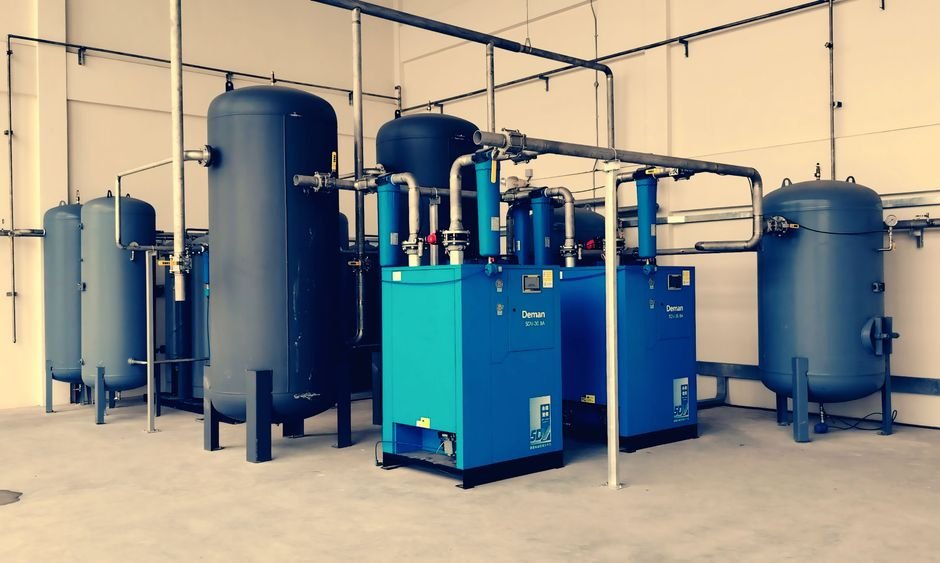
According to details received by The Chenab Times, industrialists highlighted significant hurdles in meeting the revised standards, including the substantial cost associated with installing Air Pollution Control Devices (APCDs), procurement delays for essential pollution control equipment, and a scarcity of qualified technical agencies capable of conducting adequacy assessments. Furthermore, a shortage of approved laboratories for testing and certification also contributed to the difficulties in meeting the original compliance deadlines.
These factors collectively made it arduous for numerous businesses to complete the necessary upgrades within the stipulated timeframe. The CAQM had initially issued an order on February 20, 2026, which reduced the permissible PM emission limit for industries from 80 mg/Nm³ to 50 mg/Nm³ with the aim of mitigating air pollution and improving air quality in the region. Under the original directive, medium and large industries were required to achieve compliance by August 1, 2026, while other covered industries were slated to meet the standards by October 1, 2026.
However, the CAQM’s latest order designates October 1, 2026, as a unified compliance date for all industries falling under the purview of the revised emission norms. This move consolidates the previous staggered deadlines into a single target. The industrialists, however, had advocated for a more extended timeline, requesting an extension until March 31, 2027, for the installation of Online Continuous Emission Monitoring Systems (OCEMS), PTZ cameras, and stack emission monitoring facilities, in addition to meeting the 50 mg/Nm³ PM emission limit.
The industrialists conveyed their appreciation to the Union Ministers, the Haryana Assembly Speaker, and the Karnal MLA for their intervention and support in addressing the industry’s concerns. Sushil Jain, president of HREA, expressed gratitude stating, “We are grateful to Union Ministers Manohar Lal Khattar, Bhupender Yadav, Assembly Speaker Harvinder Kalyan, our MLA Jagmohan Anand for raising our concerns with the concerned authorities and providing us relief.”
Despite the extension, some industry representatives voiced concerns that such stringent environmental regulations could potentially deter new industrial investments in the NCR region of Haryana. The ongoing dialogue between industry stakeholders and regulatory bodies underscores the balance being sought between environmental protection and economic development in the region.
The CAQM’s decision reflects an acknowledgment of the practical challenges faced by industries in adapting to new environmental regulations, while also maintaining its commitment to improving air quality. The extended deadline provides a crucial window for businesses to invest in the necessary technology and infrastructure to meet the revised emission standards.
The revised norms are part of a broader strategy by the Indian government to combat severe air pollution in and around the NCR, a region that frequently experiences critical air quality levels, particularly during winter months. The implementation of stricter emission standards is considered a vital component in achieving long-term improvements in public health and environmental sustainability.
Further engagement is anticipated between the CAQM and industry associations to ensure a smooth transition to the new emission standards. The focus remains on fostering a regulatory environment that supports both industrial growth and environmental stewardship, ensuring that the NCR can achieve cleaner air for its residents.
The extension is expected to alleviate immediate pressure on businesses, allowing them to focus on operational continuity while strategically planning for the required environmental upgrades. The collective efforts of government officials, regulatory bodies, and industry representatives are aimed at finding sustainable solutions to the complex challenges of air pollution in one of India’s most densely populated and industrialized areas.
The CAQM continues to monitor air quality across the NCR and may introduce further measures or adjustments as needed to meet its environmental objectives. The current extension underscores a responsive approach to regulatory implementation, acknowledging the need for phased compliance and support for industrial adaptation.
The implications of these emission standards extend beyond immediate compliance, influencing long-term investment decisions and the adoption of cleaner industrial technologies throughout the region. The government’s stance indicates a sustained commitment to environmental regulation, balanced with an understanding of industry’s capacity for change.
The relief provided to the industries is a testament to the ongoing dialogue and collaborative spirit between the government and the private sector in addressing critical environmental issues affecting the NCR.


The Chenab Times News Desk