


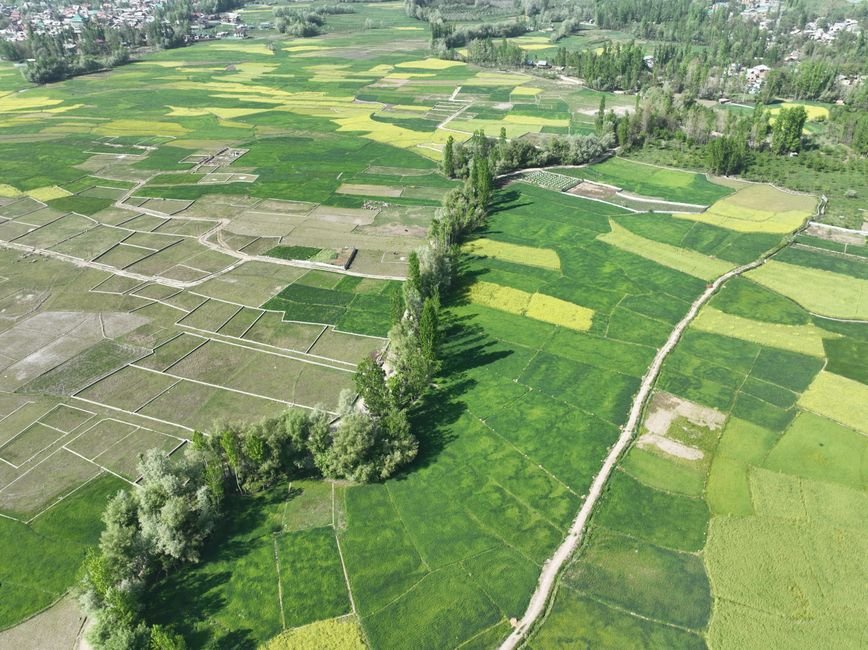
Melting glaciers, shrinking lakes, and an increase in cloudbursts are stark indicators of Jammu and Kashmir’s ecological fragility, which is struggling to withstand mounting environmental pressures.
The Chenab Times has learned that the visible reduction of the Shivling ice formation at Amarnath, from approximately seven feet to about one foot within five days in July, serves as a potent symbol of a region whose natural defenses are deteriorating rapidly. This marks the third consecutive year the formation has failed to maintain its shape for a significant portion of the pilgrimage season. Scientists attribute this phenomenon to a combination of factors, including four consecutive winters with below-normal snowfall, rising regional temperatures, and the cumulative heat generated by thousands of pilgrims visiting the enclosed cave.
This pattern of environmental degradation is not isolated to the Amarnath shrine but is evident across the broader landscape of Jammu and Kashmir. A government audit has revealed that nearly half of the region’s recorded lakes have vanished since 1967, diminishing the valley’s capacity to absorb heavy rainfall. Furthermore, forest cover has thinned significantly over the past two decades, leading to the destabilization of slopes that were once naturally secured.
The consequences of these ecological shifts are increasingly apparent in the form of more frequent and intense cloudbursts. The Kishtwar district, for instance, has experienced devastating cloudbursts twice in the last four years. The first, in Honzar in 2021, and a more catastrophic event in Chositi in 2025, which tore through a pilgrimage gathering and resulted in numerous fatalities.
Experts emphasize that these environmental challenges are intrinsically linked to the scale of human activity within the region. The significant influx of tourists and pilgrims, with over two crore tourist visits and more than five lakh Amarnath pilgrims recorded in a recent year, places considerable strain on ecologically sensitive high-altitude zones such as Gulmarg, Sonamarg, and the Amarnath cave. Unmanaged footfall and vehicular emissions in these fragile alpine environments accelerate ecological degradation, which in turn threatens the tourism economy through landslides, blocked routes, and disrupted seasonal activities.
Government agencies have acknowledged the growing severity of the situation and have implemented measures such as early warning applications, risk categorization for glacial lake outburst floods (GLOFs) across two dozen lakes, phased flood management initiatives along the Jhelum River, and the pre-positioning of rescue infrastructure in anticipation of severe weather warnings. These interventions are crucial for saving lives and mitigating immediate impacts.
However, the underlying issue requires a more fundamental shift in approach. Official submissions to the Assembly have highlighted the necessity of integrating development strategies with ecological protection, recognizing that these two aspects can no longer be treated independently. Key interventions such as afforestation drives, wetland restoration projects, the implementation of carrying capacity limits for tourism, the promotion of climate-resilient crop varieties, and floodplain zoning are no longer considered optional but are essential for the long-term survival of the valley. Given that the Himalayan range is warming at a faster rate than much of the world, and the region relies on a single overburdened river system, these comprehensive measures are vital to sustain the millions of lives and the centuries of cultural and spiritual significance that are tied to Jammu and Kashmir.


The Chenab Times News Desk