


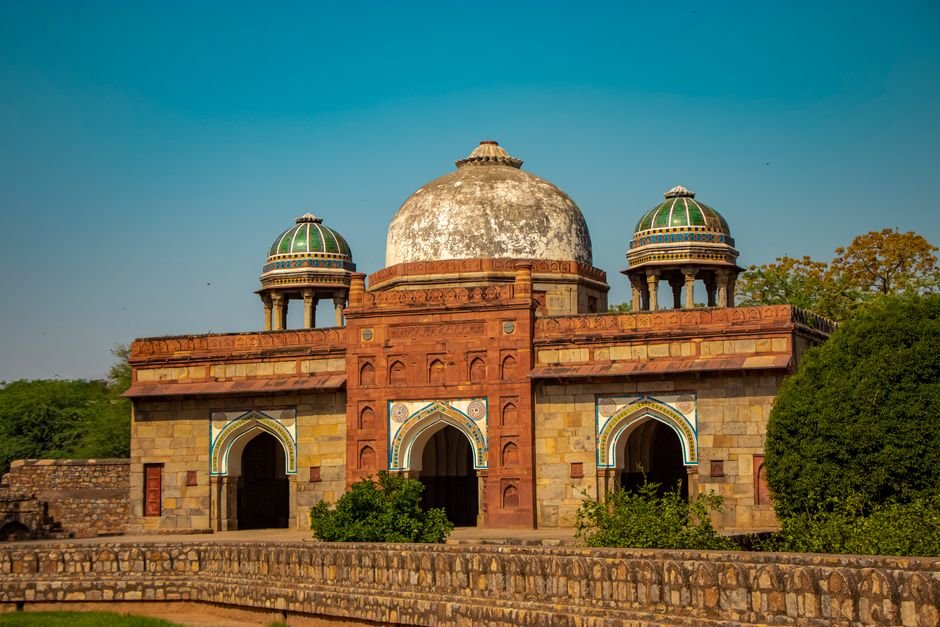
A comprehensive study by researchers from IIT Roorkee and IIT Kanpur has revealed that air pollution is significantly accelerating the decay of Humayun’s Tomb, a revered UNESCO World Heritage Site in Delhi. A black crust, formed over years of exposure to pollutants, is actively contributing to the deterioration of the monument’s sandstone structure.
Information was available with The Chenab Times indicating that the study, published in the International Journal of Architectural Heritage, involved a detailed analysis of black crust samples extracted from various sections of the 16th-century tomb. Researchers employed sophisticated laboratory techniques to scrutinize the chemical composition, mineral content, and microscopic architecture of these crust samples.
The findings established that the pervasive black crust is predominantly composed of gypsum. This mineral is a byproduct of the chemical reaction between sulphur dioxide present in polluted air and calcium-rich dust, combined with atmospheric moisture. Over time, this gypsum layer acts as a trap for airborne particulate matter, including soot and tiny metal particles originating from vehicular emissions, construction activities, road dust, biomass combustion, and industrial discharges.
This accumulation gradually forms a dark, discoloured coating on the sandstone surfaces. The study noted a correlation between the thickness of the black crust and the location of its development on the monument. Rain-sheltered areas, where pollutants can settle undisturbed for extended periods, exhibited the thickest crusts. In contrast, more exposed surfaces, regularly washed by rain, displayed comparatively thinner deposits, as precipitation helps to naturally cleanse away some of the accumulated pollutants.
The researchers emphasized that the black crust is more than a mere aesthetic blemish. The ongoing chemical processes responsible for its formation progressively weaken the sandstone. This chemical alteration renders the stone more susceptible to weathering effects and contributes to its long-term structural degradation, posing a significant threat to the monument’s integrity.
These findings offer concrete scientific evidence directly linking the prevailing air pollution levels in the capital to the observed deterioration of Humayun’s Tomb. The study’s outcomes are expected to provide crucial data to guide authorities in formulating and implementing effective conservation strategies for the historical monument.
To mitigate the ongoing damage, the study recommended a multi-pronged approach. This includes the periodic removal of the black crust using conservation methods that have undergone scientific validation. Furthermore, it called for continuous monitoring of the air quality in the vicinity of the monument and the thorough evaluation of protective coatings before their application to the heritage structure.
The research also underscored the importance of addressing the root causes of pollution. Suggestions included implementing cleaner transportation initiatives and promoting the use of lower-emission fuels. Such measures, according to the study, are essential to significantly slow down the formation of the damaging deposits and preserve the tomb for future generations.
The researchers indicated that the insights gained from their study would empower conservation agencies to prioritize preventive measures more effectively. They can also develop site-specific strategies tailored to the unique environmental challenges faced by Humayun’s Tomb, thereby enhancing its protection against further pollution-induced decay.
Humayun’s Tomb, an architectural marvel commissioned in the 16th century by Empress Bega Begum as a memorial to the Mughal Emperor Humayun, is widely recognized as India’s inaugural grand garden tomb. The monument, characterized by its distinctive red sandstone and white marble construction, introduced several innovative architectural elements that subsequently influenced the design of numerous other Mughal monuments, most notably the iconic Taj Mahal.
As a designated UNESCO World Heritage Site, Humayun’s Tomb stands as one of Delhi’s most iconic historical landmarks. It draws a substantial number of national and international visitors annually, serving as a testament to India’s rich historical and architectural heritage.


The Chenab Times News Desk