


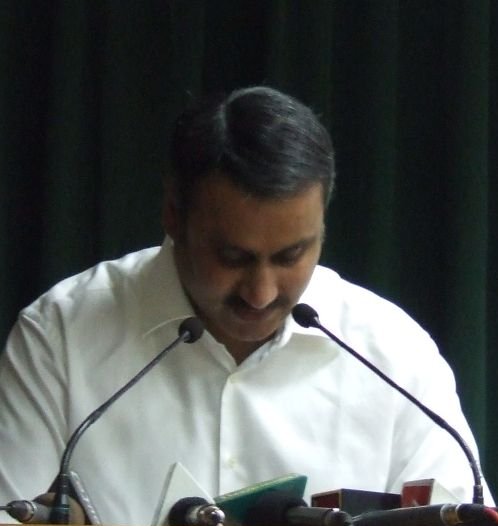
Chennai: Pattali Makkal Katchi (PMK) president Anbumani Ramadoss has strongly voiced his opposition to the increasing trend of Public-Private Partnerships (PPPs) and privatisation across various sectors in Tamil Nadu, arguing that such policies will adversely impact employment opportunities and undermine social justice. Ramadoss has been a vocal critic of several government decisions that involve outsourcing public services and privatising state-run entities, asserting that these moves primarily benefit private entities at the expense of the public and the welfare of workers.
According to details received by The Chenab Times, Ramadoss has specifically targeted recent decisions concerning conservancy works in the Greater Chennai Corporation and the potential privatisation of state-run liquor outlets. He has also raised concerns about the outsourcing of driver and conductor posts in the Metropolitan Transport Corporation (MTC) and the filling of government posts through manpower agencies, which he contends bypasses reservation norms and compromises social justice principles.
The PMK leader has pointed to the Greater Chennai Corporation’s move to privatise conservancy works in Anna Nagar and Tondiarpet zones, following similar decisions in Royapuram and Thiru Vi Ka Nagar. Ramadoss argued that the corporation’s claim of improved efficiency through privatisation is misleading, as the same workers would continue performing their duties, but under private contractors. He suggested that any perceived increase in efficiency would merely highlight existing administrative shortcomings within the corporation rather than the inherent superiority of private management. Furthermore, he alleged that the underlying motive behind these privatisation efforts is to divert funds to those in power, jeopardising the job security and wages of sanitation workers.
In another significant statement, Anbumani Ramadoss has urged the Tamil Nadu government to abandon any proposals to privatise state-run liquor outlets. He argued that such a move would not address the state’s concerns regarding alcohol consumption but would, in fact, increase availability and vulnerability to addiction among all sections of society, including youth and students. Ramadoss advocated for the gradual closure of all liquor shops and the implementation of total prohibition, viewing privatisation as a regressive step that shames the government’s role in liquor sales without offering a genuine solution.
The issue of employment and adherence to reservation policies has been a recurring theme in Ramadoss’s critique. He condemned the Metropolitan Transport Corporation’s decision to outsource 1,020 driver and 1,172 conductor posts, alongside the recruitment of drivers and conductors through outsourcing for newly introduced electric buses. Ramadoss asserted that the intention behind establishing public sector undertakings like the MTC is not only to provide public service but also to create employment opportunities governed by reservation norms. He warned that outsourcing allows private firms to appoint individuals without adhering to these norms, leading to exploitation of workers and a subversion of social justice.
Further elaborating on his concerns about employment, Ramadoss has also opposed the government’s decision to fill posts in the electricity board and other public sector undertakings through manpower agencies on an outsourcing basis. He stated that this practice bypasses the traditional method of issuing notifications and conducting examinations, thereby undermining reservation policies and compromising the hard-won gains of social justice. Ramadoss accused the current state government of “drawing curtains over the reservation” and “murdering social justice.”
Beyond employment and service delivery, Ramadoss has also voiced opposition to projects involving private participation. He has previously criticised decisions to privatise government-owned water bodies through the Tamil Nadu Land Consolidation (Special Projects) Act, warning that it could lead to private companies acquiring these vital resources. He questioned the government’s focus on privatisation, suggesting that resources could be better directed towards increasing irrigation areas and improving water conservation infrastructure.
Anbumani Ramadoss has consistently argued that the government’s push for privatisation and PPPs is contrary to the principles of social justice and inclusive growth. He contends that while these policies may offer financial advantages to the private sector, they often result in job insecurity, reduced wages for workers, and a dilution of public accountability. The PMK leader’s stance underscores a broader debate on the role of the state in providing essential services and ensuring equitable employment opportunities in Tamil Nadu.


The Chenab Times News Desk