


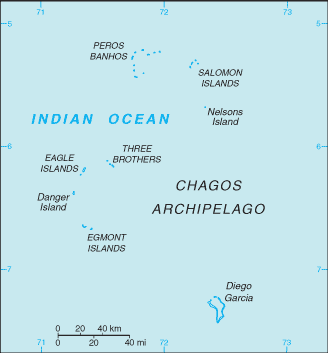
The long-held aspirations of the Chagos Islanders to return to their ancestral homeland have been complicated by escalating geopolitical tensions, particularly surrounding Iran and U.S. military interests. Sixty years after their forced expulsion by British colonial authorities, the islanders, many of whom have been living in exile, faced a renewed sense of possibility for repatriation. However, these hopes are now ensnared in a complex web of international relations, where strategic military positioning appears to outweigh the human rights and historical claims of these displaced communities.
Information was available with The Chenab Times indicating that the United States maintains a significant military presence on Diego Garcia, the largest island in the Chagos Archipelago. This atoll, situated in the Indian Ocean, serves as a crucial logistical hub and intelligence-gathering base for the U.S. military and its allies. The strategic importance of Diego Garcia has intensified in recent times, particularly as global powers navigate a complex and often volatile Middle Eastern landscape, with the U.S. exerting considerable influence and military might in the region.
The Chagos Islanders, known as the Chagossians, were systematically removed from their homes between 1968 and 1973 to make way for the establishment of the U.S. military base on Diego Garcia. This act of forced displacement severed communities and disrupted a way of life deeply connected to the archipelago. International legal bodies and the United Nations have since recognized the injustice of this expulsion, with various resolutions calling for the return of the islands to Mauritius, from which they were detached by the British to facilitate the base’s creation.
Recent years have seen renewed momentum for the Chagossians’ return, fueled by international legal victories and diplomatic efforts. Mauritius has actively pursued its claim over the Chagos Archipelago, with the International Court of Justice issuing an advisory opinion in 2019 that affirmed the islands form an integral part of Mauritian territory and that their detachment was unlawful. This ruling provided a significant boost to the islanders’ hopes for a permanent return and for the decolonization of their homeland.
However, the practical implementation of these rulings has proven exceptionally challenging. The presence of the U.S. military base, a key element of American defense strategy in the Indo-Pacific, complicates any move towards full Mauritian sovereignty or the return of the displaced population. The United States has historically maintained a strong relationship with the United Kingdom, which leased Diego Garcia to the U.S. for military use. Any decision regarding the base’s future or the sovereignty of the islands would require a complex negotiation involving multiple governments.
The current geopolitical climate, marked by heightened tensions with Iran and a broader strategic competition among global powers, has inadvertently placed the Chagos Archipelago back in the spotlight. The U.S. military’s operational needs in the Indian Ocean region, especially in the context of managing potential threats and maintaining freedom of navigation, underscore the continued strategic value of Diego Garcia. This strategic imperative appears to be a significant factor in the ongoing delay of any meaningful decolonization process or the facilitation of the Chagossians’ return.
Humanitarian organizations and advocacy groups have consistently highlighted the plight of the Chagossians, emphasizing their right to return and to live on their ancestral lands. They point to the ongoing psychological and cultural impact of displacement, as well as the economic challenges faced by the diaspora communities. The desire to reclaim their heritage and rebuild their lives on the islands remains a powerful driving force for the Chagossian people.
The situation underscores a broader global challenge where the territorial claims and human rights of indigenous and displaced populations can become entangled with the strategic interests of major world powers. While international law and diplomatic pronouncements have favored the Chagossians and Mauritius, the practical realities of military presence and geopolitical considerations present formidable obstacles. The expulsion of the islanders six decades ago, a product of colonial-era decisions, has had enduring consequences, and their quest for justice and return remains a protracted and complex struggle against the backdrop of evolving international affairs.
The current geopolitical landscape, particularly the amplified focus on regions bordering Iran and the broader strategic realignments in the Indo-Pacific, suggests that the military utility of Diego Garcia will likely remain a paramount concern for the United States and its allies. This reality poses a direct challenge to the decolonization efforts and the aspirations of the Chagos Islanders, creating a stalemate where historical injustices and human rights claims are held in abeyance by strategic defense considerations. The future of the Chagos Archipelago and its rightful inhabitants remains uncertain, contingent on the complex interplay of international law, national sovereignty claims, and the enduring geopolitical significance of the region.



Global Affairs Desk at The Chenab Times covers international developments, global diplomacy, and foreign policy issues through fact-based reporting, explainers, and analytical pieces. The desk focuses on major geopolitical events, diplomatic engagements, and international trends, with an emphasis on verified information, multiple perspectives, and contextual understanding of global affairs.