


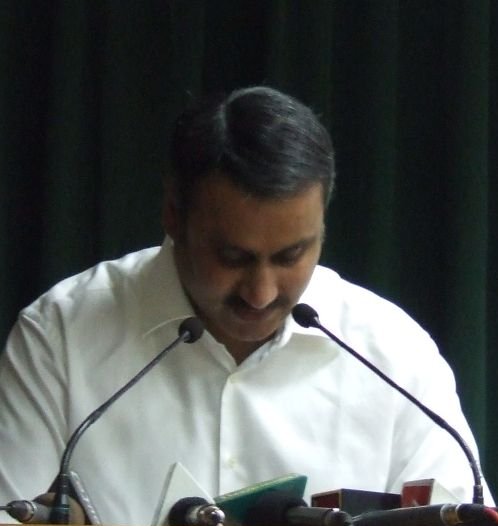
The allocation of funds towards education in Tamil Nadu has seen a drastic decline, falling to approximately one-third of what it was 25 years ago, according to a statement by Pattali Makkal Katchi (PMK) Member of Parliament Anbumani Ramadoss.
The Chenab Times has learned that the lawmaker has raised significant concerns regarding the state’s budgetary priorities, highlighting a trend that he argues is detrimental to the future of the state’s human capital. Ramadoss pointed to historical data to illustrate the diminishing share of the state’s budget dedicated to the education sector over the past two and a half decades.
While the precise figures for the current year and the baseline 25 years ago were not detailed in the initial report, the assertion by the PMK MP suggests a critical shortfall in investment. He implied that this reduction in funding could have profound implications for educational infrastructure, teacher training, curriculum development, and overall access to quality education for students across Tamil Nadu.
Ramadoss’s concerns resonate with broader national discussions about the importance of sustained and adequate public spending on education as a cornerstone of economic growth and social development. Experts often emphasize that a significant portion of a nation’s or state’s budget should be earmarked for education to ensure a competitive workforce and an informed citizenry.
The trend, if accurate, poses a challenge to Tamil Nadu’s standing as a state that has historically prioritized development, including in its educational institutions. A decrease in funding could lead to overburdened teachers, outdated learning materials, and a decline in the quality of education imparted, potentially impacting the state’s ability to innovate and compete economically.
The PMK, a regional political party in Tamil Nadu, often focuses on issues related to social justice, education, and healthcare. Ramadoss, a former Union Health Minister, has a track record of raising critical policy issues in Parliament. His statement on education funding is likely to draw attention from the state government and educational stakeholders, prompting calls for a review of budgetary allocations.
The current state of education funding in Tamil Nadu, according to the MP, reflects a worrying shift in financial commitment. The decline to one-third suggests that for every rupee spent on education a quarter-century ago, only about 33 paise are now being allocated. This drastic reduction could manifest in various ways, including reduced per-student spending, diminished resources for research and higher education, and potential cuts to essential educational programs.
This situation underscores the broader challenge faced by many states in balancing fiscal constraints with the imperative to invest in human development. The effectiveness of educational policies and outcomes is intrinsically linked to the financial resources made available. A consistent decrease in budgetary allocation over an extended period can have cumulative negative effects that are difficult to reverse.
Ramadoss’s statement implies a need for a thorough examination of the state’s budget and expenditure patterns concerning education. It also raises questions about the long-term vision for Tamil Nadu’s development and its commitment to ensuring that future generations are equipped with the knowledge and skills necessary to thrive in an increasingly competitive global landscape. The urgency of addressing this issue is paramount for the state’s continued progress and its ability to maintain its developmental trajectory.
The specific period of 25 years referenced by the MP would likely span from the late 1990s to the present. During this time, Tamil Nadu has seen various governments, each with its own fiscal policies and priorities. A detailed analysis of budget documents from these periods would be necessary to fully substantiate the claim and understand the precise reasons behind the alleged decline in education funding. The implications for the state’s economy, social equity, and its position in national development indices remain a critical point of concern following the MP’s statement.


The Chenab Times News Desk