


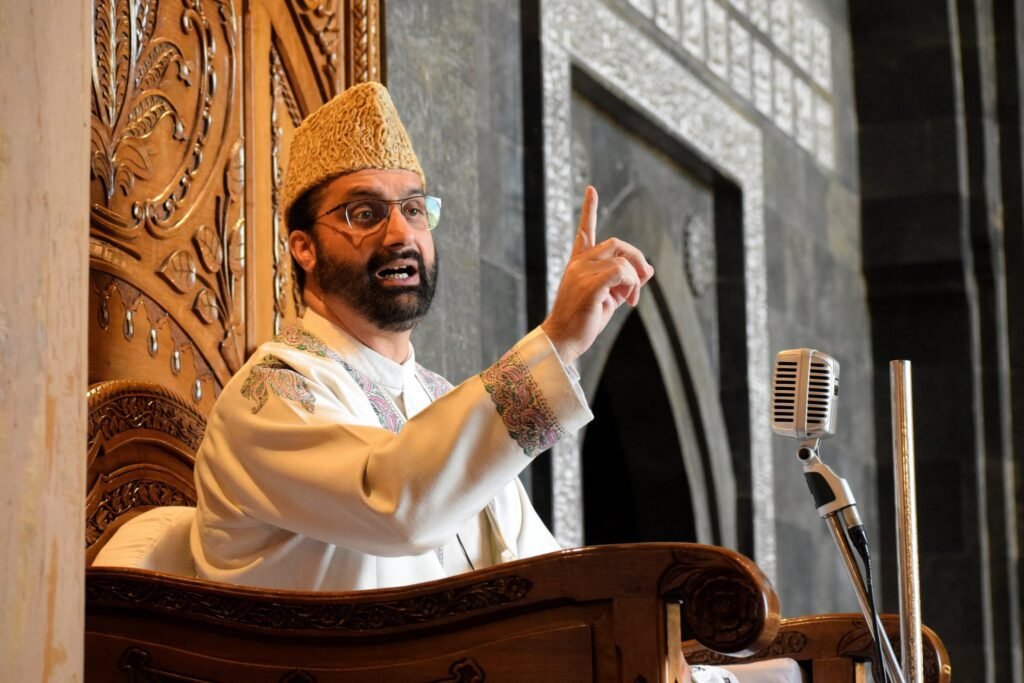
Srinagar, Jammu and Kashmir: Mirwaiz Umar Farooq, the influential religious leader and chief preacher of Kashmir, stated on Friday that he has been placed under house arrest, preventing him from leading congregational prayers at the historic Jamia Masjid.
The Chenab Times has learned that the Mirwaiz took to the social media platform X to voice his grievance, posting, “Placed under house arrest yet again, on the eve of the blessed month of Rabi-ul-Awwal. The repeated and arbitrary restrictions imposed on Fridays are highly condemnable.” He accompanied his statement with CCTV images purportedly showing police personnel stationed outside the entrance to his residence in the Nigeen area of Srinagar.
Questioning the necessity of these restrictions, especially in light of official pronouncements of normalcy in the region, the Mirwaiz remarked on the credibility of such claims. He stated, “if the authorities themselves do not trust their own ‘narrative of ‘normalcy’ enough to repeatedly prevent me from going to Jamia Masjid, what credibility does that narrative have?”
The cleric extended greetings to Muslims throughout Jammu and Kashmir and across the globe on the commencement of the Rabi-ul-Awwal month, a significant period in the Islamic calendar marking the birth anniversary of Prophet Muhammad.
The alleged house arrest comes at a time when authorities often impose curbs on movement in Srinagar’s old city areas, particularly on Fridays and during significant religious or political events, citing security concerns. The Jamia Masjid, a centuries-old congregational mosque, is a central site for religious gatherings in the Kashmir Valley.
Mirwaiz Umar Farooq, a prominent figure in Kashmiri politics and religious leadership, has been subject to various restrictions over the years. His statements often reflect the sentiments of a section of the local population regarding political and social issues.
The authorities have consistently maintained that any restrictions are implemented based on security assessments to ensure public order and prevent potential disruptions. However, such actions frequently draw criticism from political leaders and civil society groups who argue that they infringe upon fundamental rights and contradict claims of a return to normalcy.
The recurring instances of such detentions, particularly ahead of important religious observances, have become a point of contention, raising questions about the extent of civil liberties and freedom of movement in the region. The latest assertion by the Mirwaiz is likely to reignite debates surrounding these issues within Jammu and Kashmir.


The Chenab Times News Desk