


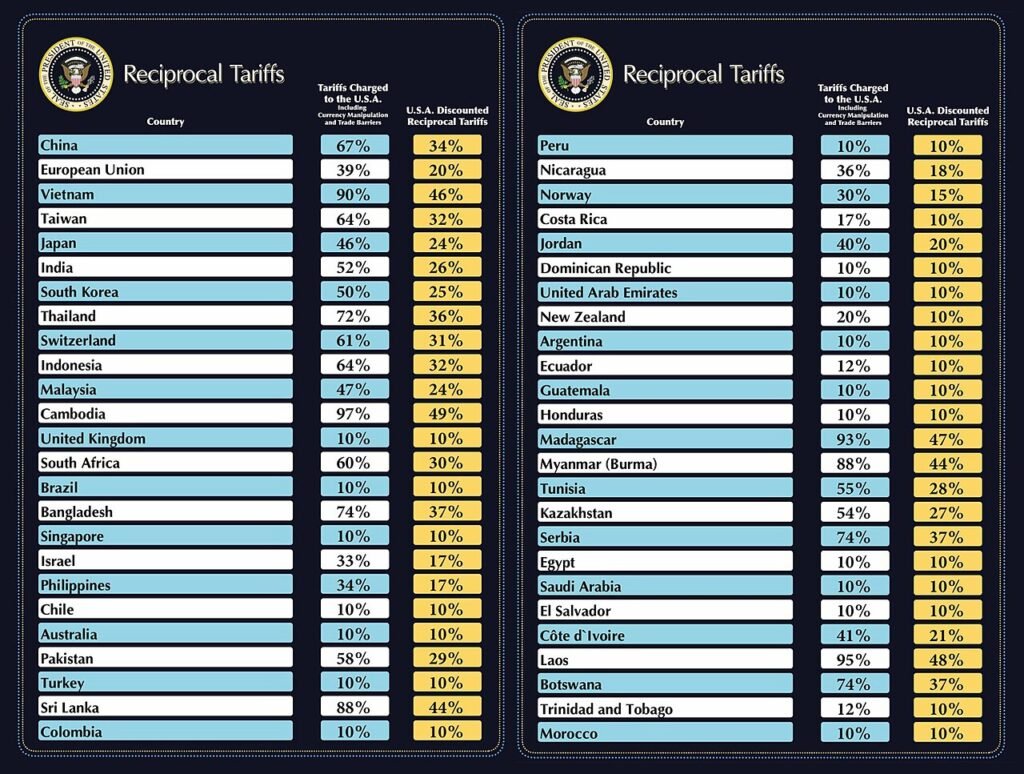
The United States is considering imposing significant tariffs of up to 50% on a range of Canadian goods, a move that could impact numerous sectors and items previously exempt from such measures.
The Chenab Times has learned that the proposed tariffs, reportedly championed by former President Donald Trump, would represent a substantial escalation in trade tensions between the two North American neighbors. While the exact list of targeted goods is still under discussion and subject to change, initial reports suggest a broad spectrum of products could be affected, potentially including items not typically seen as central to trade disputes.
The potential imposition of these tariffs stems from a broader reassessment of trade relationships by proponents of the policy, who argue for a more protectionist approach to safeguard domestic industries. Canada, as the United States’ largest trading partner, would inevitably face considerable economic repercussions from such sweeping measures. The Canadian government has historically opposed unilateral tariff actions, advocating instead for negotiated resolutions to trade disagreements.
Sources close to the discussions indicate that the proposed 50% tariff rate is intended to be a significant deterrent and a strong negotiating tool. The specific items being considered for these tariffs are reportedly diverse, ranging from agricultural products and manufactured goods to potentially more obscure or niche items. This broad approach could create uncertainty across various supply chains and consumer markets in both countries.
The possibility of these tariffs has raised concerns among industry groups and economists in both Canada and the United States. Businesses that rely on cross-border trade, particularly those involved in the automotive, agricultural, and manufacturing sectors, are closely monitoring the situation. Tariffs can lead to increased costs for consumers, reduced competitiveness for businesses, and potential retaliatory measures from the affected country.
The proposed trade action is part of a larger dialogue surrounding international trade policies and the renegotiation of existing agreements. Proponents argue that such measures are necessary to address perceived trade imbalances and unfair practices. Critics, however, warn of the potential for significant economic disruption and damage to long-standing trade partnerships.
Canada has previously engaged in retaliatory measures when faced with U.S. trade actions, such as the tariffs imposed on steel and aluminum imports. Any new round of tariffs could trigger a similar response, leading to a cycle of escalating trade barriers that could harm economies on both sides of the border. The specific impact will depend on the final list of goods targeted and the magnitude of the tariffs imposed.
The political backdrop to these discussions is also significant, with trade policy often playing a central role in bilateral relations and domestic political agendas. The outcome of these deliberations will have implications not only for the economies of Canada and the United States but also for the broader landscape of international trade relations. Official statements from both governments are being closely watched for further clarity on the potential scope and implementation of these tariffs.
It is understood that the process of identifying and finalizing the list of goods for tariff imposition involves inter-agency review within the U.S. government. Various departments and agencies are likely assessing the potential economic impact on different sectors, as well as the strategic implications of such a move. The specific criteria for selecting goods are not publicly disclosed, adding an element of uncertainty for affected industries.
The timeline for any potential implementation of these tariffs remains unclear. Such trade actions typically involve a period of public comment and consultation, as well as formal notification processes. However, the urgency expressed by proponents suggests that decisions could be made relatively swiftly once internal reviews are complete. The focus on specific, and potentially unusual, items underscores a strategy that may aim to exert pressure across a wide array of economic interests.
The potential for tariffs on a wide array of Canadian goods highlights the complex and often volatile nature of international trade negotiations. As the situation develops, businesses and governments will be seeking clearer guidance on the specific items that could be affected and the anticipated economic consequences. The implications for supply chains, consumer prices, and overall economic stability will be closely examined in the coming weeks and months.



Global Affairs Desk at The Chenab Times covers international developments, global diplomacy, and foreign policy issues through fact-based reporting, explainers, and analytical pieces. The desk focuses on major geopolitical events, diplomatic engagements, and international trends, with an emphasis on verified information, multiple perspectives, and contextual understanding of global affairs.