


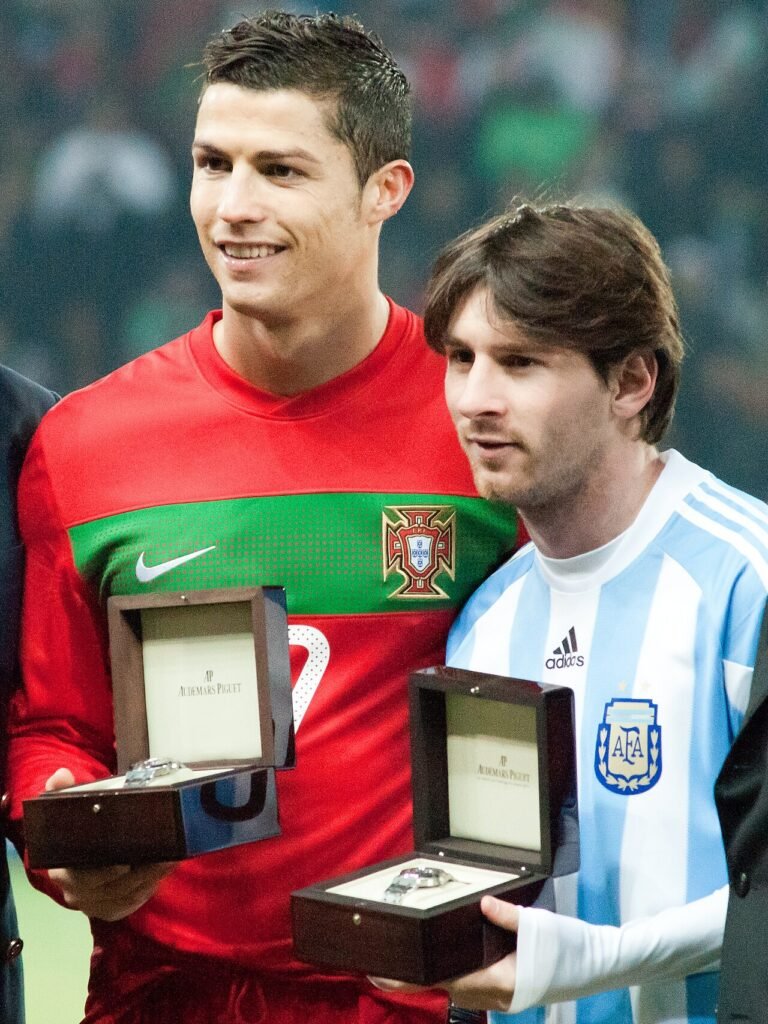
Lionel Messi, the celebrated Argentine football icon, has officially announced his retirement from the national team. The decision, confirmed in a heartfelt social media post, comes after a storied international career spanning over two decades.
Messi, 39, stated that the recent passing of his father, Jorge Messi, significantly influenced his decision, making him “even more convinced than before” to step away from international duty. He revealed that he had originally written his retirement statement on July 21, just two days after Argentina’s heartbreaking loss in the World Cup final, but chose to delay its release.
The announcement has sent ripples of emotion across Argentina, where Messi is revered as a national hero. Fans and former teammates have expressed profound gratitude for the joy and pride he brought to the country through his remarkable performances on the football pitch. His legacy includes leading Argentina to victory in the 2022 World Cup and securing two Copa América titles in 2021 and 2024, alongside winning the inaugural Finalissima in 2022.
In his statement, Messi conveyed a deep sense of fulfillment and peace, despite the personal pain associated with his departure. “I leave with the peace of mind and pride of having given you—alongside my teammates—moments we once only dreamed of,” he wrote. He acknowledged the passage of time and the emergence of new talent, stating, “Time is running short, chapters come to a close, and this is one that hurts me deeply.”
Messi’s international career was not without its challenges. He had previously announced his retirement from the national team in 2016 following a penalty shootout loss to Chile in the Copa América final, his fourth major final defeat at the time. However, immense public support and his own deep love for representing his country led him to reverse that decision.
The 2026 World Cup final, where Argentina was narrowly defeated by Spain, marked the culmination of Messi’s quest for ultimate international glory. He had hinted at his impending retirement during the tournament, acknowledging his physical limitations and the approaching end of his career, especially with the next World Cup scheduled for 2030 when he would be 43.
Reactions to Messi’s retirement have been swift and widespread. Argentinian President Javier Milei offered his thanks, calling Messi an “impossible man.” FIFA president Gianni Infantino lauded Messi’s “extraordinary international career that has inspired millions of people and redefined our sport,” noting that his “magical talent and humility will be remembered forever.” The Argentine Football Association expressed its gratitude, stating, “Thank you for everything, Leo. Thank you for representing Argentina. Thank you for making us dream.”
Former teammates, including Angel Di Maria and Leandro Paredes, shared emotional tributes on social media, thanking Messi for his leadership and contributions. Rodrigo De Paul highlighted Messi’s “unconditional love for our country” and his resilience. Players like Cristian Romero emphasized the profound impact Messi has had on them personally and on the nation.
While Messi’s international career has concluded, his contributions to football are indelible. He retires as Argentina’s most-capped player and all-time leading goalscorer, leaving behind a legacy that transcends statistics and speaks to the profound connection he forged with his nation through the beautiful game.



Global Affairs Desk at The Chenab Times covers international developments, global diplomacy, and foreign policy issues through fact-based reporting, explainers, and analytical pieces. The desk focuses on major geopolitical events, diplomatic engagements, and international trends, with an emphasis on verified information, multiple perspectives, and contextual understanding of global affairs.