


Srinagar, Sep 4: Jammu and Kashmir has been declared a fully literate Union Territory, marking a significant educational milestone with an overall literacy rate of 98.43 percent. The achievement was announced under the ULLAS-NBSK (New India Literacy Programme) initiative, aimed at promoting lifelong learning.
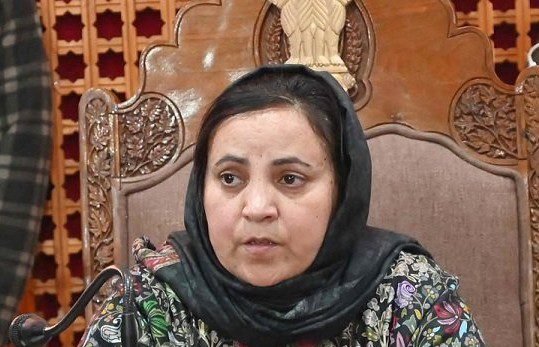
Information was available with The Chenab Times indicating that the announcement was made by the then Education Minister Sakeena Itoo. She lauded the collective effort of teachers, officials, volunteers, and learners across the Union Territory for their dedication in extending educational access to all communities.
In a statement posted on the social media platform X, the minister described the accomplishment as a historic moment of immense pride for every citizen of Jammu and Kashmir. She officially declared the Union Territory as fully literate, citing the impressive 98.43 percent literacy rate achieved through the ULLAS-NBSK program. Itoo emphasized that this success spans from the mountainous regions of Kashmir to the plains of Jammu, with educators and volunteers extending the reach of learning into every corner.
The minister extended her gratitude to the then Chief Minister Omar Abdullah for his leadership and commitment to strengthening the education sector and empowering the people of Jammu and Kashmir. She characterized the achievement not as an endpoint, but as the commencement of a new phase where education will continue to be a guiding force for peace, progress, dignity, equality, and prosperity in the region.
The ULLAS-NBSK programme, a central government initiative, focuses on basic education and life skills for all citizens, particularly targeting those who missed out on formal schooling. It aims to cover not only basic literacy and numeracy but also critical thinking, vocational skills, digital literacy, and financial literacy. The programme’s success in Jammu and Kashmir underscores the intensive efforts made at the grassroots level, involving extensive surveys to identify non-literate individuals and tailored learning modules to meet their needs.
This initiative has been instrumental in bridging educational gaps and fostering a culture of continuous learning. The high literacy rate signifies improved access to education, enhanced teaching methodologies, and increased community participation in educational activities. The declaration highlights a substantial improvement in the educational landscape of the Union Territory, contributing to its overall socio-economic development and empowering its citizens with essential knowledge and skills for a better future.


The Chenab Times News Desk