


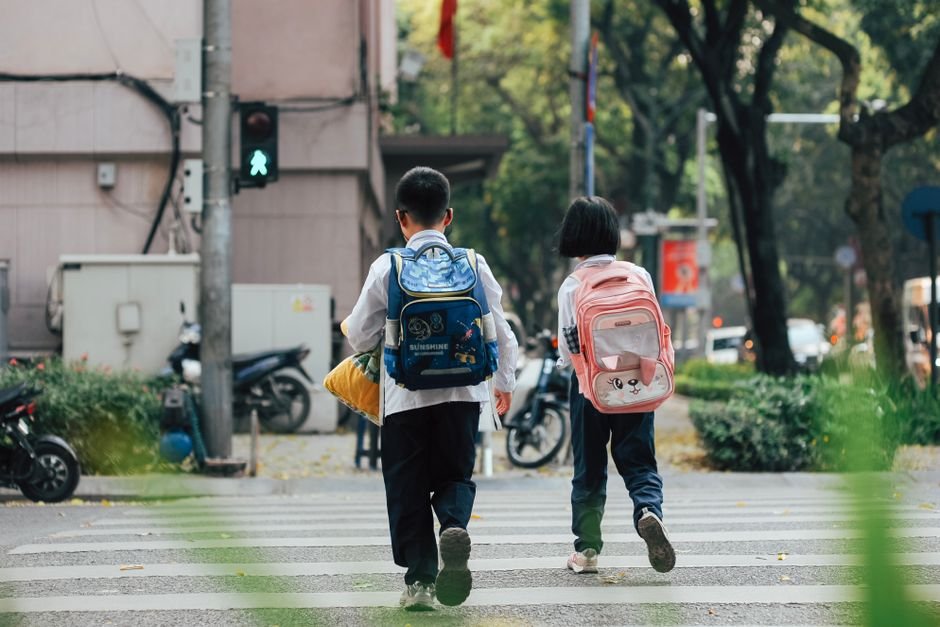
A significant majority of school-going adolescents in Delhi, approximately 65%, are compelled to cross major roads unsupervised on their daily commutes to school, underscoring critical safety challenges. Walking remains the predominant mode of transportation for these students, according to a recent study that highlights the urgent need for enhanced safety measures along school routes.
Study Reveals Alarming Road Crossing Habits Among Delhi Students
Information was available with The Chenab Times indicating that a comprehensive study involving 4,789 students, aged between 10 and 19 years, was conducted across four public schools situated in proximity to high-crash road segments, identified as “black spots,” within Delhi. The research, a collaborative effort by The George Institute for Global Health and supported by the Indian Council of Medical Research (ICMR), delved into the travel patterns of adolescents to and from their educational institutions, their comprehension of road safety signage, their adopted safety practices, and the risks they perceive during these daily journeys.
Pratishtha Singh, a public health researcher in the Injury Division at The George Institute for Global Health, stated that walking emerged as the most prevalent method of school travel, particularly among male students. Many students articulated concerns regarding road accidents, excessive speeding by vehicles, and incidents of robbery and harassment encountered during their daily commutes.
The study found that 80% of boys and 49% of girls walk from school to home, frequently traversing busy roads and highways without any adult supervision. The act of crossing major roads alone was also reported as a common occurrence. Similarly, a considerable number of students who commuted by bicycle navigated high-traffic roads independently.
Adolescents Face Diverse Safety Risks on School Commutes
The research further detailed a spectrum of safety concerns faced by adolescents during their daily journeys. Road crashes and high-speeding vehicles were identified as the most significant worries. However, fears also extended to personal safety, including risks of robbery and harassment. The study noted a distinction in these concerns, with boys more likely to report anxieties about robbery, while girls more frequently expressed fears related to gender-based harassment or “eve teasing.”
These findings critically emphasize the necessity of implementing measures to make school journeys safer. This can be achieved through a multifaceted approach involving people-centric infrastructure development, strict enforcement of traffic regulations, and more effective road safety education programs. Pratishtha Singh articulated that the school commute is an integral part of an adolescent’s daily life, often requiring them to navigate busy roads and make independent safety decisions. She stressed that the focus should shift from solely individual behaviour to creating an environment that intrinsically supports safe travel. Enhancing safety for school journeys necessitates improvements in infrastructure, robust enforcement, and educational initiatives that accurately reflect the daily realities faced by young people.
The study also suggested that regular exposure to traffic risks might lead some hazards to be perceived as ordinary aspects of daily life. Moreover, it highlighted distinct differences in how boys and girls experience safety during their travel. A significant portion of the surveyed students, nearly 60%, demonstrated a poor understanding of common road safety signs, with particularly low recognition of signs specifically relevant to school zones and pedestrian areas.
Recommendations for Improved Road Safety Education and Infrastructure
Researchers proposed that traditional classroom-based road safety education might not suffice on its own. They recommended exploring interactive methodologies such as simulations, peer education, and scenario-based learning to aid adolescents in better comprehending and retaining road safety information. Jagnoor Jagnoor, Head of Injury Prevention at The George Institute for Global Health, added that the study also identified deficiencies in the use of protective equipment. Among students travelling as pillion riders on motorcycles, 39% of boys and 46% of girls reported never using a helmet. Similarly, seatbelt usage among the smaller group travelling by car was found to be low and inconsistent.
Jagnoor stressed that the onus of road safety cannot be placed solely on adolescents. If children are walking and cycling to school, the surrounding roads and streets must be designed to ensure their protection. This includes the implementation of dedicated pedestrian pathways, improved street lighting, traffic calming measures, and protected crossings, coupled with effective enforcement. She concluded by stating the imperative to place people, especially children and other vulnerable road users, at the forefront of urban planning strategies.


The Chenab Times News Desk