


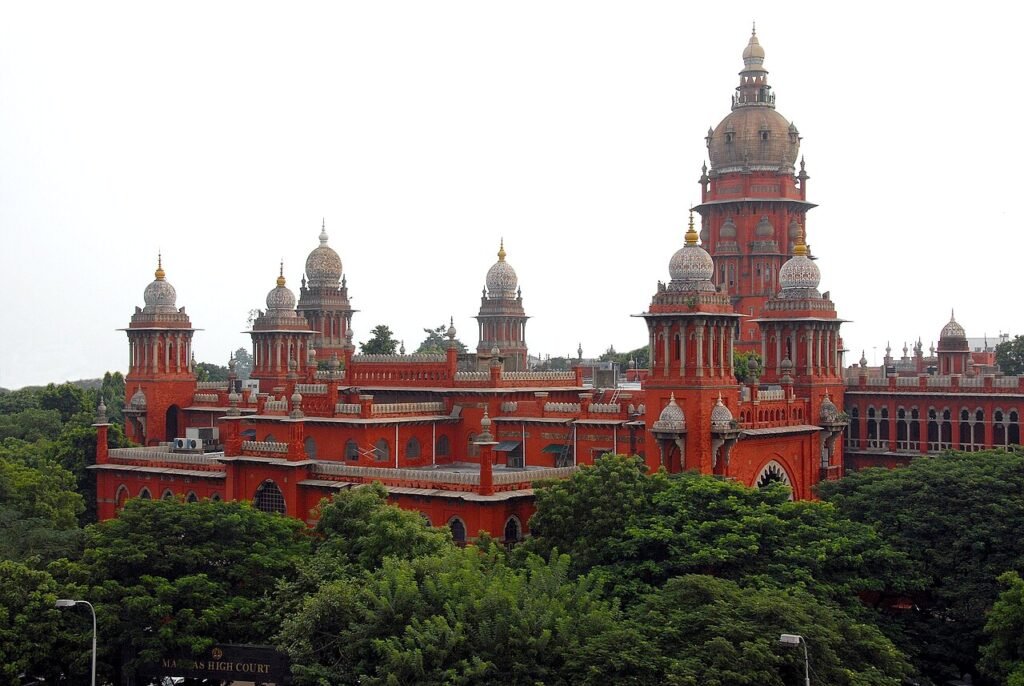
A judge of the Madras High Court has remarked that former MLAs who resign their seats and then seek re-election in the ensuing by-elections may be considered to be insulting the voters. This observation came during a hearing concerning petitions that challenge the acceptance of resignations by certain legislators.
Background of the Case
The remarks were made in the context of multiple petitions filed before the Madras High Court challenging the decisions of the Tamil Nadu Assembly Speaker to accept the resignations of several MLAs. These MLAs had contested and won elections on the ticket of one party, only to resign shortly after and join another political party, often the ruling one. The petitions argue that such actions undermine the democratic process and can be seen as a circumvention of anti-defection laws.
Information available with The Chenab Times indicates that the issue involves several former All India Anna Dravida Munnetra Kazhagam (AIADMK) MLAs who, after the recent Assembly elections, resigned from their seats and joined the ruling Tamilaga Vettri Kazhagam (TVK) party. The acceptance of their resignations by the Speaker and the subsequent notification of vacancies have been contested by the AIADMK.
Judicial Scrutiny of Resignations
The Madras High Court has been actively hearing several cases related to these resignations. In one instance, a Division Bench comprising Chief Justice Sushrut Arvind Dharmadhikari and Justice G Arul Murugan issued notices to the Speaker, the Election Commission of India (ECI), and the concerned MLAs regarding petitions challenging the acceptance of resignations. The court noted that the Speaker’s role involves inquiring whether a resignation is voluntary and genuine, as per constitutional provisions.
The court has also expressed concerns about the potential for complex legal issues if by-elections are conducted while election petitions challenging the original election results are still pending. A significant development was the court’s interim order restraining the ECI from issuing notifications for by-elections to five vacant Assembly constituencies. This order was based on the argument that pending election petitions could lead to a situation where two individuals claim the right to represent the same constituency.
Legal Arguments and Constitutional Provisions
Legal arguments presented in court have centered on Article 190(3)(b) of the Constitution, which pertains to the vacation of seats by members of a legislative assembly. The contention has been raised that the Speaker must conduct a thorough inquiry to ascertain the voluntary and genuine nature of a resignation, and that simply accepting it without due diligence, especially when anti-defection proceedings are underway, is problematic.
The AIADMK has argued that the resignations were accepted without the mandated inquiry and that this process was used to bypass scrutiny and potentially circumvent anti-defection laws. They have sought quashing of the Speaker’s orders and a stay on by-elections until a decision is taken on the disqualification proceedings.
Disqualification Proceedings and Party Condonation
Parallel to the cases concerning resignation acceptance, the High Court has also addressed matters related to disqualification proceedings against MLAs who allegedly voted against their party whip. In a significant ruling, the court upheld the Speaker’s decision to drop disqualification proceedings against 21 AIADMK MLAs. The court reasoned that the AIADMK, through its general secretary, had condoned the actions of these members, allowing them to continue representing the party.
The court stated that since the party had condoned the act and the members continued to represent AIADMK, disqualification under the Tenth Schedule of the Constitution did not arise. A Public Interest Litigation (PIL) challenging the Speaker’s decision to drop these proceedings was dismissed, with the court asserting that the petitioner lacked the locus standi to interfere in the internal affairs of a political party.
Broader Implications for Defections and Elections
The ongoing legal battles highlight a broader concern about the practice of MLAs resigning their seats after being elected, allegedly to switch parties or to escape disqualification proceedings, thereby necessitating by-elections. Petitions have also sought directions for the ECI to introduce measures such as ‘election expenditure security deposits’ to recover by-poll costs from resigned legislators who seek re-election, or to implement a statutory cooling-off period.
The judicial interventions, including the stay on by-elections and the observations made by judges, underscore the complexities surrounding legislative integrity, party discipline, and the electoral process in India. The courts are examining whether current legal frameworks adequately address the practices of resignation and party switching by elected representatives and their impact on public mandate and resources.


The Chenab Times News Desk