


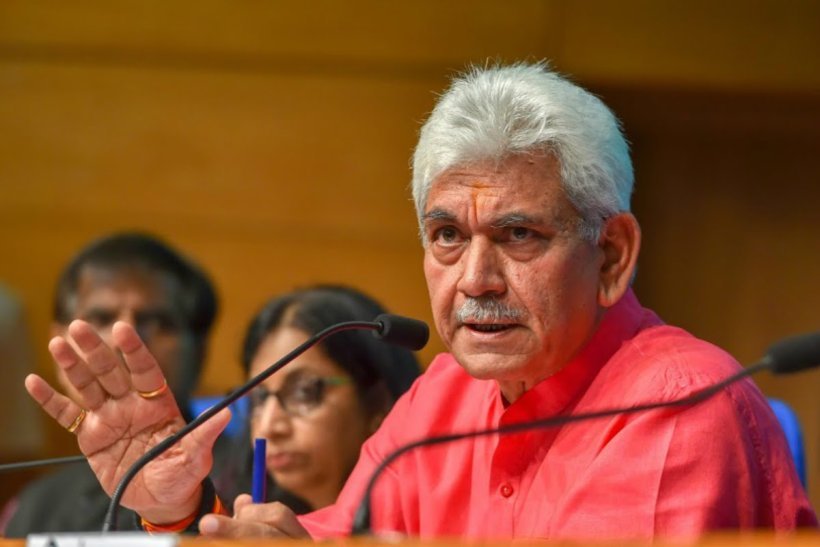
Jammu, September 18: Jammu and Kashmir Lieutenant Governor Manoj Sinha on Friday underscored the critical importance of dismantling drug-smuggling networks, highlighting their direct connection to narco-terrorism and their detrimental impact on peace and security within the Union Territory.
Information was available with The Chenab Times that Sinha called for a concerted and sustained approach involving multiple agencies to disrupt these illicit operations. His remarks came during the launch of a documentary and collage exhibition focused on the ‘Nasha Mukt Bharat Abhiyan’ at the University of Jammu.
The Lieutenant Governor recalled the initiation of the ‘Nasha Mukt Jammu Kashmir Abhiyan’ in 2020. Building on this foundation, a comprehensive 100-day campaign was launched in April 2026. This initiative extended its reach beyond formal events, engaging villages, schools, universities, and families across the region to foster a drug-free environment.
Sinha described the campaign as a people’s movement, propelled by initiatives like Padyatras (foot marches) and widespread awareness drives, complemented by administrative actions. He acknowledged the significant contributions of women, youth clubs, teachers, doctors, civil society groups, and religious leaders in disseminating information and providing support for rehabilitation efforts.
He outlined a three-pronged strategy essential for combating drug abuse: dismantling supply chains, raising public awareness, and facilitating rehabilitation. In line with this strategy, the administration introduced the Rehabilitation and Socio-Economic Reintegration Scheme for Drug Abuse Victims in 2026, aiming to provide a structured pathway for recovery and reintegration.
Addressing the youth directly, Sinha urged them to actively engage their peers, challenge misconceptions surrounding drug use, and offer support to individuals struggling with addiction. He stressed that awareness, robust family support, timely intervention, and effective rehabilitation are indispensable components for achieving lasting change in combating drug abuse.


The Chenab Times News Desk