


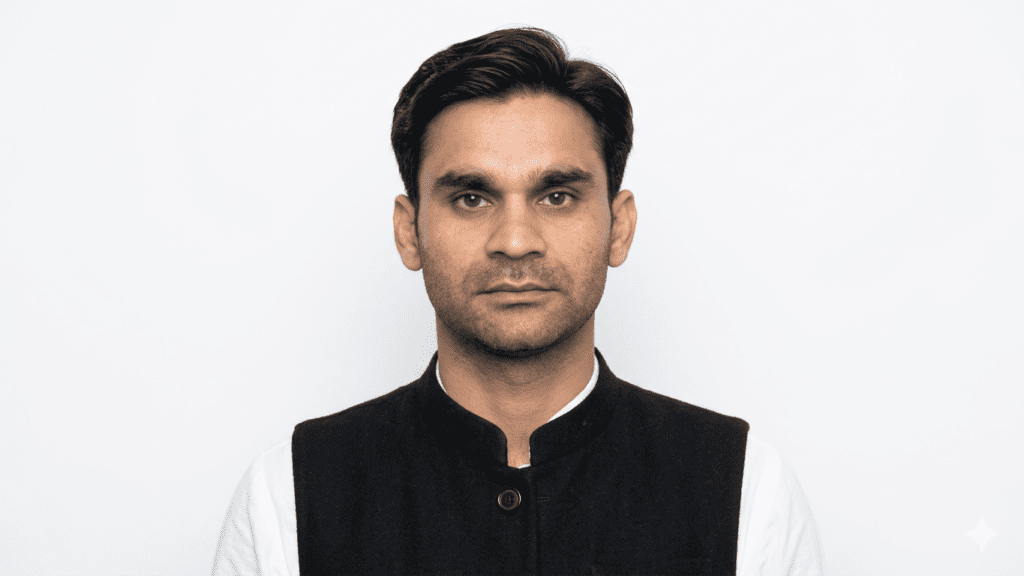
Srinagar, Sep 20: A senior Peoples Democratic Party (PDP) MLA has introduced a private member’s bill in the Jammu and Kashmir Legislative Assembly aimed at tackling the declining fertility rate in the region. The proposed legislation, titled the ‘Protection of Kashmir’s Future Generations from Demographic Decline and Advancement of Women, Adolescent Girls, Maternal and Child Health Bill, 2026’, also known as the ‘Maa-Beti Aur Aane Wali Naslein Bachao Bill, 2026’, seeks to establish a comprehensive framework for enhancing healthcare, education, and social support for women and adolescent girls.
Information was available with The Chenab Times that the bill has been submitted to the Assembly Secretariat and is slated for consideration during the upcoming 10-day Autumn session commencing on September 21. The proposed law integrates measures for women’s health and empowerment with voluntary approaches to address the long-term implications of consistently below-replacement fertility levels.
The statement of objects and reasons accompanying the bill highlights declining fertility and evolving family structures as significant demographic shifts within Jammu and Kashmir. Citing data from the National Family Health Survey-5, the bill points out that the total fertility rate in the Union Territory stands at approximately 1.4 children per woman, falling short of the conventional replacement-level fertility rate of 2.1.
The bill elaborates on the potential consequences of this demographic transition, including impacts on the future age structure of society, inter-generational support mechanisms, the viability of rural communities, labour force availability, social security provisions, and the overall sustainability of families and communities. It further draws a connection between this demographic shift and increasing educational and economic pressures on young individuals, leading to delayed marriages and childbearing, alongside broader concerns regarding the health and well-being of women and adolescent girls.
A cornerstone of the proposed strategy is the establishment of a ‘voluntary, non-coercive and inclusive Family Support and Demographic Stabilisation Scheme.’ The objective of this scheme is to mitigate economic and social obstacles that hinder family formation. Potential support mechanisms include financial assistance, educational scholarships, childcare support, maternity aid, housing-related assistance, nutritional support, healthcare services, and crèche facilities.
Furthermore, the bill suggests offering graded financial and educational support to eligible families raising two or more children. This support could encompass additional social security benefits and scholarship opportunities. The legislation also mandates the stringent, transparent, and time-bound enforcement of the Pre-Conception and Pre-Natal Diagnostic Techniques (Prohibition of Sex Selection) Act, coupled with enhanced oversight of ultrasound and diagnostic facilities.
The proposed framework includes provisions for periodic inspections, verification of records, and compliance audits, with violations to be addressed under relevant central legislation. A confidential system for reporting suspected sex-selection activities is also proposed. The identities of complainants would be protected as much as legally permissible, and the government may institute a reward system for information leading to successful enforcement actions, provided safeguards are in place against false or malicious complaints.
The bill advocates for sustained public awareness campaigns against sex selection, female foeticide, and discrimination against the girl child, as well as against dowry-related practices and the denial of education to girls. To facilitate the monitoring of demographic changes, the bill proposes the creation of a Jammu and Kashmir Demographic Research and Monitoring Cell.
This proposed body would be tasked with studying fertility trends, age structure, marriage patterns, maternal and child health, female education, migration, workforce participation, and economic factors influencing family formation. It would also be responsible for publishing an annual ‘Jammu and Kashmir Demographic and Family Well-being Report,’ providing an institutional mechanism for tracking demographic and family-related indicators.
The bill further outlines the establishment of a Kashmir Girls and Women’s Health Mission to coordinate implementation. This mission would encompass community awareness programs, school and college initiatives, menstrual health campaigns, awareness about Polycystic Ovary Syndrome (PCOS), nutrition and anaemia programs, reproductive health camps, maternal and child health awareness, educational continuation efforts, and demographic research.
Additionally, the proposal includes the formation of a Jammu and Kashmir Council for Women, Girls and Future Generations, along with district-level committees. These committees would monitor critical areas such as the availability of free sanitary products, maternal health services, facilitating educational re-entry for women, child healthcare, and the effective implementation of government schemes.
The bill acknowledges that its implementation will necessitate public funding for various services, including reproductive health clinics, sanitary products, vending machines, menstrual waste management facilities, health screenings, educational scholarships, re-entry programs, childcare facilities, maternal and child health services, community outreach, and demographic research. It suggests adequate budgetary allocation and the creation of a dedicated ‘Women, Girls and Future Generations Fund’, with all expenditures subject to applicable financial rules and audit procedures.
A specific clause within the bill proposes the establishment of a 100-bed Maternity and Child-Care Hospital in Pulwama district, located in south Kashmir. This hospital would offer comprehensive services, including antenatal and obstetric care, high-risk pregnancy management, emergency obstetric services, neonatal intensive care, paediatric care, diagnostic services such as ultrasonography, postnatal care, breastfeeding support, and maternal nutrition programs.
The bill’s policy declaration articulates its broader vision, emphasizing measures to ensure that girls do not have to discontinue their education due to unaffordability of menstrual products, and that young women are not compelled to abandon their studies because of marriage or motherhood. The overarching objective, as stated in the bill, is not to control women or dictate family size, but rather to dismantle economic, educational, healthcare, and social barriers that impede motherhood, education, healthcare, and family life. This is to be achieved while upholding the constitutional dignity, equality, privacy, and autonomy of women and girls.


The Chenab Times News Desk