


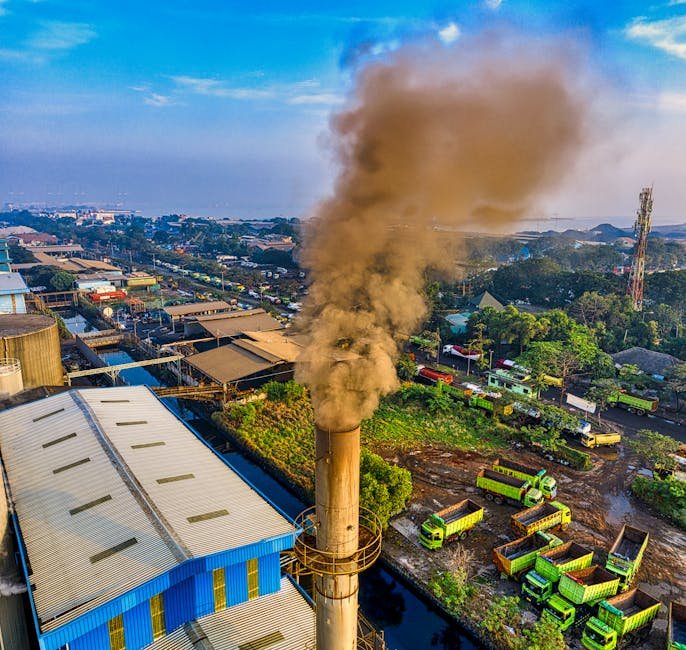
The Commission for Air Quality Management (CAQM) in the National Capital Region (NCR) has convened a review meeting to assess the enforcement measures and crackdowns against polluters across the region. This meeting comes as the air quality in Delhi and surrounding areas has already deteriorated to a “moderate” level, preceding the winter months when pollution typically escalates significantly.
CAQM Examines Anti-Pollution Efforts in Delhi-NCR
Information was available with The Chenab Times indicating that the commission, a statutory body tasked with managing air quality in the NCR, has been closely monitoring the situation. The review focused on the effectiveness of existing strategies and the level of compliance among various industrial and commercial entities operating within the region. The proactive stance by the CAQM aims to preempt the severe air pollution episodes that often characterize the post-monsoon period in North India.
The commission’s mandate includes the development and implementation of a comprehensive air pollution control action plan for the NCR, which comprises Delhi, Haryana, Uttar Pradesh, and Rajasthan. Enforcement of stringent environmental norms, including directives related to industrial emissions, vehicular pollution, dust control at construction sites, and the burning of agricultural residue, forms a crucial part of the CAQM’s operational framework. The recent review likely scrutinized reports from various enforcement agencies and local authorities regarding the implementation of these directives.
During the meeting, officials from the CAQM likely reviewed data pertaining to pollution levels, inspections conducted, and penalties imposed on non-compliant units. The commission has previously issued various directions aimed at curbing sources of pollution, such as the prohibition of certain highly polluting fuels and the mandatory use of dust suppression measures. The effectiveness of these measures in bringing down particulate matter (PM2.5 and PM10) and other harmful pollutants is a key area of focus for the CAQM.
The review also likely involved discussions on inter-state coordination, as air pollution does not respect administrative boundaries. Collaborative efforts between the governments of Delhi, Haryana, Uttar Pradesh, and Rajasthan are essential for a unified approach to pollution management in the NCR. The commission often facilitates such coordination, ensuring that pollution control strategies are implemented uniformly across the region.
Specific attention is typically paid to sectors that contribute significantly to air pollution, including thermal power plants, industries operating on non-PNG fuels, diesel generator sets, vehicular traffic, and construction activities. The CAQM has been progressively tightening norms for these sectors, encouraging the adoption of cleaner technologies and fuels. The review meeting would have assessed the progress made in these areas and identified any bottlenecks or challenges hindering effective enforcement.
The commission’s decisions and recommendations stemming from such reviews often lead to the issuance of further directions to various stakeholders, including state governments, pollution control boards, and local bodies. These directions can range from imposing stricter emission standards to implementing temporary bans on certain polluting activities during periods of severe air quality. The objective is to ensure that the air quality in the densely populated NCR improves and remains within safe limits, safeguarding public health.
As the region braces for the onset of winter, the CAQM’s ongoing efforts to monitor and control air pollution are critical. The commission’s periodic reviews serve as a vital mechanism to ensure accountability and adapt strategies based on real-time environmental conditions and the efficacy of implemented measures. The outcomes of this review are expected to influence the enforcement priorities and action plans in the coming months, with a strong emphasis on mitigating the rise in pollution levels during the critical winter period.


The Chenab Times News Desk