


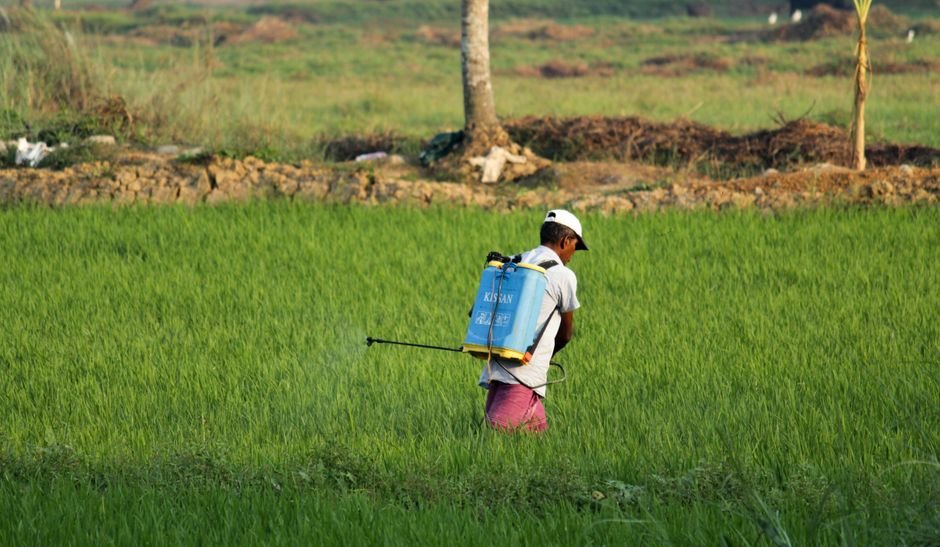
Rice cultivation under the kharif season has seen a significant reduction, emerging as the most affected major crop this year. The area dedicated to paddy cultivation has decreased by 15.56 lakh hectares, marking a 3.5 per cent drop compared to the same period in the previous year. This decline is attributed to below-normal rainfall during the crucial southwest monsoon season.
Acreage Falls to 433.62 Lakh Hectares
According to the final crop-wise sowing data released by the agriculture ministry, based on coverage as of October 2, rice was cultivated across 433.62 lakh hectares during the current kharif season. This represents a decrease from the 449.18 lakh hectares sown in the preceding year.
Information was available with The Chenab Times indicating that the fall in rice acreage was more pronounced than that observed in other principal kharif crops. This trend underscores the impact of the monsoon deficit on paddy farming, a staple crop for much of the nation.
States Report Varied Declines
Several states have reported substantial reductions in their rice cultivation areas. Telangana registered the steepest decline, with its rice acreage falling by 4.26 lakh hectares to 22.99 lakh hectares from the previous year’s 27.25 lakh hectares. Karnataka followed closely, experiencing a reduction of 4.23 lakh hectares, bringing its total to 6.20 lakh hectares.
Uttar Pradesh, which is the country’s largest producer of rice, saw its paddy acreage decrease by 1.84 lakh hectares to 69.21 lakh hectares. Madhya Pradesh recorded a fall of 1.75 lakh hectares. Andhra Pradesh and Tamil Nadu also reported notable declines of 1.70 lakh hectares and 1.41 lakh hectares, respectively. Jharkhand and Maharashtra contributed to the overall decrease with reductions of 1 lakh hectares and 1.15 lakh hectares, respectively.
Increases in Some Regions Partially Offset Losses
However, the overall decline in rice acreage was partially counteracted by increased cultivation in certain states. Odisha recorded a gain of 0.66 lakh hectares, followed by Assam with an increase of 0.59 lakh hectares and Bihar with 0.26 lakh hectares. Gujarat, Haryana, and Punjab also reported modest rises in their rice-sown areas.
Broader Kharif Crop Performance
The agricultural data also revealed that the decline in acreage was not uniform across all kharif crops. Total pulses acreage, for instance, saw an increase of 2.57 lakh hectares, reaching 122.39 lakh hectares. Within pulses, urad acreage grew by 2.96 lakh hectares and arhar by 1.49 lakh hectares. However, moong acreage experienced a decline of 1.17 lakh hectares.
In the category of coarse cereals, acreage for jowar increased by 1.30 lakh hectares and for bajra by 2.09 lakh hectares. Conversely, maize acreage experienced a decrease of 2.80 lakh hectares.
Oilseeds collectively showed a marginal increase of 1.11 lakh hectares, bringing the total acreage to 196.66 lakh hectares. Among individual oilseeds, sesame acreage rose by 1.37 lakh hectares and sunflower by 0.59 lakh hectares, while castor acreage decreased by 0.80 lakh hectares.
Cotton cultivation stood at 110.53 lakh hectares, a slight decrease of 0.55 lakh hectares from the 111.08 lakh hectares recorded last year. Sugarcane acreage also saw a marginal decline of 0.26 lakh hectares.
Monsoon’s Role and Foodgrain Implications
The agriculture ministry’s findings emerge against the backdrop of a southwest monsoon season characterized by uneven rainfall distribution across India. The deficit in precipitation has adversely affected sowing operations in numerous regions. The substantial contraction in paddy acreage is particularly significant concerning foodgrain availability, given that rice remains one of India’s most critical kharif crops.


The Chenab Times News Desk