


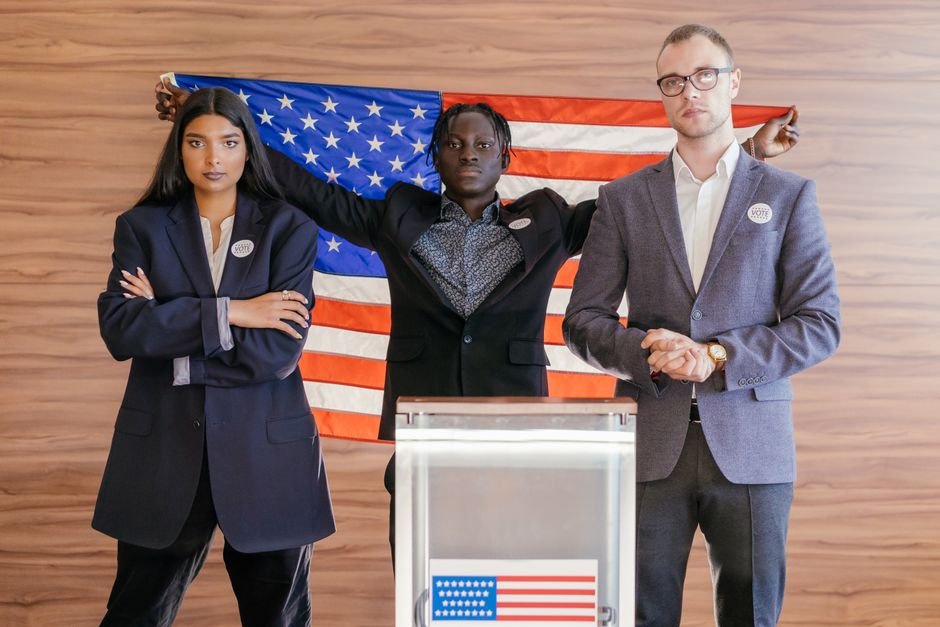
Record-breaking sums of money are being poured into the United States midterm elections, with total spending projected to surpass $16.7 billion, setting a new benchmark for non-presidential election cycles. This unprecedented financial investment underscores the high stakes of the contests, as both Republican and Democratic parties vie for control of the narrowly divided House and Senate. The scale of expenditure, encompassing attack ads, campaign staff salaries, and extensive get-out-the-vote operations, highlights a significant escalation in campaign finance trends.
According to estimates from OpenSecrets, a nonpartisan organization that tracks campaign finance data, federal candidates and committees alone are expected to spend approximately $8.9 billion. State candidates, party committees, and ballot measure committees are projected to raise an additional $7.8 billion, contributing to the overall record-breaking total. This figure significantly outpaces the previous record of $13.7 billion spent in 2018, adjusted for inflation, and dwarfs the $4 billion aggregate total for the 2014 midterms. The surge in spending is attributed to increased fundraising by congressional campaign committees and outside groups, including Super PACs, which can accept unlimited contributions.
The financial landscape of the 2022 midterms also reveals shifting strategies within the Republican party, with significant resource reallocation occurring in key battleground states. Reports indicate a notable shift of funds from North Carolina to Kansas by the Senate Leadership Fund, a super PAC aligned with top Senate Republicans. This move suggests a reassessment of electoral viability and a defensive posture in certain races, as the party seeks to maintain its Senate majority. The decision to bolster investment in Kansas, where Republican Senator Roger Marshall is seeking a second term, reflects a strategic pivot aimed at securing crucial votes.
This reallocation of resources comes as some Republican leaders express concerns about specific campaign environments. Donald Trump, commenting on the North Carolina race, conveyed apprehension about the prospects of the Republican candidate, Michael Whatley, facing Democratic former Governor Roy Cooper. The emphasis on Kansas, a state that Donald Trump carried by a significant margin in the last presidential election, underscores the party’s focus on retaining existing seats amid a challenging electoral map.
While overall spending is at historic highs, the effectiveness of massive campaign expenditures is also under scrutiny. Some reports suggest that in certain races, substantial spending may be backfiring, indicating that financial advantage does not automatically translate into electoral victory. The sheer volume of campaign advertising, with projections indicating spending on political ads could exceed $7.5 billion for the current cycle, highlights the pervasive role of media in shaping electoral outcomes.
The financial surge is partly fueled by large individual donors and billionaire “megadonors,” a trend that has become increasingly pronounced in recent election cycles. These major contributors are playing a significant role in funding Super PACs and other outside groups, which operate with considerable financial clout. Analysis of top donors reveals a consistent pattern of significant contributions from wealthy individuals to both Republican and Democratic aligned organizations, though Republican-affiliated groups have seen substantial inflows.
In terms of party committee fundraising, the 2022 election cycle saw combined efforts by the Democratic and Republican parties raise approximately $1.8 billion. The Democratic National Committee, Democratic Senatorial Campaign Committee, and Democratic Congressional Campaign Committee collectively raised $966 million and spent $980 million. Their Republican counterparts, the Republican National Committee, National Republican Senatorial Committee, and National Republican Congressional Committee, raised $875 million and spent $943 million. Despite these substantial figures, political party spending represented a smaller share of the total election-related spending compared to previous cycles, with candidates, Super PACs, and outside groups absorbing a larger proportion.
The influence of outside groups, particularly Super PACs, is a defining characteristic of the current campaign finance system. These organizations, often backed by wealthy donors, engage in extensive advertising and voter outreach efforts, operating independently of official campaign coordination. The fundraising and spending dynamics of these entities significantly shape the electoral battles, often dominating the airwaves with campaign messaging.
The scale of spending extends beyond federal races, with state and local campaigns also experiencing significant financial inflows. The overall expenditure across all levels of government reflects a broader trend of escalating campaign costs, necessitating robust fundraising efforts from candidates and affiliated organizations. This intensive financial environment raises ongoing questions about the role of money in politics and its impact on democratic processes.


Global Affairs Desk at The Chenab Times covers international developments, global diplomacy, and foreign policy issues through fact-based reporting, explainers, and analytical pieces. The desk focuses on major geopolitical events, diplomatic engagements, and international trends, with an emphasis on verified information, multiple perspectives, and contextual understanding of global affairs.