


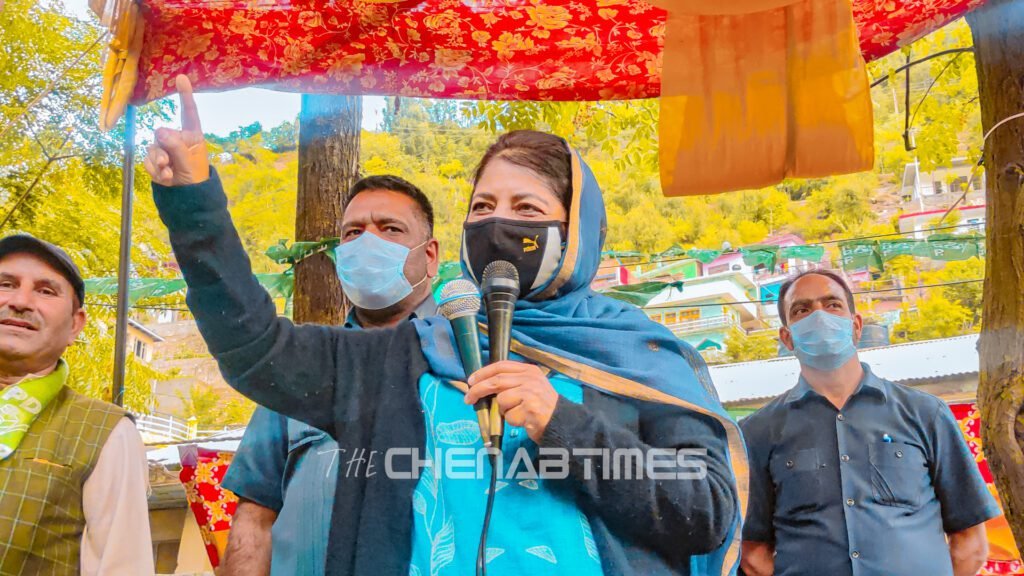
Srinagar, Oct 11: Peoples Democratic Party (PDP) president Mehbooba Mufti has voiced significant concerns regarding the opening of agricultural land and orchards in Jammu and Kashmir for commercial high-rise constructions. She warned that such policy shifts could pose substantial risks to the region’s food security, environmental stability, and public safety.
The Chenab Times has learned that Mufti, in a communication on the social media platform X, shared a post by PDP MLA Waheed Para which critically examined the administration’s Ease of Doing Business laws. Mufti questioned the long-term implications of allowing commercial development on land historically designated for agriculture.
Mufti stated, “In the name of development, J&K’s orchards and agricultural land are being opened up for commercial high rises, even as experts warn of catastrophic seismic and liquefaction risks.” She further elaborated, “This is not development. It is a dangerous betrayal of our land, our food security and our people’s lives.”
Adding to her critique, Mufti posed a critical question about accountability in the event of a disaster stemming from these regulatory changes. “Who will take responsibility when this reckless experiment turns into a disaster?” she inquired, highlighting potential legal and ethical ramifications.
Her remarks followed an earlier critique by Waheed Para, who had expressed reservations about the new Ease of Doing Business framework. Para argued that provisions designed to expedite construction approvals and permit commercial activities in residential zones could inadvertently weaken essential regulatory oversight and compromise established urban planning principles.
Para had also issued a warning that construction activities impacting drainage channels, wetlands, and floodplains could exacerbate Kashmir’s susceptibility to flooding. He drew a parallel to the devastating floods that affected the region in 2014, underscoring the potential for recurrence and increased damage.
The concerns articulated by the PDP leaders emerge within a broader discourse surrounding the Jammu and Kashmir administration’s recent regulatory modifications. These changes pertain to land use policies, building permission processes, and the stringency of environmental safeguards across the Union Territory.
While the administration has promoted these ease-of-doing-business reforms as a measure to streamline bureaucratic procedures and attract investment, opposition parties and some stakeholders have raised questions about the adequacy of protections for vital agricultural land, ecologically sensitive areas, and densely populated urban centers. The debate centers on balancing economic growth with the imperative of preserving the region’s natural resources and ensuring the safety of its residents.
The administration’s efforts to foster economic activity through regulatory reforms are facing scrutiny over their potential impact on the delicate ecological balance and the long-term viability of agricultural practices in Jammu and Kashmir. The discussions highlight a critical need for comprehensive impact assessments and robust regulatory frameworks to prevent unforeseen consequences.
Experts have pointed out the unique geological and environmental vulnerabilities of the Kashmir Valley, including its susceptibility to seismic activity and the critical role of its wetlands and natural drainage systems in mitigating flood risks. The current policy shift is being viewed by critics as potentially undermining these natural defenses.
The calls for greater transparency and accountability in land-use planning and construction regulations are expected to intensify as more details of the reforms are implemented. The PDP leaders’ statements reflect a segment of public opinion concerned about the pace and direction of development in the region, emphasizing the need for a more cautious and holistic approach.
The discourse also touches upon the broader national debate regarding sustainable development, where economic progress must be balanced against environmental preservation and community well-being. The situation in Jammu and Kashmir serves as a case study for the challenges involved in implementing development policies in ecologically sensitive and geographically distinct regions.
Further deliberations are anticipated on the specific provisions of the Ease of Doing Business laws and their application to agricultural and orchard lands. The coming months will likely reveal the extent to which the administration addresses these concerns and incorporates safeguards into its developmental agenda.


The Chenab Times News Desk