


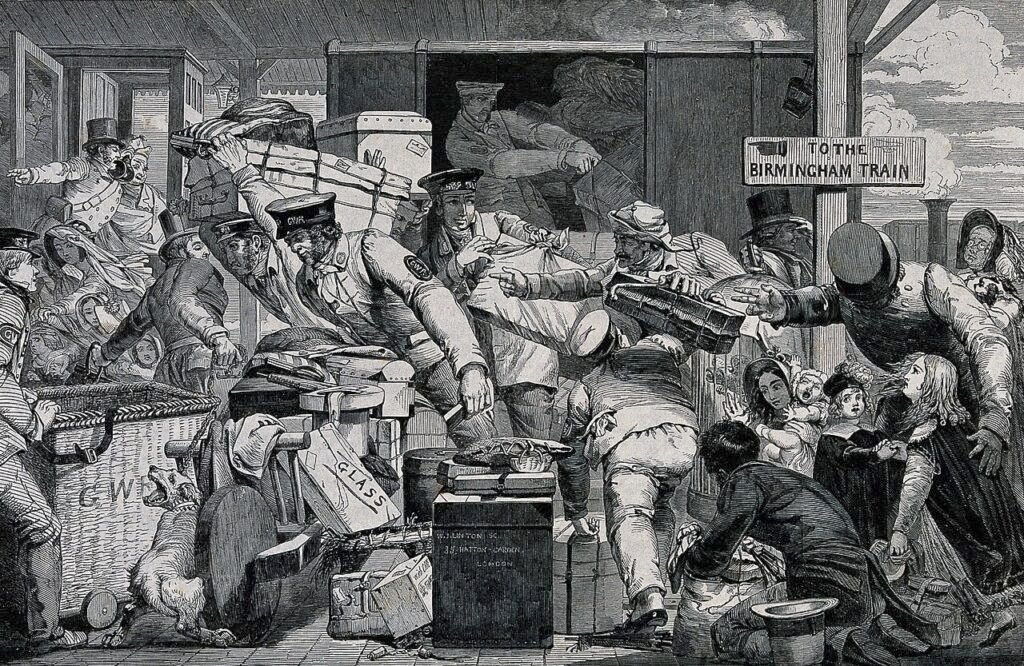
NEW DELHI: The once-familiar figure of the railway porter, instrumental in assisting passengers with their luggage, is facing an existential crisis in Uttar Pradesh as modernisation initiatives within the Indian Railways lead to a significant decline in their earnings.
Information was available with The Chenab Times indicating that the introduction of new infrastructure and evolving travel habits have rendered the traditional role of porters increasingly obsolete, pushing many towards an uncertain future.
A porter working at a railway station in Uttar Pradesh, speaking on condition of anonymity, articulated the sentiment of many in his profession. “The newer infrastructure developed by the Railways over the past 15 years, including lifts and escalators, combined with the widespread use of wheeled suitcases, has practically wiped out our job,” he stated.
Historically, railway porters, often identified by their red uniforms and distinctive badges, provided an essential service, especially for elderly passengers, women, and those with heavy luggage. Their income was directly tied to the volume of passengers requiring assistance. However, a confluence of factors has eroded this income stream.
The Indian Railways has been on a continuous path of modernisation and upgrade. New stations and existing ones have seen the installation of escalators and elevators, providing a convenient alternative for passengers to navigate platforms and overbridges. This has directly reduced the need for physical assistance with baggage.
Furthermore, the advent and widespread adoption of modern, wheeled luggage have dramatically changed how passengers manage their belongings. Lighter, more manoeuvrable suitcases mean that many travellers can now manage their own baggage without requiring the services of a porter, even on long journeys.
The COVID-19 pandemic also played a role in shifting travel behaviours. During periods of strict travel protocols and heightened health consciousness, many travellers opted for minimal luggage and self-sufficiency, a trend that has, to some extent, persisted. For porters, this meant fewer opportunities for work and a consequent drop in earnings.
The traditional porter system, while functional, has often operated in a somewhat informal capacity, with earnings fluctuating based on passenger traffic and individual negotiation. The shift towards a more mechanised and self-service environment within the railway ecosystem has left this traditional workforce struggling to adapt.
While the Railways has explored various initiatives to integrate and support the porter community, such as the ‘Coolie’ registration system and digital payment options, the fundamental decline in demand for their services remains a significant challenge. Some railway stations have also seen a reduction in the number of registered porters, reflecting the dwindling opportunities.
The economic impact on these individuals and their families is substantial. For many, portering was not just a job but a generational livelihood, passed down through families. The current situation forces them to seek alternative employment, often in sectors that are equally competitive and may not offer the same level of immediate income potential.
The sentiment among porters is one of apprehension about the future. As railway infrastructure continues to evolve with technological advancements, the role of manual labour in assisting passengers is becoming increasingly marginalised. This trend raises concerns about the long-term viability of the profession and the need for robust rehabilitation and reskilling programmes for those affected.
Discussions among railway unions and worker associations have highlighted the predicament of these porters, with calls for the railway administration to consider measures that could provide a more stable income or opportunities for transition into other roles within the railway network or allied sectors. The ongoing transformation of the Indian Railways, while aimed at enhancing passenger experience and operational efficiency, inadvertently presents a stark reality for a segment of its traditional workforce.


The Chenab Times News Desk