


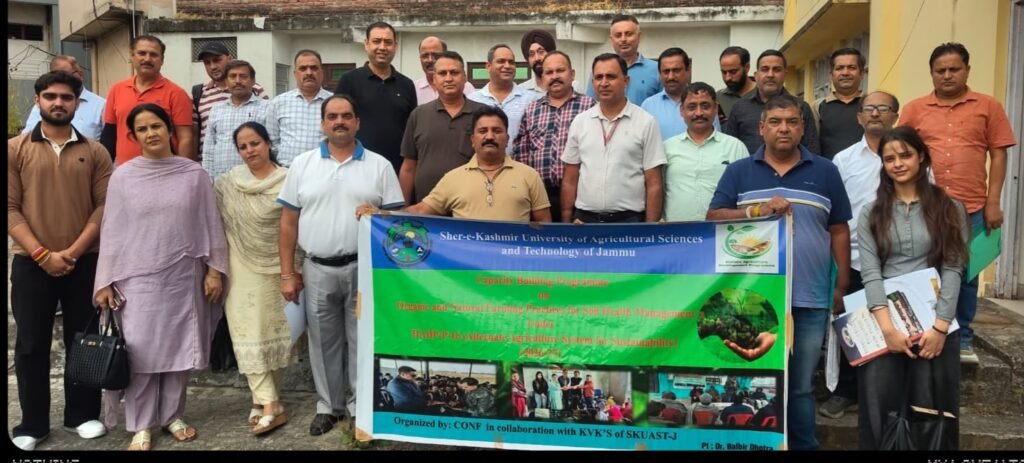
The programme focused on soil health management, natural farming techniques and the preparation of organic inputs to promote sustainable agriculture.
Krishi Vigyan Kendra (KVK), Udhampur, organised a one-day training programme on organic and natural farming practices for soil health management under the Holistic Agriculture Development Programme (HADP), Project No. 16, in Jammu and Kashmir.
According to details received by The Chenab Times, the programme was conducted under the leadership of Prof. B. N. Tripathi, Vice-Chancellor of Sher-e-Kashmir University of Agricultural Sciences and Technology of Jammu (SKUAST-Jammu), and the guidance of Dr. Amrish Vaid, Director Extension, and Dr. S. K. Gupta, Director Research. Officers from the Agriculture Department and allied departments attended the training.
The programme focused on promoting alternative agricultural systems, improving soil health and encouraging the adoption of organic and natural farming methods. It was organised under HADP-16, titled “Alternate Agriculture System for Sustainability”, which aims to support sustainable agricultural practices through technical training and the dissemination of farming technologies.
The HADP-16 project team, including Dr. Balbir Dhotra, Professor at SKUAST-Jammu’s Centre for Organic and Natural Farming, and Dr. A. P. Rai, contributed to the programme by sharing their technical knowledge and expertise on sustainable agricultural practices.
During their sessions, Dr. Dhotra and Dr. Rai highlighted the role of organic and natural farming in maintaining soil quality and supporting long-term agricultural sustainability. They also emphasised the importance of environmentally friendly farming methods and the need to encourage farmers to adopt practices that support soil fertility and reduce dependence on external agricultural inputs.
Mr. Sunil Gupta, Assistant Soil Chemist, delivered a session on soil health management, soil fertility improvement and the role of organic inputs in maintaining soil quality and productivity. The session addressed the importance of managing soil resources to support agricultural production over the long term.
A practical demonstration on the preparation of Jeevamrit, a bio-input used in natural farming, was also conducted during the programme. The demonstration provided participants with hands-on exposure to the preparation of on-farm inputs and their role in natural farming practices.
The training also highlighted the importance of capacity building and coordination among agricultural institutions and government departments for implementing sustainable farming initiatives. Technical training for departmental officers is intended to strengthen their ability to disseminate relevant agricultural practices and provide guidance to farmers at the field level.
The programme aimed to improve the technical understanding of officers from agriculture and allied departments and strengthen efforts to promote sustainable, eco-friendly and farmer-oriented agricultural practices in the region.
It concluded with an emphasis on continued collaboration among KVKs, the HADP-16 project team and the Agriculture Department and allied departments to advance the objectives of sustainable agriculture under the programme.

Saqib Zargar is a The Chenab Times staff reporter.