


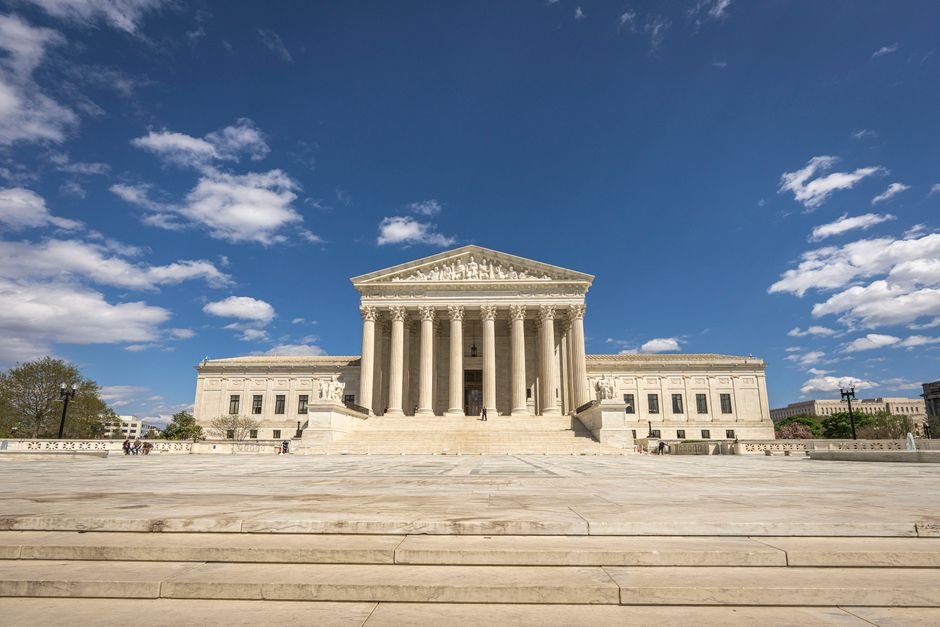
The Supreme Court has directed the Ministry of External Affairs (MEA) to consider issuing a public notice inviting families of Indian nationals who died while fighting in the Russia-Ukraine war to seek assistance and compensation. The apex court emphasized that the right to seek compensation must be enforced.
Information was available with The Chenab Times that the MEA, in its latest status report to a Bench comprising Chief Justice Surya Kant and Justice Joymalya Bagchi, informed that 51 Indians who fought in the conflict have died and 77 recruits remain untraced. The court instructed the MEA to file a fresh status report detailing the exact compensation provided by the Russian government to the families of six deceased individuals.
Additional Solicitor General Aishwarya Bhati, representing the Centre, informed the Bench that six compensation claims have been processed by the Russian government, with five claims being fully satisfied and one partially. The Bench noted that the right to compensation extends to the families of all 51 individuals who lost their lives in the conflict zone.
The court also directed the District Legal Services Authorities in Rajasthan, Punjab, Haryana, and Himachal Pradesh to adhere to previous orders mandating the provision of free legal aid to aggrieved families. This aid is intended for submitting claims, conducting DNA tests, and completing other necessary legal and administrative formalities.
ASG Bhati further disclosed that approximately 267 Indian nationals had joined the Russian armed forces. Of these, 51 have died and 139 have been discharged from military service. The Indian embassy in Russia is actively working to ascertain the whereabouts of 77 recruits, including seven confirmed missing by Russian authorities. The MEA’s submission indicated that officials are individually contacting affected families and facilitating their compensation claims.
The Bench acknowledged the challenges involved in securing compensation from Russia, including delays in DNA-based identification and the repatriation of mortal remains. The Additional Solicitor General assured the court that all possible efforts are being made to assist these families, highlighting that ongoing diplomatic and consular efforts are expected to yield positive results. She added that Russian authorities have been cooperative and the Indian government will continue to pursue measures to simplify the compensation process.
During the proceedings, the Bench also examined the case of Sikandar Singh, who received an eight-year prison sentence in Russia on charges of molestation. The court was urged to explore the possibility of transferring Singh to an Indian jail to serve the remainder of his sentence, a move that would require him to withdraw his appeal against conviction from the Russian appellate court.
Petitioners also sought action against agents allegedly involved in recruiting Indian nationals for the Russian armed forces under false pretences of employment. The ASG confirmed that a nodal officer has been appointed in the MEA, in line with an earlier court order, to coordinate with families of those affected by the war.
The Supreme Court had previously, on July 31, ordered the Centre to appoint a nodal officer in the MEA to liaise with the families of individuals who have died, gone missing, or suffered injuries while fighting in the Russia-Ukraine war. The court had also directed the MEA to facilitate DNA matching for mortal remains with family members. The current plea stems from allegations that travel agents duped Indian nationals, mostly from Rajasthan, Haryana, and Punjab, into joining the Russian Army after reaching Russia with promises of employment in sectors like hospitality.
According to the Bench’s observations, these individuals were allegedly enrolled in the Russian Army and deployed to war zones. The court noted that many have lost their lives, and while mortal remains of some have been repatriated to India after due verification, compensation for many families remains outstanding.


The Chenab Times News Desk