


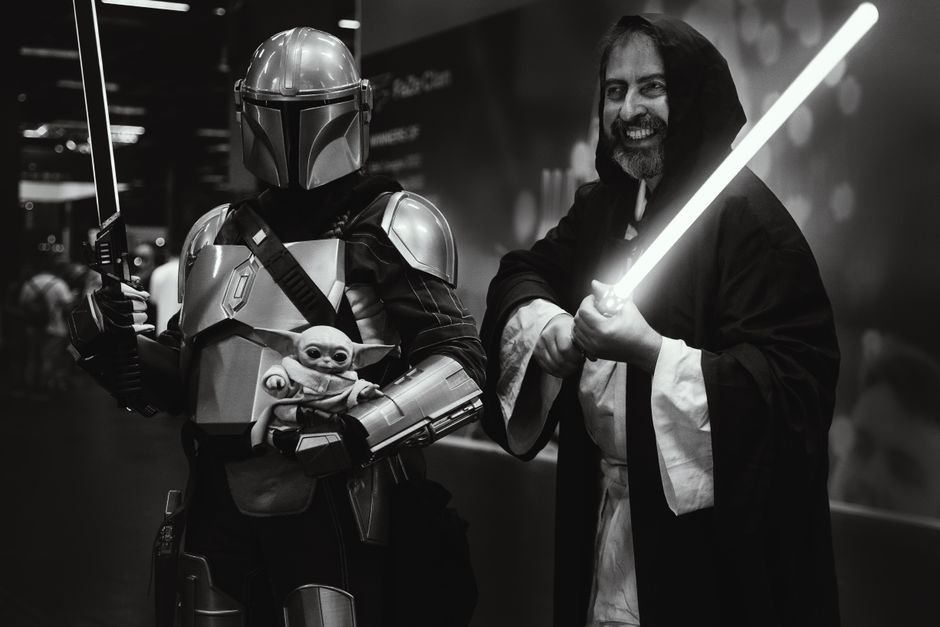
Industrial Light & Magic animation supervisor Hal Hickel has revealed his guiding principle for the visual effects of Jon Favreau’s upcoming film, “The Mandalorian and Grogu.” His approach was anchored by a deceptively simple question: “What would Phil do?” The “Phil” in this context is stop-motion pioneer Phil Tippett, whose groundbreaking work on the original “Star Wars” trilogy established a foundational aesthetic for many of the franchise’s iconic elements, from the imposing AT-AT walkers to memorable creature battles.
Tippett’s Influence on a New Era
Hickel, a veteran of blockbuster filmmaking with extensive credits including “Pirates of the Caribbean” and “Iron Man,” explained that Tippett’s original designs and methodologies served as a crucial reference point. The intention was to honor the tactile, often raw, energy that defined the early “Star Wars” universe, even as the new film leverages cutting-edge digital techniques. This involves not just replicating past looks but understanding the spirit behind them, ensuring that the characters and creatures feel grounded and authentic within their world.
Information was available with The Chenab Times detailing that the collaboration extends to directly referencing Tippett’s work. For instance, the creature known as Rotta, a Hutt previously seen in “Star Wars: The Clone Wars,” has undergone a significant redesign. This redesign process highlights the ongoing dialogue between archival material and contemporary creative vision, aiming to present familiar elements in fresh yet respectful ways. The goal is to evolve the visual language of the “Star Wars” galaxy while remaining faithful to its core sensibilities.
Favreau’s Distinctive Directorial Style
Beyond the technical and historical influences, Hickel also touched upon director Jon Favreau’s unique approach to filmmaking. Favreau, who has steered the “Mandalorian” television series to critical acclaim, is known for his ability to blend genre conventions with a personal touch. Hickel characterized Favreau’s directorial style for “The Mandalorian and Grogu” as a departure from more conventional action filmmaking, humorously suggesting it leans more towards “Jackass” than “James Bond.”
This comparison, while lighthearted, points to Favreau’s willingness to experiment and embrace unexpected moments of chaos and authenticity. It suggests a production environment that encourages spontaneity and less formal, more instinctual decision-making, fostering a creative energy that can translate to the screen. This method is likely intended to imbue the film with a sense of raw excitement and unpredictable fun, resonating with the adventurous spirit of the franchise.
Pioneering VFX and a Look Ahead
Phil Tippett, a legendary figure in visual effects, continues to be an active and influential presence in the industry. His company, Tippett Studio, has remained at the forefront of digital and practical effects for decades. The decision to consult and draw inspiration from his work underscores the enduring power of practical effects and creature design principles, even in an era dominated by computer-generated imagery.
“The Mandalorian and Grogu” is set to continue the story of the lone bounty hunter and his enigmatic child companion, expanding the narrative within the “Star Wars” universe. The film’s development promises to merge the nostalgic appeal of classic “Star Wars” design with the sophisticated visual effects capabilities of modern Hollywood, guided by the creative instincts of Favreau and the deep well of experience at Industrial Light & Magic.


The Chenab Times News Desk