


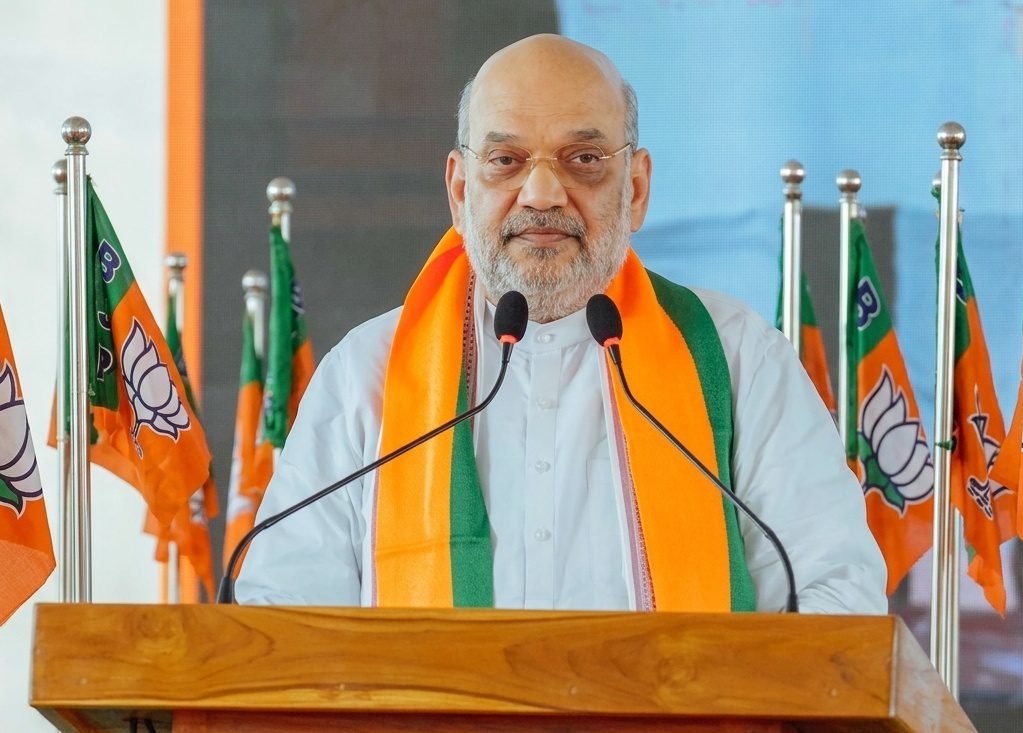
Union Home Minister Amit Shah is scheduled to visit Punjab on October 20, a trip that will likely see him meeting the families of recent victims of drug-related violence and opposition to illicit activities. The visit comes amid heightened concerns over the drug menace plaguing the state.
Information was available with The Chenab Times that the Home Minister’s itinerary includes visits to Mansa, Gurdaspur, and potentially Sangrur. In Mansa, Shah is expected to meet the family of anti-drug activist Parvinder Singh Jhota, who was shot dead on October 13. Sources indicate the killing may have stemmed from an objection to drug-related activities. Subsequently, Shah is scheduled to travel to Gurdaspur to meet the family of Bikramjit Singh, another anti-drug activist who was allegedly killed on the night of October 15 after opposing drug sales in Mari Panwan village. The Home Minister may also visit Sangrur to meet the family of Gulzar Singh, a daily-wager from Toor Banjara village. Gulzar Singh reportedly died by suicide on September 7 after facing pressure from local Aam Aadmi Party leaders to apologize for questioning Finance Minister Harpal Singh Cheema at a public meeting regarding the alleged sale and supply of heroin in his village.
This visit by Union Home Minister Amit Shah marks his second to Punjab within a month. His previous visit on September 30 included addressing a rally in Jalandhar, which signified the conclusion of the BJP’s ‘Nasha Mukt Punjab Yatra’. The Yatra, aimed at raising awareness and combating drug abuse, commenced on September 18.
The recent incidents, including the killings of Jhota and Bikramjit Singh, and the alleged suicide of Gulzar Singh, have amplified the focus on the pervasive issue of drug trafficking in Punjab. The safety of individuals who actively oppose these activities has also come under sharp scrutiny.
In response to these grave developments, the Ministry of Home Affairs dispatched three letters to the Punjab Chief Secretary on Friday. These communications sought detailed reports concerning the recent alleged drug-related deaths and the specific killings of Jhota in Mansa, Bikramjit Singh in Gurdaspur, and Gulzar Singh in Sangrur. The official requests underscore the central government’s concern and its intent to gather comprehensive information on the unfolding situation.
BJP leader Ravneet Singh Bittu, a former Union Minister, confirmed Shah’s visit on Sunday via a post on social media platform X, stating, “Punjab welcomes Hon’ble Union Home Minister Shri @AmitShah Ji on his visit to Punjab on 20th October.” Bittu emphasized the critical need for decisive action and strong leadership to address the drug menace and safeguard the state’s youth and future. He also appealed to the people of Punjab to support Shah and have confidence in the BJP’s mission to make the state free from drugs, suggesting that the incumbent AAP government had lost its mandate prematurely.
The drug problem in Punjab has been a long-standing concern, with official data and anecdotal evidence pointing to widespread availability and consumption of various substances, often referred to as ‘chitta’, a colloquial term for heroin. The porous border with Pakistan is often cited as a significant factor contributing to the inflow of narcotics, alongside domestic production and distribution networks. Law enforcement agencies have undertaken numerous operations to curb drug trafficking, leading to seizures and arrests, but the scale of the problem necessitates sustained and multi-pronged strategies.
The involvement of individuals in opposing drug activities, as highlighted by the cases of Jhota and Bikramjit Singh, underscores the risks faced by those attempting to combat the menace at the local level. Their deaths have brought into sharp relief the dangers faced by activists and ordinary citizens who speak out against drug peddling in their communities.
The Home Minister’s visit is anticipated to include discussions on enhancing inter-state coordination, strengthening border surveillance, and intensifying enforcement measures to dismantle drug supply chains. It also provides an opportunity to assess the effectiveness of existing drug control policies and explore new strategies in collaboration with the state government, despite political differences. The focus on meeting families of victims aims to convey solidarity and a commitment to justice for those affected by the drug trade.
The incidents have also brought into question the efficacy of law and order mechanisms in certain areas and have fueled public discourse on the need for greater accountability and transparency in combating drug-related crime. The Aam Aadmi Party government in Punjab has faced criticism regarding its handling of the drug situation, with opposition parties frequently raising the issue in the state assembly and public forums.
The Union Home Ministry’s proactive engagement through official letters indicates a desire for a detailed understanding of the ground situation and a potential roadmap for future interventions. The outcomes of Shah’s visit could shape the future course of action against drug trafficking and related violence in Punjab, with implications for regional security and public health.


The Chenab Times News Desk