


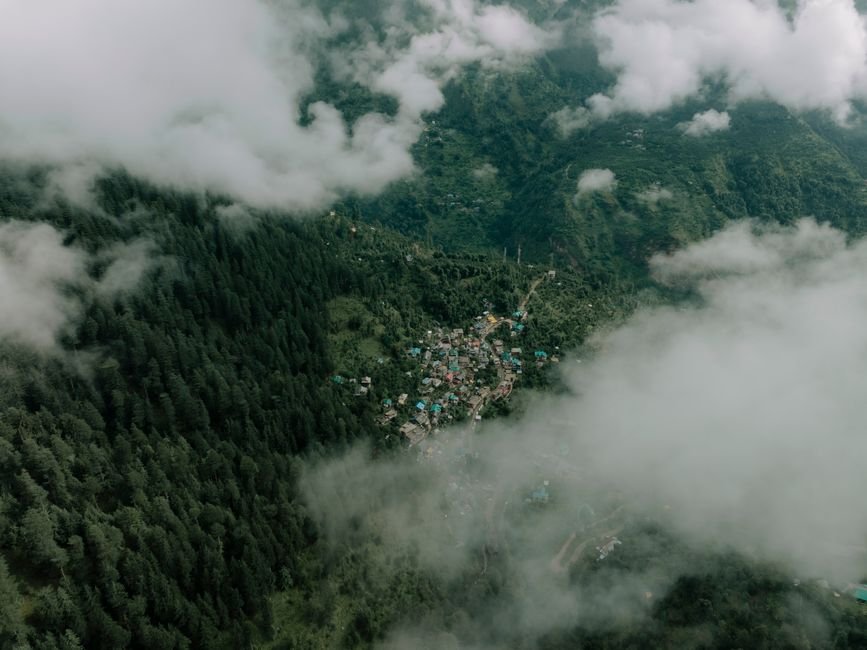
Kullu, Himachal Pradesh – The ancient valley of Kullu has come alive with its unique Dasehra festivities, commencing on Vijayadashami and marking the beginning of a seven-day spiritual convergence known as the ‘Dev Mahakumbh’. Unlike celebrations across the rest of India, which conclude with the burning of effigies, Kullu’s Dasehra transforms the region into a grand gathering of deities, attracting devotees and tourists for centuries.
Information was available with The Chenab Times that over 300 deities from various parts of the Kullu district are converging at the Dhalpur ground. These divine figures participate in rituals and processions, all centered around Lord Raghunath, who is revered as the presiding deity of the festival. The elaborate celebrations are further enhanced by a month-long trade fair, drawing visitors from across the country and beyond.
The origins of Kullu Dasehra are steeped in history, dating back to the reign of King Jagat Singh, who ruled the region between 1637 and 1662. The festival’s genesis is linked to a legend involving divine intervention and royal atonement. According to the lore, the king once demanded pearls from a Brahmin named Durgadutt. Unable to meet the king’s demand and fearing his wrath, the Brahmin immolated himself. Subsequently, the king fell gravely ill, believed to be a consequence of a curse stemming from the Brahmin’s death.
Seeking a remedy, the king’s spiritual advisor, Taranath, suggested consulting the sage Krishandas Pathhari. The sage prescribed a unique solution: the installation of idols of Lord Rama and Sita, reportedly crafted during the Treta Yuga, from the Tretanath temple in Ayodhya. The challenging task of acquiring these idols was assigned to Damodar Das, a disciple of sage Krishandas Pathhari.
Damodar Das journeyed to Ayodhya and diligently served the temple priests for a year before absconding with the thumb-sized idols. He was apprehended by the priests in Haridwar, but they found themselves unable to lift the idols, while Damodar could do so with ease. This event was interpreted as divine will, indicating that the idols were destined for Kullu. Some individuals, referred to as ‘sevadars’, accompanied the deity, and the Mahant community is believed to have descended from them.
The idols were initially housed in Manikaran, where they remained for a decade, during which period a Ram temple was established. The legend narrates that King Jagat Singh, in a profound act of devotion, washed the feet of Lord Raghunath’s idol and drank the water, which is said to have miraculously cured him of his ailment. Following this spiritual experience, the king abdicated his kingdom to Lord Raghunath, assuming the title of ‘Chharibardar,’ or the chief caretaker of the deity, a tradition that continues to this day.
In 1660, the Raghunath temple was established in Sultanpur, also known as Raghunathpur, within Kullu town, where the idols were finally installed. It was at this point that the king extended invitations to deities from across the valley to partake in the Dasehra celebrations and formally acknowledge Lord Raghunath as their paramount deity. The festival has been observed annually since then, with only a few historical exceptions.
A significant evolution in the festival’s rituals occurred in 2014 when the Himachal Pradesh High Court imposed a ban on animal sacrifices during religious congregations. Previously, the concluding Lanka Bekar ritual involved the ritualistic sacrifice of a male buffalo, lamb, cock, crab, and fish as offerings to appease Goddess Kali, symbolizing the vanquishing of five evils: anger, intoxication, lust, attachment, and greed. Since the court’s directive, coconuts and other symbolic items have replaced animal sacrifices.
The administration of the festival has also undergone substantial changes. The district administration now holds the responsibility for overseeing its commercial and administrative aspects, including the management of the trade fair and cultural activities, which were historically organized by the Kullu Municipal Council. The cultural dimension of the festival has been further enriched by the participation of cultural troupes from various countries.
Maheshwar Singh, a descendant of the erstwhile royal family and a former Member of Parliament, currently holds the position of ‘Chharibardar’ of Lord Raghunath, thereby continuing the ancestral legacy. Thousands of devotees assemble annually to witness the deities being carried in palanquins, participate in the grand Rath procession, and observe the symbolic Lanka Dahan ceremony.
Kullu’s Dasehra transcends mere festivity; it is a living tradition that artfully bridges the ancient and the contemporary, the spiritual and the cultural. While the outward aspects of many activities have transformed over the years, the fundamental traditions remain steadfast. The festival stands as a powerful testament to the enduring faith of the people of Kullu, their profound reverence for Lord Raghunath, and their unwavering commitment to preserving a heritage that has withstood centuries of change.
As the festival continues to adapt, incorporating international participation and evolving to meet modern sensibilities while diligently preserving its sacred essence, Kullu Dasehra maintains its distinct identity. It stands apart from celebrations elsewhere in India as a unique occasion where the literal burning of effigies is substituted by the divine convergence of gods. It is a celebration where the end of one tradition heralds the commencement of another, and where faith itself transforms a picturesque valley into a sacred landscape of timeless devotion.


The Chenab Times News Desk