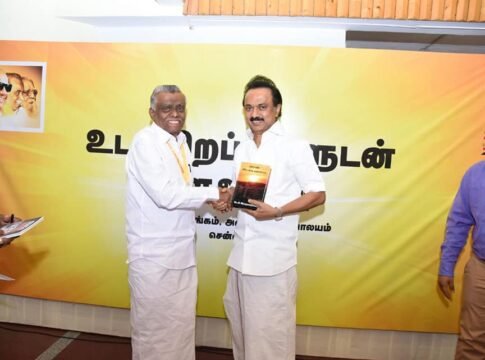
Tamil Nadu Chief Minister M.K. Stalin has stepped in to offer financial assistance to a PhD scholar, Bharathidasan, studying at the National University of Malaysia, who claimed to be facing a situation akin to that of Rohith Vemula. The offer comes amidst allegations that the current state government has failed to release necessary funds for the scholar’s academic pursuits.
The Chenab Times has learned that the scholar, in a video circulating on social media, drew parallels between his predicament and the tragic circumstances faced by Rohith Vemula, a research scholar whose death in 2016 sparked nationwide protests against institutional discrimination and caste bias. Bharathidasan’s appeal highlighted his concerns about the potential disruption to his doctoral studies due to the alleged non-disbursement of funds.
In response to the scholar’s distressing appeal and the ensuing public attention, Chief Minister Stalin publicly declared his intention to personally cover the educational expenses of Bharathidasan, should the state government’s financial provisions fall short. This assurance signals a proactive approach by the Chief Minister’s office to address the immediate academic needs of the student and prevent any recurrence of what the scholar termed as a ‘Rohith Vemula-like’ situation. The statement aims to reassure students pursuing higher education abroad, particularly those relying on state funding, that their academic careers will not be jeopardised.
The situation underscores the critical importance of timely financial support for students engaged in advanced research, especially those studying in international universities. The alleged delay in fund release has brought to the fore the bureaucratic hurdles that can sometimes impede the academic progress of aspiring scholars. Rohith Vemula’s case remains a poignant reminder of the devastating consequences that can arise from systemic failures in supporting students, particularly those from marginalised backgrounds, during their academic journeys.
Bharathidasan’s video statement, which brought his plight to public attention, reportedly detailed the specific financial support he anticipated from the state government for his doctoral research at the National University of Malaysia. His comparison to Rohith Vemula’s case highlights the gravity of his concerns and the potential impact on his future academic and professional life. The student’s appeal resonated with many, sparking discussions about the responsibilities of governments in facilitating higher education for their citizens, regardless of their location of study.
The Chief Minister’s offer is seen by many as a strong political and humanitarian gesture, aimed at ensuring that no student is forced to abandon their educational aspirations due to financial constraints. It also serves as a public commitment from the Tamil Nadu government to uphold its support for higher education and research. The political undertones are also significant, given the past political discourse surrounding such issues and the opposition parties’ readiness to critique the government on matters of public welfare and student support.
While the specifics of the alleged funding delay are yet to be fully elaborated upon by official sources, the Chief Minister’s swift intervention suggests a desire to resolve the matter promptly and prevent further escalation. The Tamil Nadu government has, in the past, shown commitment to various student welfare schemes and scholarships, aiming to empower students to pursue their academic goals. This incident, however, brings into focus the operational efficiency of disbursing such funds to international institutions.
The National University of Malaysia is a reputable institution, and students pursuing doctoral degrees there are often engaged in significant research projects that contribute to their fields of study. Ensuring that such students receive uninterrupted financial backing is crucial for the completion of their research and for fostering international academic collaborations. The case of Bharathidasan is expected to prompt a review of the existing mechanisms for fund disbursement to students studying abroad.
The comparison to Rohith Vemula’s tragic experience is a sensitive point, evoking memories of a period of intense national debate on social justice and institutional accountability. Vemula’s death at the University of Hyderabad in 2016, following alleged discrimination, led to widespread student protests and political ramifications, highlighting the need for robust support systems for research scholars facing personal or institutional challenges.
The proactive stance taken by Chief Minister Stalin in offering personal financial support underscores the political sensitivity surrounding such issues. It aims to preempt any narrative that the government is indifferent to the plight of its students, especially when their situation is likened to a nationally recognised tragedy. The government’s response is likely to be closely watched by student bodies and civil society organisations across the state and the country, as they advocate for better support and welfare measures for students pursuing higher education.
Further developments are anticipated as the state government is expected to provide clarity on the status of the funds and the steps being taken to ensure timely disbursement in the future. The incident serves as a crucial case study on the importance of efficient administrative processes in supporting students pursuing academic excellence on a global stage.
❤️ Support Independent Journalism
Your contribution keeps our reporting free, fearless, and accessible to everyone.
Or make a one-time donation
Secure via Razorpay • 12 monthly payments • Cancel anytime before next cycle


(We don't allow anyone to copy content. For Copyright or Use of Content related questions, visit here.)

The Chenab Times News Desk