
Mamma, tell me a story…
I wondered. It had been a long twelve years since she was a little child, and she had never asked me for a bedtime story before.
Her father, my Amal, had been the person who took care of her throughout my busy days. Now she was sixteen and asking me for a bedtime story. I was surprised and glanced at Amal. He was simply smiling at me.
His eyes seemed to say that, over the last few years, he had been doing the same thing for Mizhi: telling her unknown and interesting bedtime stories. Perhaps she had grown bored of those stories and become curious about stories from her teenage years.
I took a deep breath.
Let’s make her listen to some real thoughts through my stories.
In this fictional story, I am a freelance story writer and a psychiatrist. I love writing interesting fictional stories and listening to people. Mizhi and Amal were curious to hear what I had to tell them.
Aarushi was a young woman whose story I wanted to tell.
She lived with bipolar disorder, a mental health condition that can involve episodes of significant changes in mood, energy and activity. She was a brilliant student and a wonderful person. Yet, somewhere along the way, she began to feel that the world saw her illness before it saw her.
Let me allow her story to speak for itself.
It was a calm morning. Aarushi was playing with her dogs, Arjun and Yaara. She did not expect anything extraordinary to happen in her life. In fact, she had almost stopped expecting anything.
She had lost the closeness of her parents, her brother, her boyfriend and her best friends. They were not necessarily absent from the world, but they were no longer present in her life in the way she needed them to be.
Loneliness followed her every day. Silence had become a familiar companion. Her past experiences continued to trouble her, although very few people understood what she was going through.
She never wanted sympathy. She wanted understanding.
She was highly educated but unemployed, searching for a suitable job rather than merely any job. For her, employment meant more than a monthly salary. It meant happiness, independence, peace, success and pride.
She lived in a society where people were often curious about other people’s lives. Questions sometimes came more easily than kindness. Aarushi preferred to remain silent. She felt that nobody was interested in listening to her story, and gradually, she stopped sharing it.
Arjun and Yaara were among the few sources of comfort in her life.
Living with bipolar disorder had not been easy. There were periods when changes in her mood and energy affected her thoughts, decisions and relationships. She was receiving treatment and taking medication. But treatment did not automatically bring back the relationships she had lost, nor did it solve the difficulties of unemployment and social isolation.
She sometimes struggled to understand her own feelings. She wanted to be compassionate towards others, but she also wanted to protect her dignity and self-respect. She wondered why society expected some people to sacrifice their own happiness in the name of humanity.
One day, she began thinking about women who earn their living through sex work.
She wondered about the different men they encountered: the wealthy man, the poor man, the compassionate man, the lonely man, the man who had nothing to say and the man who desperately wanted someone to listen.
Every person carried a different story. Some came seeking physical intimacy, some perhaps companionship, and others simply wanted to escape their loneliness for a while. Yet, in a commercial relationship, the needs and feelings of the people involved could remain unequal.
Aarushi wondered how often anyone stopped to ask what these women wanted, what they felt or what kind of life they wished to lead.
Sex work, she realised, could not be understood through one person’s experience or one social stereotype. Behind every individual was a life that deserved to be understood without judgement.
She thought about women who had left their villages and entered unfamiliar worlds in search of survival. She imagined the jasmine flowers, the sound of bangles, the colourful dresses, the laughter and the tears. Some stories might have begun in difficult circumstances; others might have followed entirely different paths.
The world often saw only the profession, not the person.
Times had changed in many ways. Women were increasingly visible in different forms of work and were asserting their rights and dignity. But social acceptance, safety and equality were still important questions.
If dignity and economic independence were possible, what else might a person still long for?
Perhaps love.
That which remains.
Amal looked at me.
“Is this a bedtime story?”
His expression was truly fatherly.
I told him, “It is better that she learns about the world through thoughtful conversations rather than hearing everything from someone who might not explain it with kindness. I am a little possessive about my daughter.”
Mizhi smiled and hugged me.
“Mamma, tell me more stories. I want to listen.”
Amal encouraged me too.
Aarushi had many stories to tell. This time, she spoke about a woman named Rohini.
Rohini was a village woman. Every morning, she woke up early and completed the household work. She prepared food for her husband, son, daughter and mother-in-law. She also looked after the dogs, cats and cattle.
She worked throughout the day, but her efforts were rarely appreciated.
Her husband sometimes spoke to her harshly. Her son shouted at her. Her daughter did not always understand her struggles, and disagreements with her mother-in-law made her life even more difficult.
The animals seemed to offer her the affection she missed from the people around her.
Rohini was not asking for anything extraordinary. She wanted someone to ask whether she was tired. She wanted to be appreciated. She wanted to be treated as a person with feelings, dreams and expectations of her own.
Aarushi felt deeply for women like Rohini. She wondered how many women silently experienced similar situations. Of course, every family had its own story, and not every village household was the same. But the experiences of women whose unpaid domestic work was overlooked deserved attention.
“What is missing in Rohini’s life, Mamma?” Mizhi asked.
“Perhaps love, my dear. But not love alone. She needs respect, equality, empowerment and the freedom to live as an individual.”
“Are these things really happening in villages, Mamma?”
“Yes, Mizhi. Many women experience disrespect, unequal responsibilities and different forms of abuse. Some are made to believe that suffering silently is simply part of being a good wife, mother or daughter-in-law. But family responsibilities should never mean surrendering one’s dignity.”
Mizhi listened quietly.
“Mamma, I want more. Please!”
I looked at Amal.
“Oh, my poor darling! I am sorry I have left you alone to create all those bedtime stories for so many years. Now I have to make up for all that time.”
I smiled and continued.
“Okay, let me tell you another story Aarushi once thought about. This time, it is about two men.”
Raghav and Raghu were father and son who had both worked hard for their families. Raghu, the father, was no longer alive.
Raghav was a farmer, while Raghu was a government employee. Both loved their families, although their lives were quite different.
Raghav lived with his mother, wife, daughter and son. Every day, after finishing his work, he returned home with a packet of snacks for his children and wife.
His wife did not have a paid job, but she looked after the cattle and maintained a kitchen garden. Her work was essential to the family’s everyday life.
Whenever Raghav returned home, the family sat together for their meals. The children shared stories about their school, and everyone had an opportunity to speak. Their happiness was not because their lives were perfect, but because they shared their responsibilities and affection.
Raghu’s family life was different. Although he worked hard for his family, he often felt emotionally neglected. He missed the affection, attention and companionship he hoped to find at home.
These two men were important figures in Aarushi’s family story: Raghav was her father, and Raghu was her grandfather.
Aarushi remembered her grandfather as a wonderful person who had worked for the government. She missed the memories associated with him and the warmth of those earlier days.
While thinking about these two men, she realised something important.
Equality was not a demand that belonged to women alone. Men, too, deserved respect, affection, companionship and the freedom to express their emotions.
A healthy family should not be built on the assumption that one person must always give while another only receives. Love and responsibility should move in both directions.
“See, my dear, not every man is bad. Look at your Appa. He is one of the most wonderful people in my life. He is my best friend and my companion.”
“Mamma, stop praising Appa! Tell me more about Aarushi.”
I laughed.
“For everyone else, she might be a person living with an illness. But I want the world to see the person beyond the diagnosis. She is educated, thoughtful and full of questions. She is a good soul who wants to understand the world, even when the world does not always understand her.”
She might sometimes feel like a storyless person, but she has many stories within her.
Perhaps she understands what the world is missing because she has experienced the absence of so many things herself.
There was something else about Aarushi.
Her story was not only about the people she had lost or the relationships that had changed. She also dreamed of continuing her education.
She was well educated and wished to study further. However, she was uncertain whether her family would support her decision, considering her illness and other personal circumstances.
I wondered what would happen to her dreams.
I wished she would find a way to continue her studies.
Education is not merely a qualification or a certificate. It gives us opportunities to question, understand and recognise the values that shape our lives. It can help us see beyond the routines that society often expects us to follow.
Listening to Aarushi made me realise something about myself, too.
I wanted to study again. I wanted to experience life on a college campus, attend classes, meet people and learn something new. I wanted to pursue a regular course, not only for academic achievement but also because something within me longed for that experience.
Amal and Mizhi looked at me.
“Do you really want to study again, dear?” Amal asked.
“Yes,” I replied. “I do. I want to experience college life again. I want to learn, grow and do something for my own soul.”
There was one more thing Aarushi had recently shared.
She told me that she felt a special friendship with her little brother, Deva. He was one of the few people who did not judge her for what she had done or for what she was going through.
He did not always need an explanation. His acceptance itself meant something to her.
Perhaps this was another form of love that we often overlooked: the love that does not demand explanations, the love that does not judge and the love that simply stays.
“Mamma, is there any more story?”
I looked at Mizhi and then at Amal.
There were so many stories in this world. Some were about women who wanted dignity, some about men who wanted affection, some about people who wanted acceptance, and some about individuals who simply wanted another opportunity to live their dreams.
Aarushi had taught me to look at the world differently.
For some, what remains missing is love.
For others, it is equality, respect, empowerment, companionship or the opportunity to learn.
Perhaps all these things are connected.
And perhaps, after everything else has been taken away, what remains is the human need to be loved and understood.
That which remains is love.
Author’s Note: The narrator, characters and events in this story are entirely fictional. Aarushi does not represent any actual patient or identifiable individual. The story explores mental health, social attitudes, dignity, equality, loneliness and human relationships.
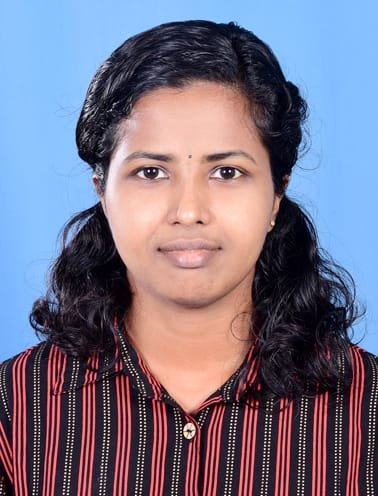
Aswani S. Babu is a law graduate from the University of Delhi with experience in legal research and litigation support across civil, criminal, family, labour and motor accident matters.
