
Mira went to the hospital one morning for an eye check-up. After entering the hospital, she approached the outpatient (OP) ticket counter and waited for her turn.
While waiting, she noticed an elderly woman standing nearby. The woman appeared to be struggling with physical discomfort. She was suffering from chronic blood sugar problems and leg pain and wanted to consult a doctor in the General Medicine Department.
Mira started a conversation with her.
Initially, they spoke about the woman’s health. Gradually, the elderly woman began sharing her family story. She had three children. One was a government nurse, another was a businessman, and the third was living abroad and earning money.
She spoke about her children with pride. However, as the conversation continued, her voice became emotional.
Her eyes filled with tears.
Despite having three children who were apparently settled in their respective lives, she had come to the hospital alone. At a time when she was struggling with her health, nobody was beside her.
Mira listened quietly.
“Did you come all the way here alone?” Mira asked.
“Yes. What can I do? Everyone has their own responsibilities. Sometimes, I wish someone would simply come with me when I am unwell,” the elderly woman replied.
Mira did not know what to say. She did not know the circumstances of the woman’s children or the reasons why they were not accompanying her. She did not want to judge anyone based on a single encounter.
But she understood that the woman needed some help at that moment.
“Which department do you need to visit?” Mira asked.
The woman explained that she wanted to consult a doctor in General Medicine.
Mira decided to accompany her. She helped the woman reach the department and find the doctor she wanted to consult.
The elderly woman seemed relieved.
After ensuring that she had reached the right place, Mira continued with her own hospital visit. However, the woman’s words remained in her thoughts.
She began wondering about the meaning of family and companionship.
People often say that children are the greatest support in old age. The older generation frequently advises younger people to get married and have children, believing that their children will take care of them when they become old.
But does having children necessarily guarantee care and companionship?
What happens when those children have their own responsibilities, careers and families?
Mira had no immediate answers.
She proceeded to the ophthalmology department for her eye check-up. Her token number, 130, appeared on the hospital screen.
The waiting area was crowded. Patients were sitting in rows, waiting for their consultations. Some were suffering from chronic eye conditions, while others were experiencing pain and discomfort.
Among them, Mira noticed a little baby, perhaps only a few months old, who had been admitted because of an eye problem.
She looked at the baby for a while and felt sorry for the little one.
Life seemed unpredictable. Some people faced health challenges from childhood, while others encountered different struggles in their later years.
After some time, Mira underwent her eye examination. The doctor mentioned that she appeared to have simple myopic astigmatism.
Mira became a little frightened.
“Is it something serious, doctor?” she asked.
“Don’t worry. You need to undergo another eye test. We will confirm everything after that,” the doctor replied.
Mira came out and continued waiting for the next test.
After some time, another woman came and sat beside her. She appeared cheerful and soon started talking about her family.
She proudly mentioned that she was the sixth daughter in her family. She had got married at the age of eighteen and had a daughter. Her daughter was now twenty-two years old and had recently got married and given birth to a baby boy.
The woman spoke about her family with happiness and pride. She seemed particularly delighted about becoming a grandmother.
Mira listened to her quietly.
After a while, the woman turned towards Mira.
“How old are you?”
“Thirty,” Mira replied.
“Thirty? Haven’t you got married yet?”
Mira smiled slightly. She had heard this question many times before.
“No, I haven’t.”
“But why? Don’t you think it is time to get married?”
Mira paused for a moment.
“I don’t think marriage should happen simply because a person reaches a particular age. I would like to get married, but I want to find someone who understands my perspective on life. I want someone who respects my individuality and believes in equality. Perhaps when society begins to rethink some of its traditional expectations, or when I find someone who shares these values, I will get married.”
The woman looked at her with curiosity.
“But everyone needs someone to take care of them, don’t they?”
“Of course, we all need care and support,” Mira replied. “But I don’t want a companion merely to provide me with food, shelter or physical care. I am capable of managing those things myself. I want someone with whom I can share my thoughts, feelings, happiness and difficulties. Someone who listens to me and understands me.”
The woman listened without interrupting.
Mira continued.
“I want to take care of someone, too. I want both of us to support each other. But I also want to preserve my independence. Marriage should not mean that I have to give up my individuality, dreams or personal choices. I believe two people should be able to build a life together without losing themselves in the process.”
The woman smiled faintly.
“Times are changing,” she said. “But every family has its own way of living.”
“Yes,” Mira replied. “And perhaps that is why we should respect different choices.”
The conversation gradually moved towards other subjects.
But Mira continued thinking about what they had discussed.
She was an independent woman. She knew how to manage her responsibilities and make decisions for herself. She did not consider marriage a necessity for survival. Yet, she wanted a companion.
She wanted someone with whom she could share even the smallest incidents of her day. Someone who would listen without judging her. Someone who would understand her silences as well as her words.
She wanted a family where her husband’s family would accept her and treat her like their own daughter. She wanted mutual respect, emotional security and understanding.
She wanted companionship, but not at the cost of her individuality.
Her thoughts returned to the elderly woman she had met that morning.
The elderly woman had three children, while the woman sitting beside her was proudly celebrating her daughter’s marriage and motherhood.
One woman was longing for someone’s presence during a difficult moment. The other was sharing the happiness she had found through her family.
Both women had different experiences of family life.
Mira wondered whether having a family and experiencing companionship were necessarily the same thing.
Perhaps they were connected, but they were not always identical.
She did not know whether the elderly woman’s children were neglecting her or whether circumstances had prevented them from being with her. She knew that one hospital encounter could not explain an entire family’s relationship.
Nevertheless, the incident raised an important question in her mind.
What exactly were people expecting from marriage and family?
Was companionship about sharing a home?
Was it about having children?
Was it about financial security?
Or was it about having someone who would hold your hand when you were physically weak, listen when you were emotionally exhausted and stand beside you when life became difficult?
Perhaps companionship was much more than simply having someone in your life.
Mira’s thoughts went further.
Different people experienced life differently. Every individual developed a philosophy shaped by their experiences, circumstances, relationships, struggles and expectations.
For one person, marriage might be the greatest achievement. For another, independence might represent freedom. Some might find happiness in raising children, while others might discover meaning through education, professional achievements or social service.
Some people might consider a financially secure family an ideal life. Others might simply want good health, peace of mind and someone who genuinely cares about them.
Who was right?
Could there be one universal definition of happiness?
Mira thought about her own future.
She was thirty. She had dreams, expectations and questions about her life. She wanted to experience companionship, but she also wanted to preserve her independence.
She wondered what her life would look like after another twenty or thirty years.
Would she have a companion? Would she have children? Would she be financially secure? Would someone be there to listen to her?
Or would she, too, one day sit in a hospital waiting room, hoping that someone would accompany her?
She looked around.
People were coming and going. Some were waiting for medical reports, some for consultations, and others were waiting for their loved ones.
Everyone seemed to be waiting for something.
Perhaps life itself was a journey of waiting, hoping, experiencing and understanding.
But what was the ultimate purpose of all this?
What is the meaning of marriage?
What is the meaning of family?
What is the meaning of companionship?
And, above all, what is the meaning of life?
Perhaps there was no single answer.
Perhaps every individual wrote their own definition through the experiences they encountered and the choices they made.
Suddenly, Mira’s token number was called.
She stood up and walked towards the examination room.
The results of her eye examination were still awaited. But that morning, she had discovered something else. Within a few hours, she had encountered different versions of life, each carrying its own expectations, struggles and understanding of happiness.
Different people. Different experiences. Different expectations. Different philosophies of life.
And perhaps life is simply about finding our own meaning amidst all these differences.
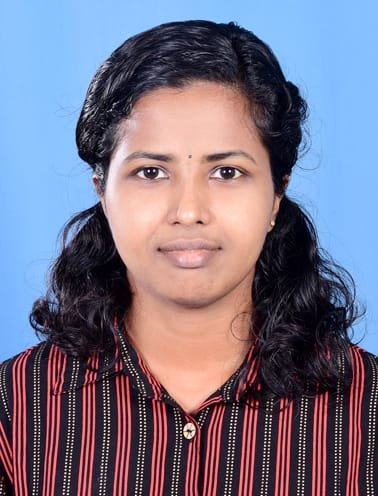
Aswani S. Babu is a law graduate from the University of Delhi with experience in legal research and litigation support across civil, criminal, family, labour and motor accident matters.
