Independent journalism for India—rooted in the mountains
Sunday, January 18, 2026

Top 5 This Week

EDITOR'S PICK

Dooyn—the Kashmiri Walnuts’ harvesting – Photo essay

Walnuts form an essential part of people’s lives in Kashmir as it is the main contributor to India’s walnut production. Each year, walnuts are exported to various parts of the country. Locally in Kashmir, called Dooyn, the trade of walnuts contributes considerably to the local economy. During the ongoing harvest season, the owners and workers of the walnut farms in Kashmir can be seen climbing trees and processing the produce.
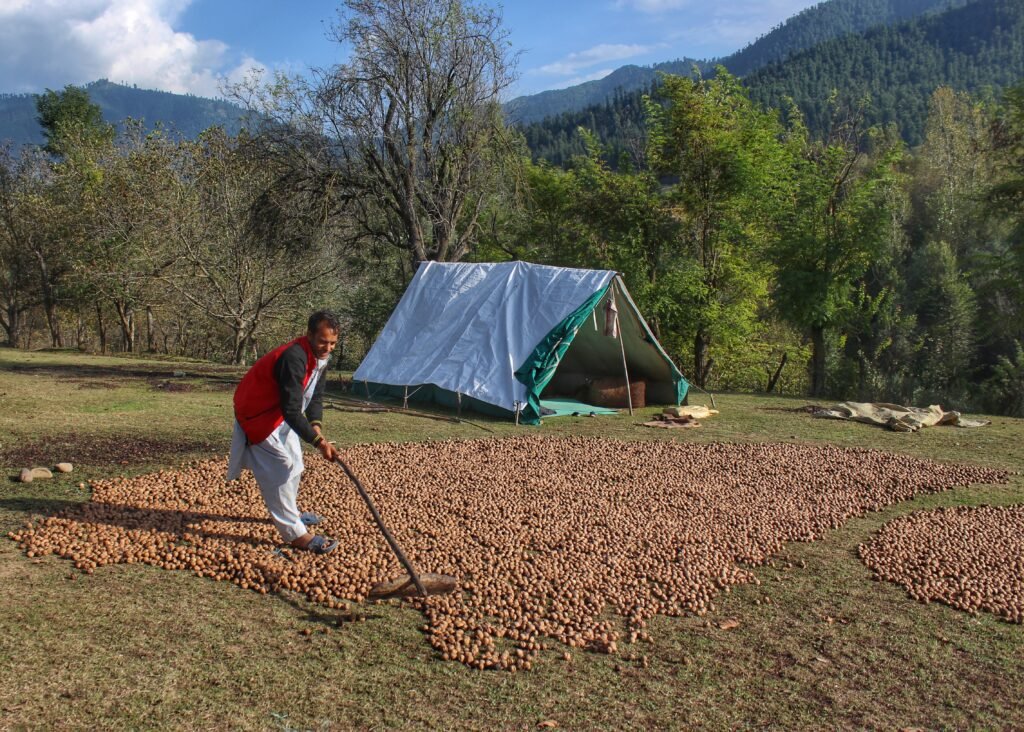
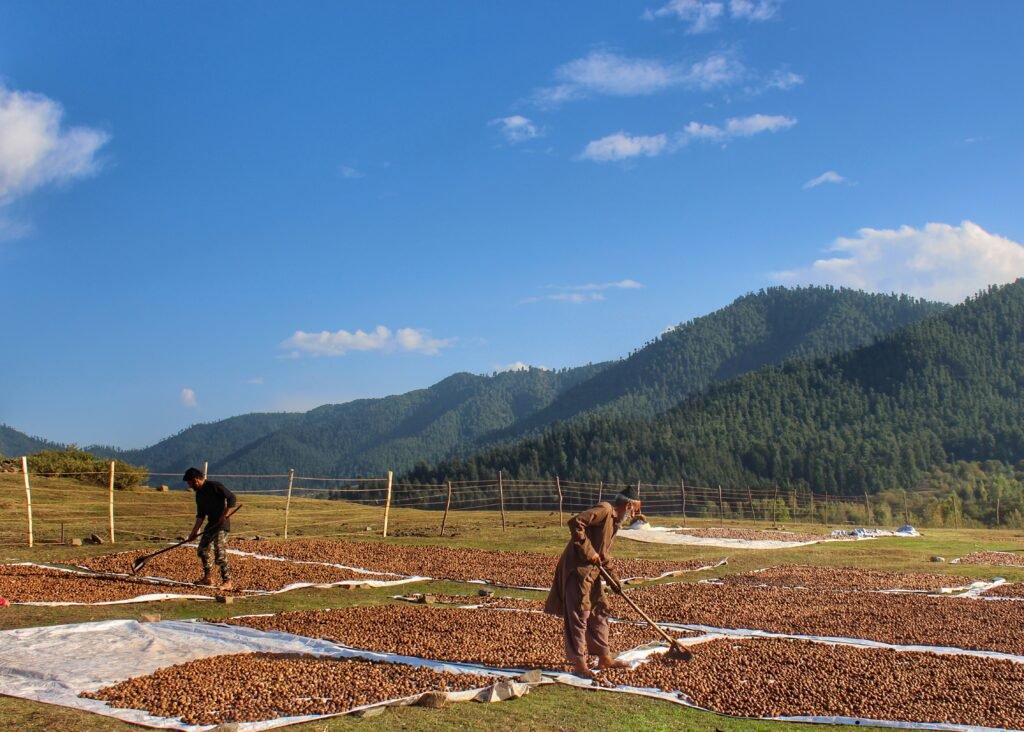
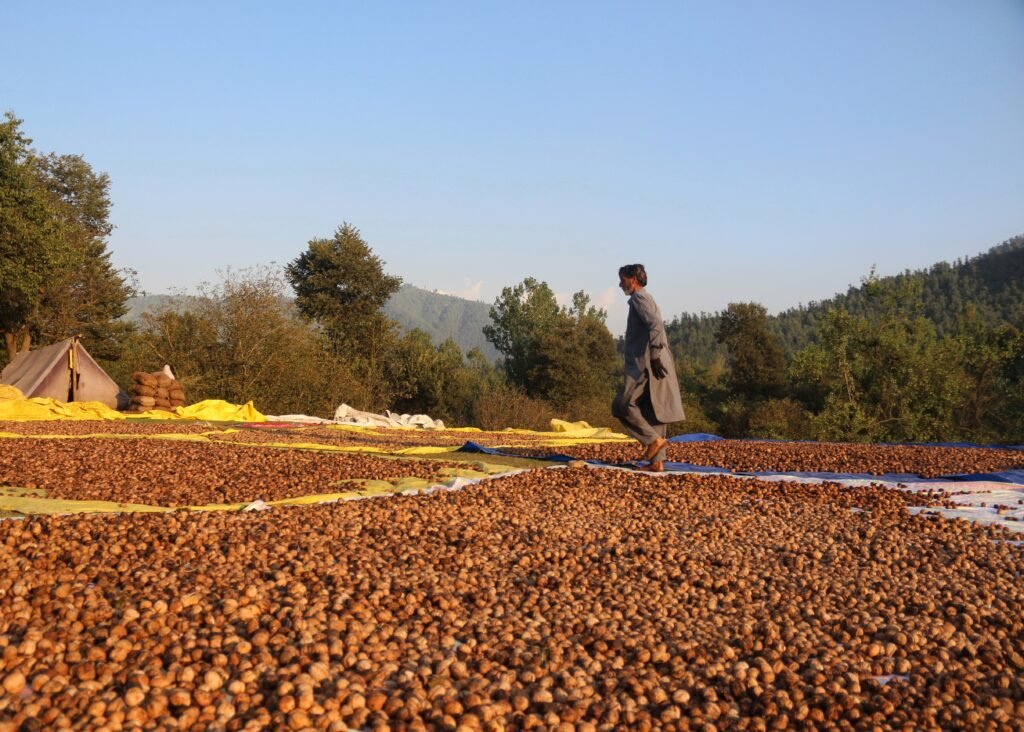
A Kashmiri farmer dries walnuts after removing their green husks and cleaning them during the harvesting season in a village in Manigam village in South Kashmir’s Anantnag district.
A Kashmiri farmer dries walnuts after removing their green husks and cleaning them during the harvesting season in a village in Manigam village in South Kashmir’s Anantnag district. (Photo: Aasif Shafi)
A Kashmiri farmer dries walnuts after removing their green husks and cleaning them during the harvesting season in a village in Manigam village in South Kashmir’s Anantnag district.

Kashmir accounts for 80% of India’s walnut production. The Kashmiri walnut was a great source of nutrients and was in high demand throughout India due to its superior quality and taste. There is immense potential for this product to find its place in the local and global markets. But nowadays, it is very unfortunate that the department of horticulture is not giving much attention to walnuts because of which they will be left behind. Walnuts from the Valley are exported not only to other states but also to the whole world. About 2.66 lakh metric tonnes of walnuts are grown in Jammu and Kashmir in an area spanning 89,000 hectares every year.
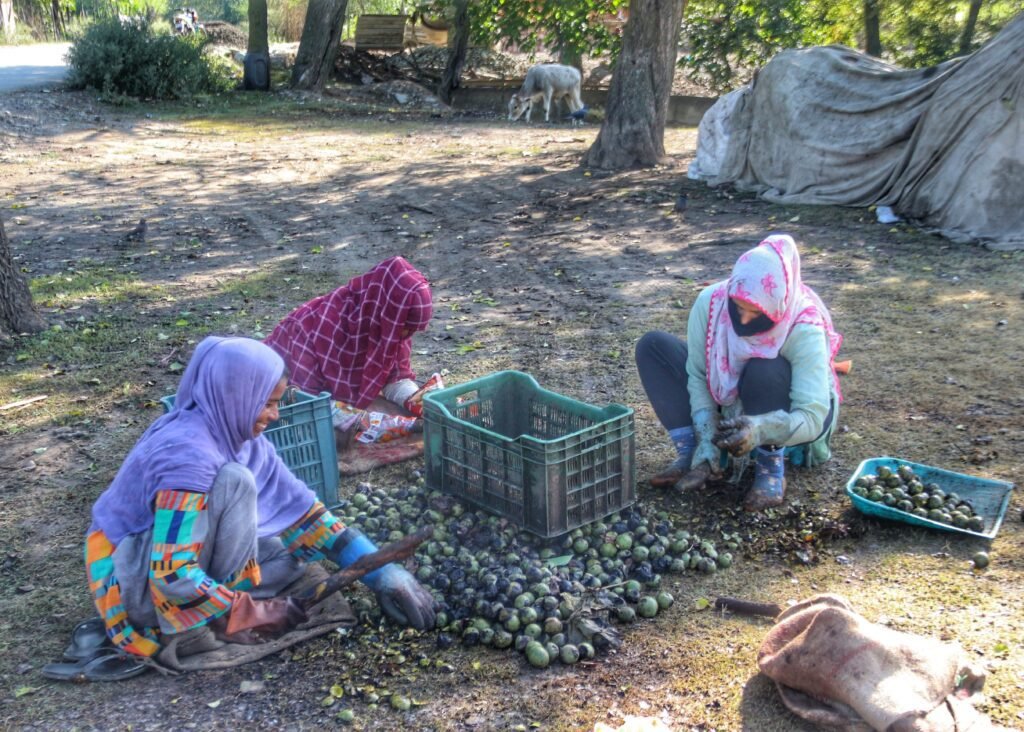
Kashmiri women beat walnuts to break open their green husks and reveal their fissured walnut shells in the Salia Area of South Kashmir's Anantnag District.
Kashmiri women beat walnuts to break open their green husks and reveal their fissured walnut shells in the Salia Area of South Kashmir’s Anantnag District.
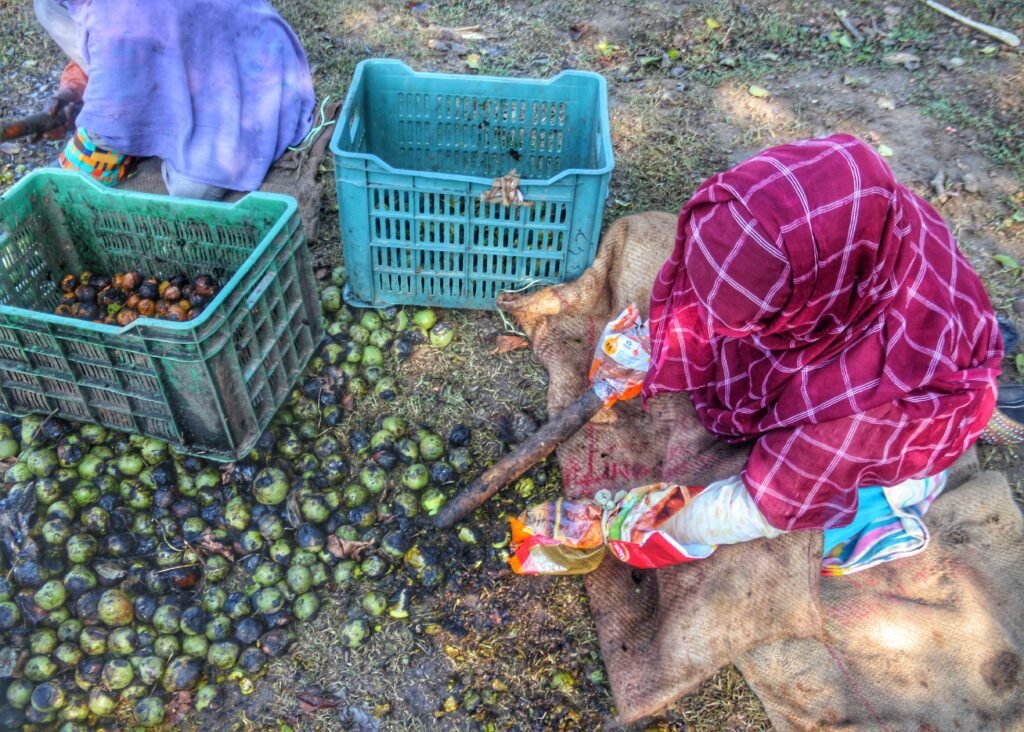
A Kashmiri woman beats walnuts to break open their green husks and reveal their fissured walnut shells in the Salia Area of South Kashmir's Anantnag District.
A Kashmiri woman beats walnuts to break open their green husks and reveal their fissured walnut shells in the Salia Area of South Kashmir’s Anantnag District. (Photo: Aasif Shafi/The Chenab Times)

Walnuts in Jammu and Kashmir produce more than 98 percent of all walnuts grown in India. Walnuts in Kashmir are grown organically, which means no chemical sprays or fertilisers are used in their cultivation. Kashmiri walnuts are popular across India and are exported to the UK, the Netherlands, and France, among many other countries. While the sales of Kashmiri walnuts declined after the COVID-19 pandemic, they are now slowly regaining their glory.
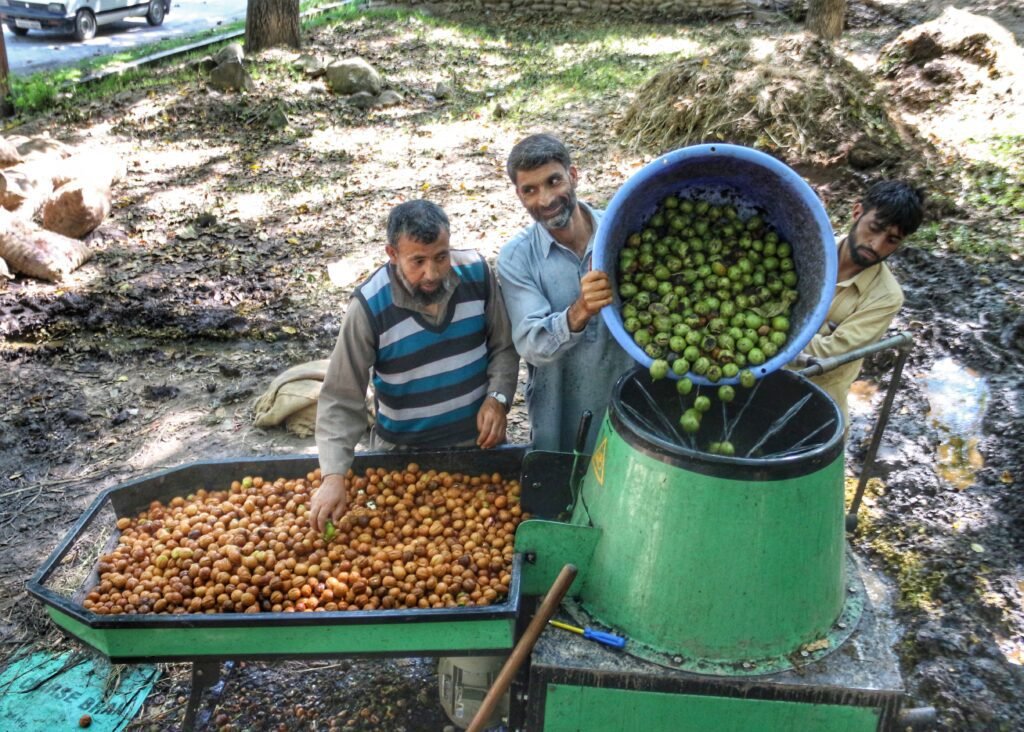
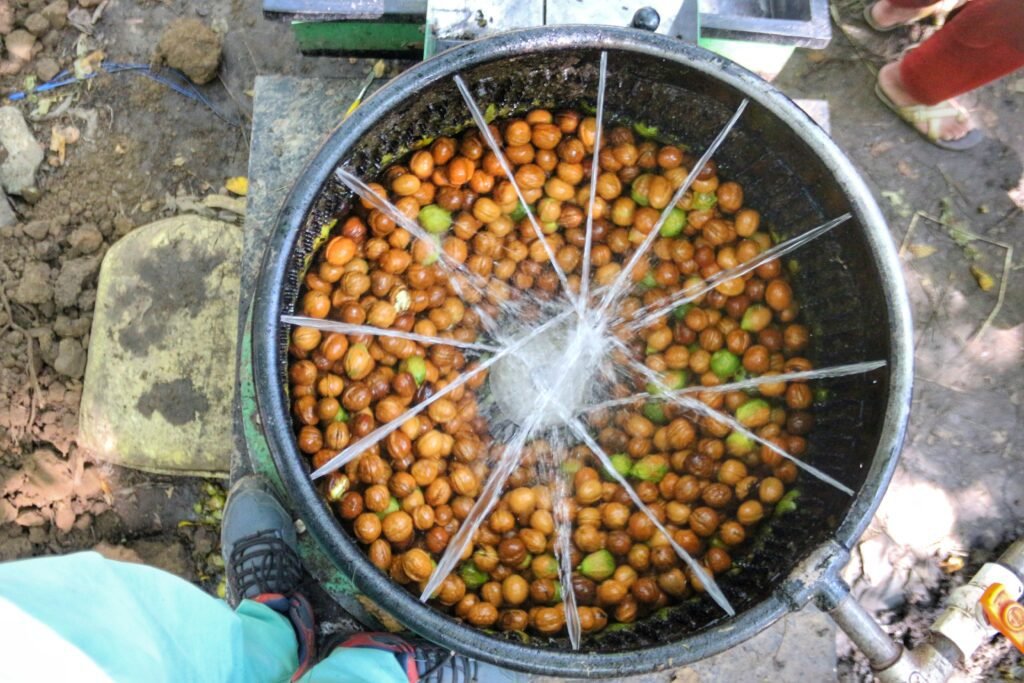
Walnut Growers Go Techie: Amid The Rising Popularity Of Kashmiri Origin Walnuts, The Valley-Based Growers Have Employed High-Tech Equipment And Machines In Order To Keep Pace With The Rising Demands And To Ensure A Constant Supply Of Their Produce. In The Picture, A Group Of Walnut Growers Can Be Seen Shedding The Peels Of Freshly Plucked Walnuts.
Walnut Growers Go Techie: Amid The Rising Popularity Of Kashmiri Origin Walnuts, The Valley-Based Growers Have Employed High-Tech Equipment And Machines In Order To Keep Pace With The Rising Demands And To Ensure A Constant Supply Of Their Produce. In The Picture, A Group Of Walnut Growers Can Be Seen Shedding The Peels Of Freshly Plucked Walnuts. (Photo: Aasif Shafi/The Chenab Times)
Walnut Growers Go Techie: Amid The Rising Popularity Of Kashmiri Origin Walnuts, The Valley-Based Growers Have Employed High-Tech Equipment And Machines In Order To Keep Pace With The Rising Demands And To Ensure A Constant Supply Of Their Produce. In The Picture, A Group Of Walnut Growers Can Be Seen Shedding The Peels Of Freshly Plucked Walnuts.

Walnut trees are found in the north and south of the Kashmir Valley. Removing walnuts from the trees is not something everyone can do. Only a skilled worker can perform the task. The trained person sits on a strong branch of a tree with a long stick. The worker then strikes the rest of the branches with force, causing the walnuts on them to fall down. The amount of walnuts exported from Kashmir in the years 2021-22 was 2.67 lakh metric tons. In 2020-21, 2.58 lakh were exported, 2.26 in 2019–20, 2.78 in 2018–19, and 2.75 in 2017–18.
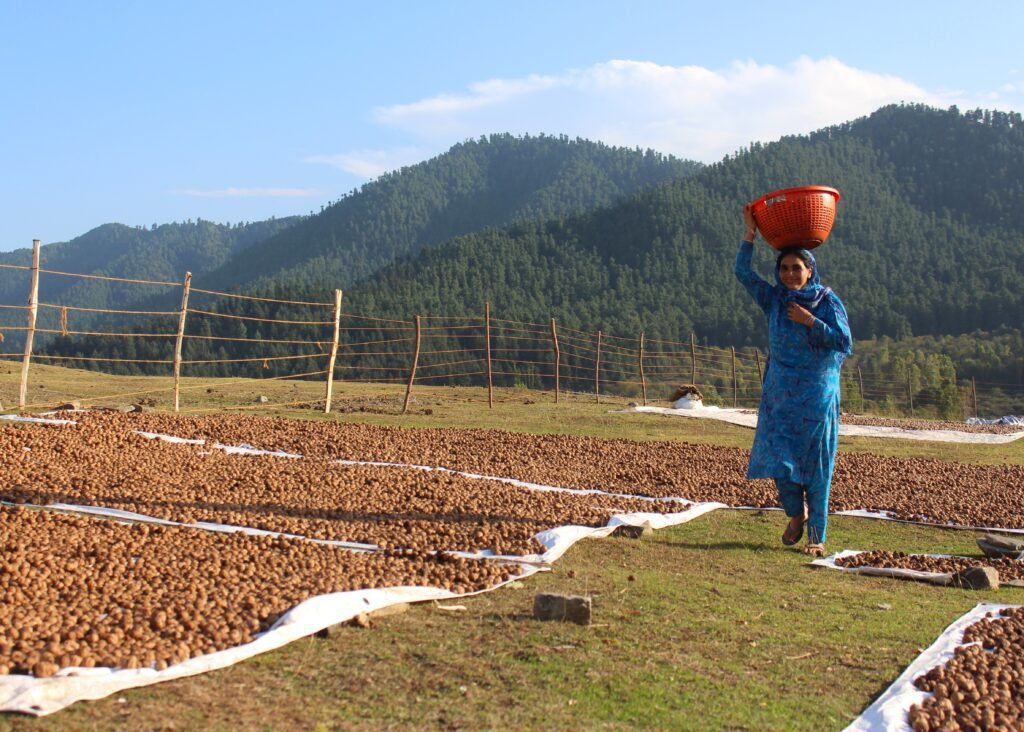
A woman carrying a basket full of walnut to let them dry in sunlight after being washed from a nearby stream in Salia village of South Kashmir’s Anantnag district. (Photo: Aasif Shafi/The Chenab Times)
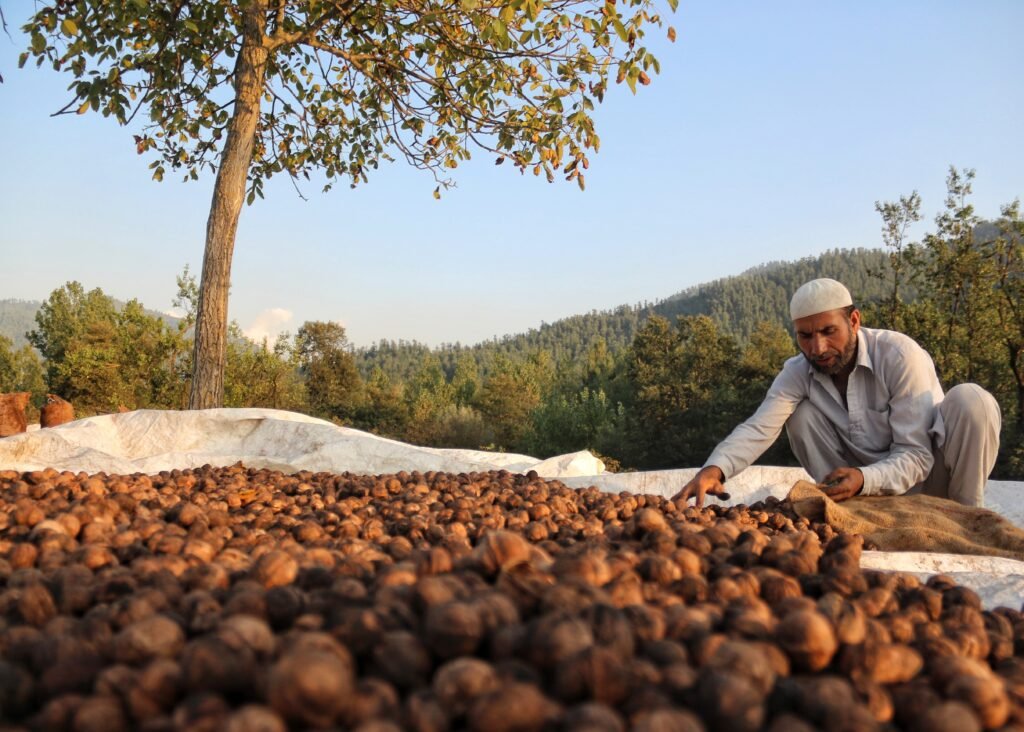
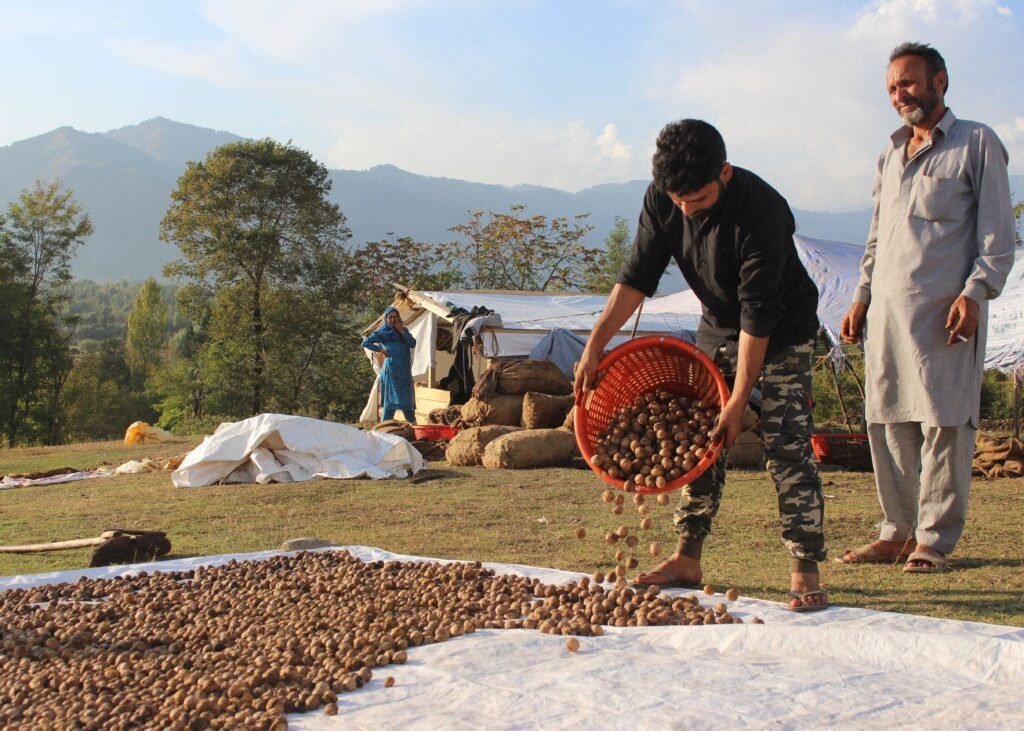
A Kashmir Farmer Sun-dried Freshly Plucked Walnuts On The Outskirts Of Anantnag District.
A Kashmir Farmer Sun-dried Freshly Plucked Walnuts On The Outskirts Of Anantnag District. (Photo: Aasif Shafi/The Chenab Times)
A Kashmir Farmer Sun-dried Freshly Plucked Walnuts On The Outskirts Of Anantnag District.

India ranks eighth among the walnut-producing countries in the world. 90% of the total production comes from Kashmir, which is around 2.75 lakh metric tons. In total, 89,000 hectares of land in the Kashmir valley are used for walnut cultivation. 
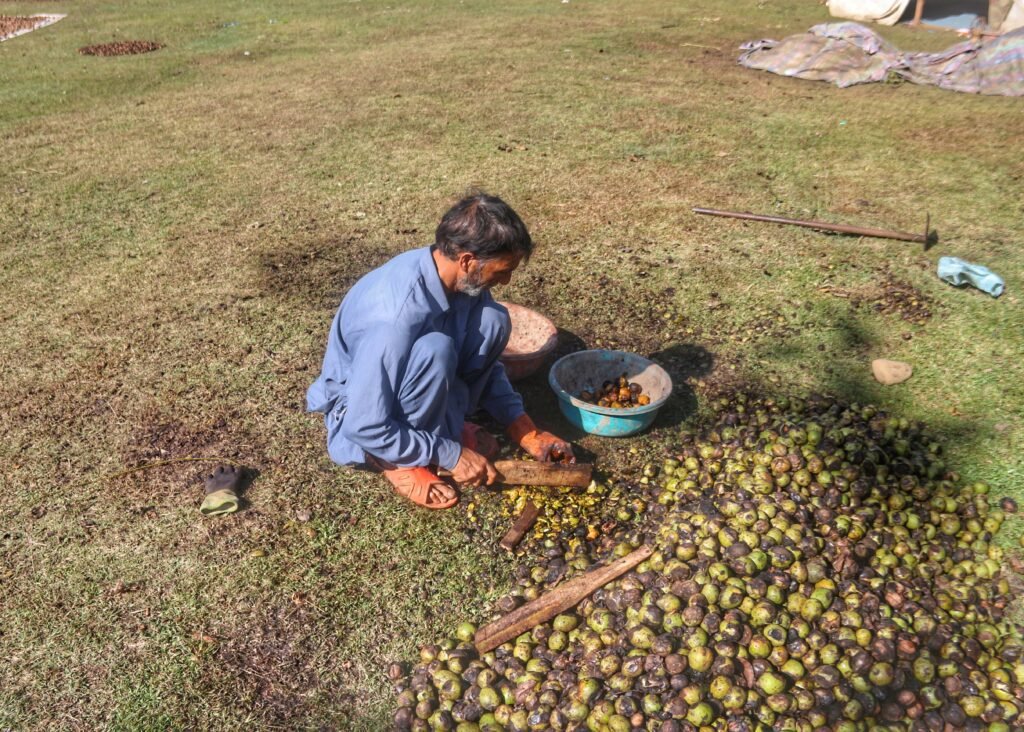
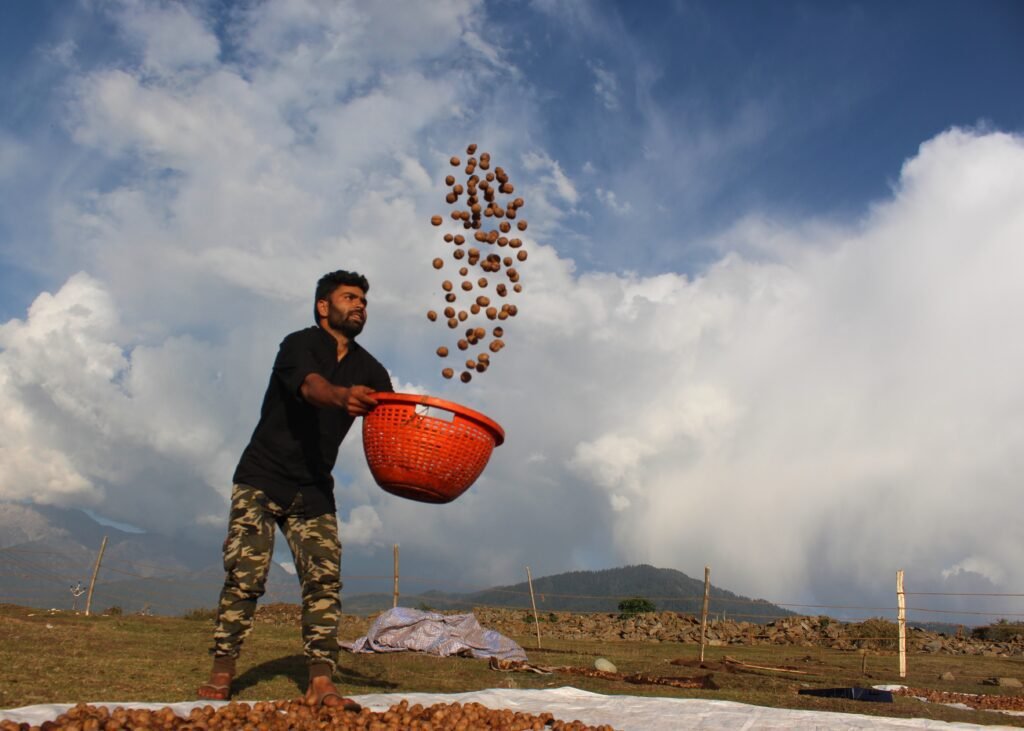
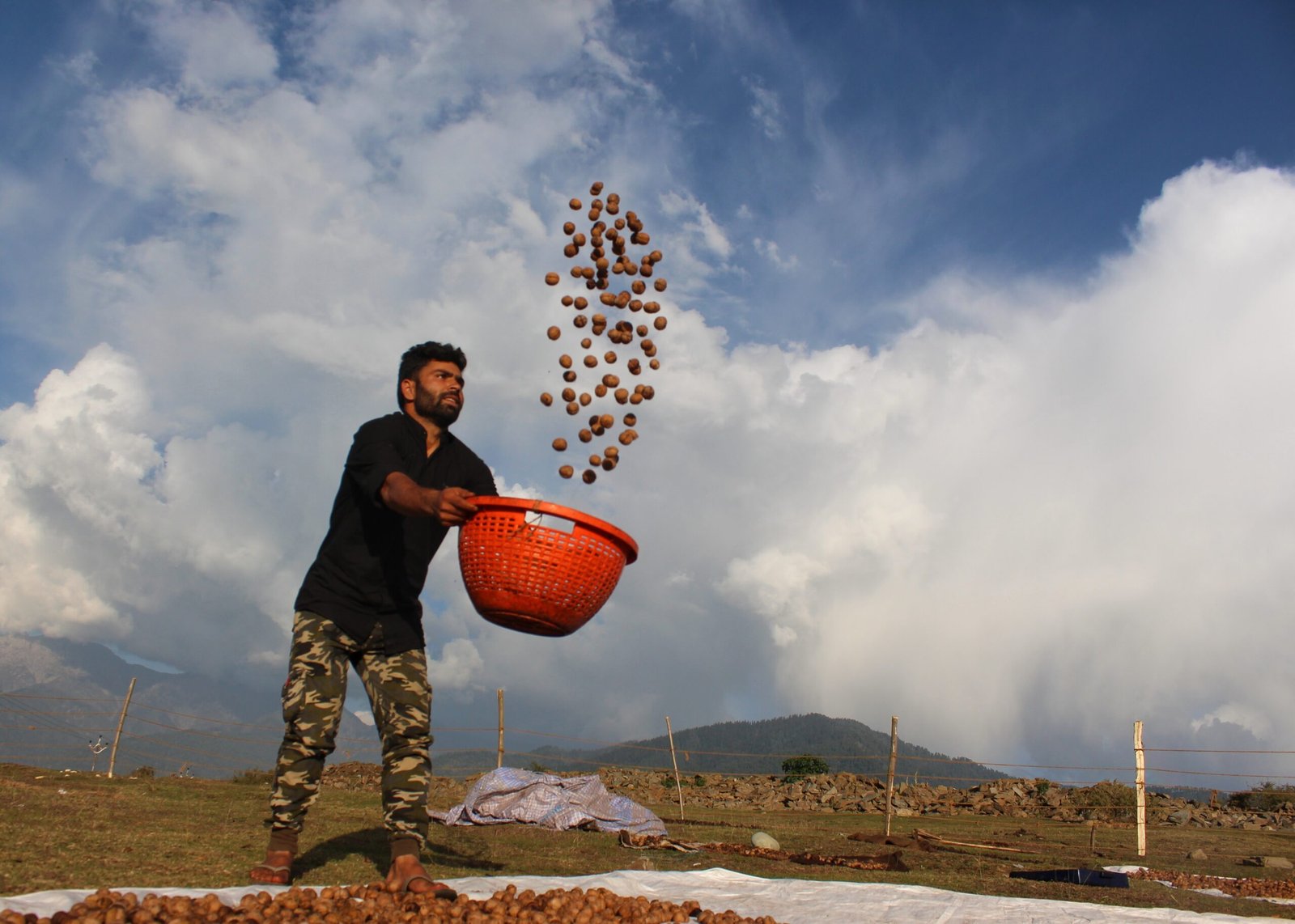
A Kashmiri farmer beat walnuts to break open their green husks and reveal their fissured walnut shells in the Salia Area Of South Kashmir's Anantnag District.
A Kashmiri farmer beat walnuts to break open their green husks and reveal their fissured walnut shells in the Salia Area Of South Kashmir’s Anantnag District. (Photo: Aasif Shafi/The Chenab Times)

This photo essay is about Walnut harvesting in the Kashmir valley and all the photographs in this essay are taken by Aasif Shafi for The Chenab Times.

❤️ Support Independent Journalism

Your contribution keeps our reporting free, fearless, and accessible to everyone.

Supporter

99/month

Choose ₹99 × 12 months
MOST POPULAR

Patron

199/month

Choose ₹199 × 12 months

Champion

499/month

Choose ₹499 × 12 months
TOP TIER

Guardian

999/month

Choose ₹999 × 12 months

Or make a one-time donation

Secure via Razorpay • 12 monthly payments • Cancel anytime before next cycle


(We don't allow anyone to copy content. For Copyright or Use of Content related questions, visit here.)

Aasif Shafi is multimedia journalist based In Kashmir.

Aasif Shafi
Aasif Shafi
Aasif Shafi is multimedia journalist based In Kashmir.

Popular Articles