


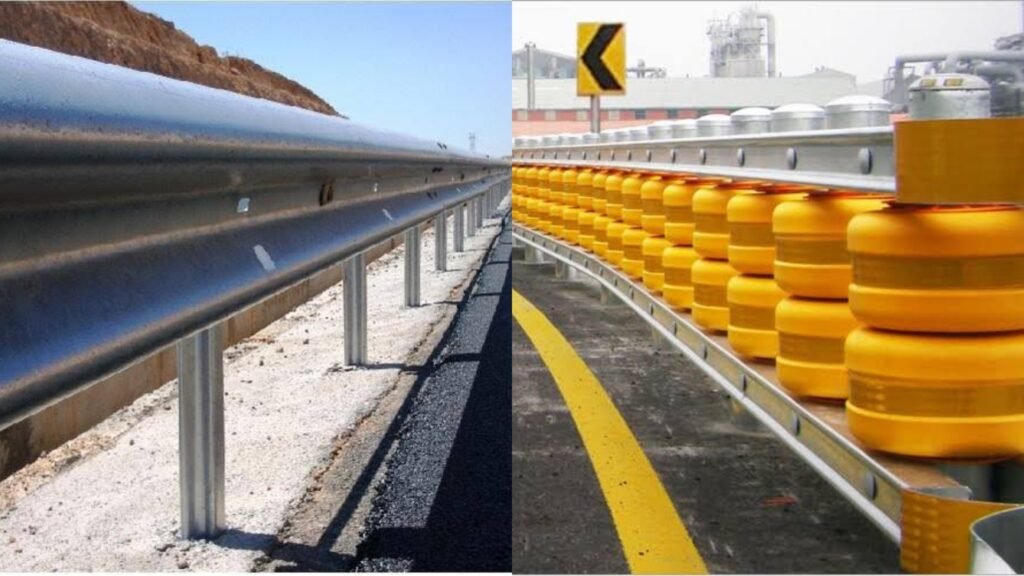
As the National Highway 244, also known as the Batote-Kishtwar National Highway, traverses through the hilly areas of Doda and Kishtwar districts, it is crucial that the road is equipped with adequate safety measures. The current metallic crash barriers, while useful in certain situations, have not proven to be effective in the hilly terrain of this region.
On the other hand, rolling barriers have the absorption capacity of 100kmph, making them a much safer option for this stretch of the highway. These barriers have the ability to absorb the impact of a collision, reducing the likelihood of serious injury or death for drivers and passengers.
Furthermore, the rolling barriers are more adaptable to the terrain of the National Highway 244, as they can be adjusted to the incline of the road, providing an additional level of protection.
In light of these considerations, it is clear that the installation of rolling barriers on National Highway 244 would be a wise decision. The added safety benefits they provide far outweigh the initial cost of installation. It is the responsibility of the government to prioritize the safety of its citizens, and implementing rolling barriers on this stretch of the highway is a step in the right direction.
What are Rolling Barriers 100kmph?
Rolling barrier guardrail system are a type of traffic management system that are designed to prevent vehicles from felling into gorges. It prevents vehicles from going off road and brings them to halt by absorbing shock energy through spinning rollers, according to NHAI officials. They are particularly useful in hilly regions like the Chenab Valley, where the winding roads and steep inclines can make it difficult for drivers to maintain control of their vehicles. The installation of rolling barriers in these areas can significantly reduce the risk of accidents and fatalities, making them a valuable asset for road safety.
One of the key benefits of rolling barriers is their ability to withstand high speeds. These barriers are designed to withstand impacts at speeds of up to 100kph, making them suitable for use on busy roads and highways. This is especially important in hilly regions, where drivers may be traveling at higher speeds due to the steep inclines and winding roads.
In addition to their strength and durability, rolling barriers are also highly effective at preventing vehicles from crossing into the opposite lane of traffic. When a vehicle collides with a rolling barrier, it is forced to come to a stop, preventing it from continuing on its path and potentially causing a catastrophic accident. This is especially important in hilly regions, where the winding roads and steep inclines can make it difficult for drivers to maintain control of their vehicles.
The installation of rolling barriers in hilly regions has already proven to be effective at reducing accidents and fatalities. In fact, India’s first rolling barriers were installed in Himachal Pradesh, a hilly region in the north of the country. Since their installation, the number of accidents and fatalities on these roads has decreased significantly, making them a valuable asset for road safety.
In conclusion, rolling barriers are a valuable tool for improving road safety in hilly regions like the Chenab Valley. The success of rolling barriers in Himachal Pradesh demonstrates their effectiveness, and it is likely that they will continue to be an important part of road safety efforts in hilly regions throughout India.
By Anzer Ayoob and Haseena Ayoob

