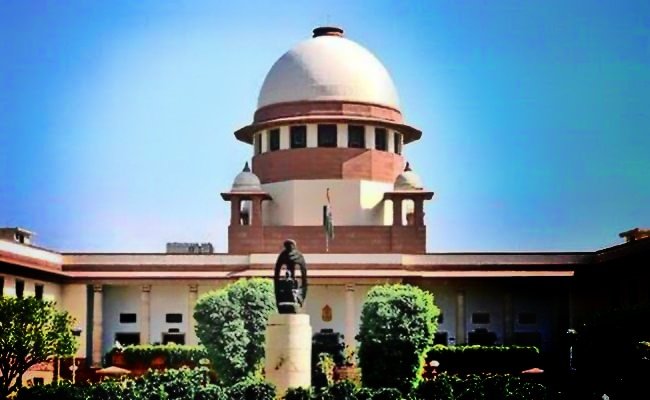
In an ongoing legal battle, a Constitution bench of the Supreme Court of India resumed its proceedings on Day 9 to deliberate upon a series of petitions challenging the abrogation of Article 370 of the Constitution. This particular article conferred special status on the former state of Jammu and Kashmir. The five-judge bench, comprising Chief Justice of India DY Chandrachud and Justices Sanjay Kishan Kaul, Sanjiv Khanna, BR Gavai, and Surya Kant, heard arguments from various parties and delved into crucial aspects of the case. Over 20 petitions remain pending, contesting the Central government’s decision in 2019 to abrogate Article 370, leading to the revocation of Jammu and Kashmir’s special status and its subsequent bifurcation into two Union Territories.
The proceedings commenced on August 2nd with a fundamental question posed to the petitioners: whether the framers of the Constitution and Article 370 itself perceived the provision as permanent or temporary in nature. The Court sought to clarify whether the dissolution of the Constituent Assembly of Jammu and Kashmir in 1957 signified the permanence of Article 370.
Throughout the hearings, multiple arguments emerged. Senior Advocate Nitya Ramakrishnan contended that the perception that Article 370 was merely a temporary provision awaiting greater integration was flawed. She emphasized that integration should not be measured by the degree of central control but rather by the state’s accedence to the Indian nation. She further emphasized the democratic pact that Article 370 upheld, highlighting its role in governing the mode of administration.
Nitya Ramakrishnan also raised concerns about the validity of orders issued by a Governor who was not recognized by the council of ministers under Article 370. She highlighted the necessity of equal mandate between the authority recommending changes and the erstwhile constituent assembly.
Advocate Manish Tiwari underscored the dual role of the Indian Constitution as both a socio-political and national security document, arguing that even minor apprehensions at the country’s periphery can have far-reaching consequences. Solicitor General Tushar Mehta clarified the distinction between temporary and special provisions, reassuring that the Central government had no intention of altering the latter. He dispelled the need for apprehensions given the government’s stated position.
The bench also examined the intricacies of Article 370 itself. Gopal Sankaranarayanan, Senior Advocate, pointed out that the article’s operation ended when the constituent assembly ceased to exist. Chief Justice Chandrachud delved into the issue, asserting that Article 1 of the Indian Constitution, which outlines the country’s territory, is permanent, and Article 370’s context suggests its temporary nature. Sankaranarayanan highlighted the abuse of executive powers to modify the Constitution and emphasized the need to uphold constitutional integrity.
The hearing featured passionate arguments, touching upon legal, historical, and political dimensions of the case. The bench adjourned for lunch after the intense deliberations, and upon resuming, it continued to discuss the intricate details of Article 370 and its implications.
The proceedings for Day 9 came to a close with a schedule set for further arguments. The Attorney General for India, Solicitor General of India, and Senior Advocate Harish Salve are scheduled to present their arguments on behalf of the Central government in the upcoming sessions.
The case remains of significant importance, as it not only concerns the legal interpretation of Article 370 but also the broader implications of constitutional principles, national integration, and the historical promises made during the formation of India’s Constitution. The Supreme Court’s continued hearings demonstrate the complex nature of this issue and its enduring relevance in shaping the nation’s legal and political landscape.
Here’s a breakdown of each argument presented during the live hearing:
Nitya Ramakrishnan’s Arguments:
- Ramakrishnan argues against the assumption that Article 370 was temporary and waiting for greater integration, emphasizing that integration should not be measured by central control but by the state’s accedence to India.
- She questions the validity of orders issued by a Governor unrecognized by the council of ministers under Article 370.
- Ramakrishnan highlights the need for recommendations for change to come from an authority equal in mandate to the constituent assembly.
- She criticizes the use of Article 356 to destroy the state legislature, claiming that power has been used maliciously.
- Ramakrishnan uses an interview with Governor Satyapal Malik to emphasize her points and questions the legitimacy of the Governor’s actions.
Menaka Guruswamy’s Arguments:
- Guruswamy questions whether a statement made by an assembly member can represent the will of the people.
- She delves into constitutional intentions during India’s founding and the promise made by the Indian Constitution.
Manish Tiwari’s Arguments:
- Tiwari emphasizes the Constitution’s dual role as a socio-political and national security document, highlighting the potential implications of even minor apprehensions at the country’s periphery.
- He brings up the distinction between temporary and special provisions and Solicitor General Mehta’s reassurances that the government has no intention to alter special provisions.
Gopal Sankaranarayanan’s Arguments:
- Sankaranarayanan underscores the abuse of executive powers to modify the Constitution and the need to uphold constitutional integrity.
- He argues that Article 370’s operation ended with the dissolution of the constituent assembly, emphasizing the importance of Article 1’s permanence.
Chief Justice Chandrachud’s Clarifications:
- The Chief Justice clarifies that Article 1 is a permanent feature of the Constitution and that Article 370 was a convenient expedient to apply orders to J&K, with the aim of making it a complete and integral part of India.
Solicitor General Tushar Mehta’s Rebuttals:
- Mehta responds to Tiwari’s arguments, distinguishing between temporary and special provisions, and assures that the government has no intention to alter special provisions.
- He emphasizes that there’s no need for apprehensions since the government’s stated position alleviates concerns.
Chief Justice Chandrachud’s Further Clarification:
- The Chief Justice reiterates the temporary nature of Article 370 based on the context and discusses the operation of the article.
These arguments cover the key points raised during the live hearing on Day 9 of the Supreme Court proceedings regarding the challenge to the abrogation of Article 370.
(Inputs from Bar and Bench)
❤️ Support Independent Journalism
Your contribution keeps our reporting free, fearless, and accessible to everyone.
Or make a one-time donation
Secure via Razorpay • 12 monthly payments • Cancel anytime before next cycle


(We don't allow anyone to copy content. For Copyright or Use of Content related questions, visit here.)

Anzer Ayoob is the Founder and Chief Editor to The Chenab Times