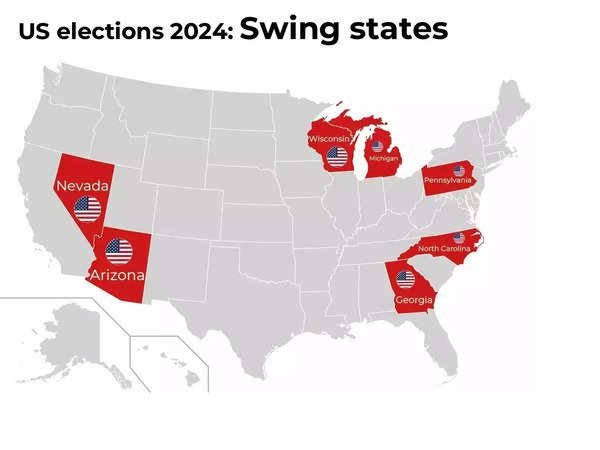
As Americans head to the polls, the weight of their choice extends far beyond national borders, shaping futures across the world. From Middle Eastern conflicts to European alliances, the result of the U.S. presidential election will profoundly influence economies, security policies, and alliances worldwide. Here is a closer look at what’s at stake in key regions depending on whether Republican candidate Donald Trump or Democrat Kamala Harris emerges as the next President of the United States.
Middle East: Israel-Gaza Conflict
The Israel-Gaza conflict remains one of the most sensitive geopolitical issues that could be significantly impacted by the U.S. election outcome. A recent Israel Democracy Institute survey indicates that nearly 65% of Israelis favor Trump, while only 13% support Harris. This preference stems from a belief that Trump may provide stronger backing for Israel in its regional security challenges, particularly against Iran and Iran-backed militants in Gaza and Lebanon.
Both Trump and Harris recognize Iran as a threat; however, Trump is viewed as more likely to take an aggressive stance to curtail Iran’s influence. Israeli sentiment has largely shifted against Palestinian statehood and the two-state solution, further solidifying Trump’s support base there. A Harris administration, in contrast, might advocate for a more balanced approach in the Israel-Palestine issue, though it remains unclear how far her administration would go on this front.
Eastern Europe: Russia-Ukraine Conflict
The future of the Russia-Ukraine war may also hinge on the election outcome. Trump has expressed a desire to quickly bring an end to the conflict, stating, “They’re dying, Russians and Ukrainians. I want them to stop dying. And I’ll have that done in 24 hours.” This approach has unsettled Ukrainian leaders, who fear that Trump’s approach might result in concessions to Russia, given his past statements praising Russian President Vladimir Putin as “savvy” and “genius.”
Ukrainian analyst Oleksandr Kovalenko expressed concerns that Trump could restrict support to Ukraine or, unpredictably, ramp up support in unexpected ways. In contrast, Harris has committed to standing firmly with Ukraine and NATO allies, stating that U.S. support will continue “until Ukraine prevails in this war.” This reassurance aligns her with the Biden administration’s stance and offers consistency for European allies anxious about shifts in U.S. support.
Asia: U.S.-China Relations and Taiwan
The next U.S. administration will also play a critical role in shaping the fraught relationship with China. Both Trump and Harris have indicated they would maintain a tough stance toward Beijing, with Trump proposing severe tariffs on Chinese exports that could exceed 60%. These tariffs would likely harm China’s economy, as the country relies heavily on U.S. demand for its goods.
A Trump administration might prioritize economic measures over military commitments in the region, potentially reducing direct pressure on China regarding Taiwan. Chinese policy experts suggest Trump may adopt a less interventionist approach, possibly scaling back U.S. involvement in the Indo-Pacific and weakening alliances with regional neighbors. Harris, on the other hand, is expected to uphold current policies that emphasize U.S. commitment to Taiwan’s security and maintaining strategic alliances, positioning herself as a reliable force against Chinese expansionism.
Europe: Economic Concerns and NATO Commitments
The outcome of the election will significantly affect Europe, with economic stability and NATO commitments on the line. Trump’s plans to impose a 10-20% tariff on European imports could stifle the European Union’s economic growth, a concern voiced by Zach Meyers of the Centre for European Reform. The anticipated tariffs would strain the European economy, possibly destabilizing the euro and intensifying inflationary pressures.
Moreover, Trump has previously suggested that the U.S. may reconsider its role in NATO, potentially jeopardizing the alliance that has been pivotal for European security since the Cold War. In contrast, Harris has vowed to maintain NATO alliances and support Ukraine, reassuring Europe that the U.S. remains a dependable partner in the face of growing regional tensions.
A Global Turning Point
The U.S. presidential election has become a global focal point, with nations around the world watching closely. The decision made by American voters will resonate across continents, affecting trade dynamics, military alliances, and international stability. From the financial markets to the future of international relations, the world eagerly awaits to see who will step into the White House—and with it, who will shape the next chapter in a rapidly evolving global landscape.
❤️ Support Independent Journalism
Your contribution keeps our reporting free, fearless, and accessible to everyone.
Or make a one-time donation
Secure via Razorpay • 12 monthly payments • Cancel anytime before next cycle


(We don't allow anyone to copy content. For Copyright or Use of Content related questions, visit here.)

The Chenab Times News Desk