“The highest result of education is tolerance.”
— Helen Keller
And yet, in our society today, we see just the opposite.
We are producing more graduates, engineers, MBAs, and civil servants than ever before. According to the All India Survey on Higher Education (AISHE) 2021-22, India now has over 43 million students enrolled in higher education institutions. The country’s literacy rate has touched 77.7%, a sharp rise from just over 52% in 1991.
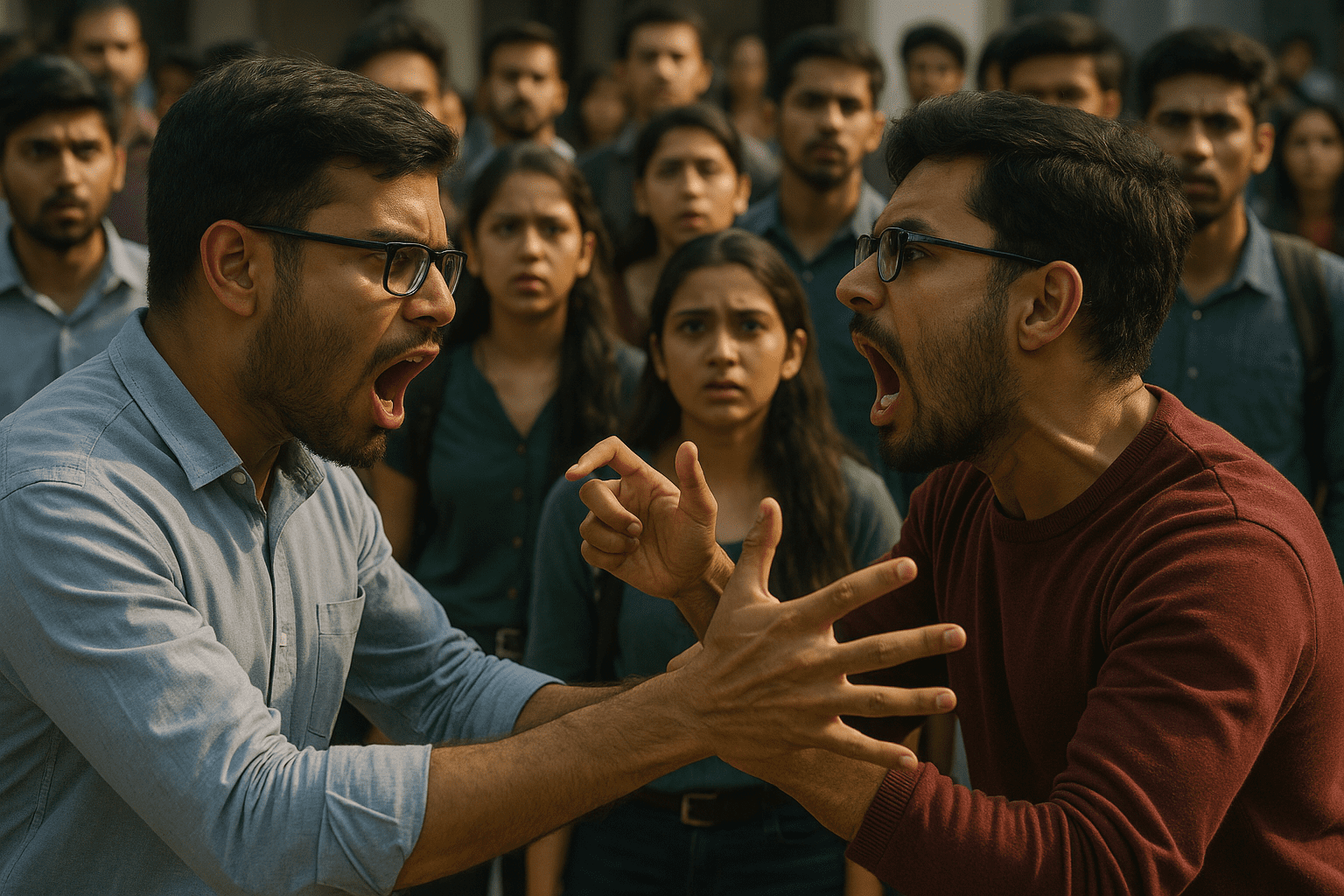
But despite this visible rise in education, there’s an invisible crisis growing deeper every day: intolerance. Turn on the television, scroll through social media, or simply observe conversations around religion, caste, gender, or politics and you’ll find educated individuals arguing not with curiosity, but with contempt. Degrees are increasing, but empathy seems to be shrinking.
Literacy without Humanity?
This paradox, of being “educated yet intolerant,” is not accidental. It’s a reflection of an education system that focuses on marks, ranks, and placements, but rarely teaches students how to respect differences, think critically, or engage with humility. In many schools and colleges, subjects like ethics, emotional intelligence, civic responsibility, and conflict resolution are either absent or poorly integrated. As a result, we are seeing a generation that is digitally literate but morally confused, and professionally skilled but socially rigid.
Intolerance today doesn’t always shout slogans on the streets. It often wears a suit and speaks fluent English. It comes from podiums, boardrooms, TV panels, and social media influencers — people who are well-read but unwilling to listen, skilled in debate but poor in dialogue.
This isn’t just emotional intolerance. It’s intellectual intolerance — the inability to accept any idea outside one’s own framework. The refusal to hear “the other side.” The danger of using education as a weapon, not a window. When being “right” becomes more important than being respectful, even the best education loses its value.
Democracy and the Cost of Close Minds
This crisis is bigger than personal opinion; it has national consequences.
A healthy democracy depends on debate, disagreement, and dialogue. But when even educated citizens refuse to engage in civil conversation, public discourse becomes polarised and toxic. Universities, once meant to nurture questioning minds, are now becoming battlegrounds of ideological rigidity.
Social media, rather than expanding our views, often narrows them. Algorithms feed us what we already believe, and we end up in echo chambers convinced we are always right and others are always wrong.
What Can Be Done?
We need to urgently rethink what we mean by “education.” True education must go beyond degrees and job skills. It must include:
- Ethics and empathy training in classrooms
- Courses on constitutional values and civic responsibility
- Dialogue-based learning models that teach students how to disagree respectfully
- Community and interfaith engagement programs to break cultural bubbles
Parents also have a role to play. Children must be taught from an early age that disagreement is not disrespect, that diversity is no danger, and that being kind is more powerful than being clever.
A Final Reflection
Let’s not forget: the real purpose of education is not just to prepare us for a career, it’s to prepare us for life. It is not how many books we’ve read that defines us, but whether we’ve learned to read people, emotions, and the world around us with an open heart. We need more minds that are informed and more hearts that are transformed.
Because without tolerance, even the most educated society can become deeply uncivil.
❤️ Support Independent Journalism
Your contribution keeps our reporting free, fearless, and accessible to everyone.
Or make a one-time donation
Secure via Razorpay • 12 monthly payments • Cancel anytime before next cycle


(We don't allow anyone to copy content. For Copyright or Use of Content related questions, visit here.)

The author is a lecturer in Educational Technology & ICT at Islamia Faridiya College of Education, Kishtwar.