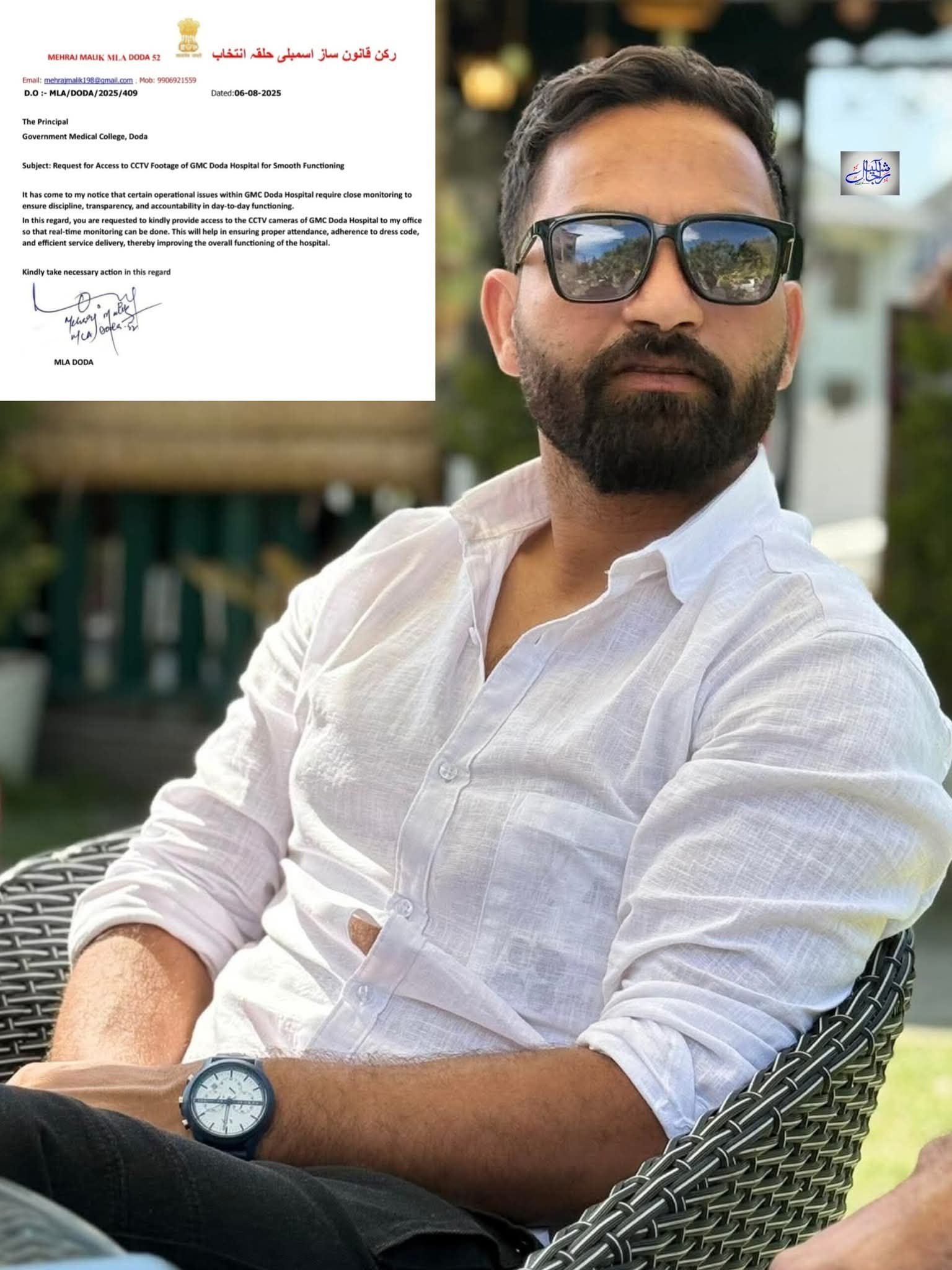
Doda, August 11 — Amid persistent criticism of healthcare delivery in Jammu and Kashmir especially in the Chenab Valley, Doda MLA Mehraj Malik has written to the Principal of Government Medical College (GMC) Doda seeking direct access to the hospital’s CCTV camera feeds. The move, he said, is intended to ensure “discipline, transparency, and accountability” in day-to-day functioning.
In a letter dated August 6, Mr. Malik noted that “operational issues” within the hospital required close oversight to improve service quality. He requested that the CCTV cameras be linked to his office for “real-time monitoring,” arguing this would help maintain proper staff attendance, adherence to dress codes, and efficient patient care.
“This will help in ensuring proper attendance, adherence to dress code, and efficient service delivery, thereby improving the overall functioning of the hospital,” the letter stated.
The latest request comes against the backdrop of a tense relationship between the MLA and GMC Doda management. In May, Mr. Malik’s unannounced visit to the hospital — live-streamed on social media — led to allegations of staff absenteeism and patient diversion to private clinics. His remarks against a doctor prompted an FIR, followed by a doctors’ strike that disrupted services for days.
Supporters argue that the legislator’s interventions reflect public frustration with service lapses in a district where healthcare access is already constrained by geography and staffing shortages. Critics, however, see his approach as confrontational, potentially undermining institutional autonomy and staff morale.
Hospital authorities are yet to respond to the MLA’s CCTV request.
Under existing protocols, hospital CCTV systems are generally administered by the medical superintendent’s office, with access limited to authorised personnel. Granting a legislator direct, continuous access raises questions about statutory authority and the scope of legislative oversight in day-to-day hospital operations. Legal experts point out that without explicit administrative sanction, such access could be challenged for bypassing the chain of command.
While transparency can strengthen public trust, healthcare settings require strict safeguards to protect patient privacy and dignity. Continuous external monitoring could risk exposing sensitive patient information, even inadvertently. Critics argue that accountability must be balanced against these fundamental rights.
Mr. Malik’s sustained focus on GMC Doda aligns with his broader political positioning as a watchdog over public services. However, repeated public confrontations with medical staff may also deepen divisions between political representatives and health professionals — potentially hindering collaborative reform.
Observers suggest that a mediated approach — such as periodic joint inspections with hospital administrators, accompanied by independent audits — might address service gaps without compromising patient rights or institutional independence.
Public opinion in Doda over MLA Mehraj Malik’s earlier interventions at GMC Doda remains sharply divided, reflecting broader tensions between calls for accountability and respect for institutional protocol.
For many residents, particularly in remote villages, Mr. Malik’s unannounced visits and vocal criticism of absenteeism struck a chord. “We hardly see doctors in our health centres, and the hospital is our only hope. If the MLA is forcing them to be present, it is a good thing,” said Mudassir Hussain, a resident of Doda. Others echoed the sentiment, arguing that without political pressure, systemic lapses would persist unchecked.
However, medical professionals and some local civic groups have expressed disquiet over the manner of Mr. Malik’s interventions. “Accountability is important, but you cannot compromise patient privacy or insult staff publicly,” said a former GMC Doda faculty member, requesting anonymity. The sudden doctors’ strike in May, triggered by his remarks against a senior faculty member, led to service disruptions that many felt harmed patients more than it helped.
❤️ Support Independent Journalism
Your contribution keeps our reporting free, fearless, and accessible to everyone.
Or make a one-time donation
Secure via Razorpay • 12 monthly payments • Cancel anytime before next cycle


(We don't allow anyone to copy content. For Copyright or Use of Content related questions, visit here.)
Anzer Ayoob is the Founder and Chief Editor to The Chenab Times