


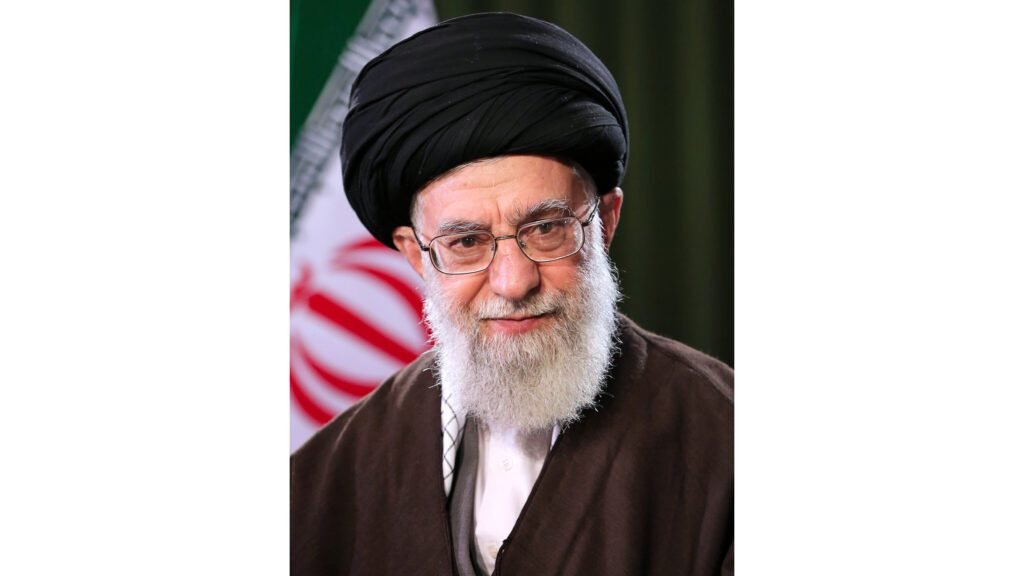
Iran’s Supreme Leader Ayatollah Ali Khamenei has been killed in a major joint military operation by the United States and Israel targeting sites across the country, including in the capital Tehran.
The 86-year-old cleric, who had ruled Iran since 1989 as the Islamic Republic’s supreme leader, died early Saturday during airstrikes on his office and compound in Tehran. The strikes marked a significant escalation in long-standing tensions between Iran, the US and Israel, coming amid ongoing regional conflicts and concerns over Iran’s nuclear program and support for proxy groups.
According to details received by The Chenab Times, Iranian state television confirmed Khamenei’s death on Sunday morning local time, describing it as martyrdom in attacks carried out by what state media termed the “criminal United States and the Zionist regime.” A statement from Iran’s Supreme National Security Council, broadcast on state channels, said Khamenei was killed while performing his duties at his office. The confirmation followed an earlier announcement by US President Donald Trump on his Truth Social platform, where he stated that Khamenei had been eliminated in the operation and described the ayatollah as “one of the most evil people in history.” Trump indicated that US and Israeli bombing would continue as necessary to achieve stability in the Middle East.
Multiple international news outlets, including Reuters, the Associated Press, BBC and The New York Times, reported the development based on Iranian state media announcements and sources familiar with the strikes. Israeli officials told reporters that the operation was timed to target Khamenei during a meeting with senior aides at a secure location in Tehran. Sources indicated that the supreme leader’s body was recovered following the attack. Iranian state media also reported that family members, including Khamenei’s daughter, grandchild, daughter-in-law and son-in-law, were killed in the strikes.
The joint US-Israeli assault, described as one of the most ambitious against Iran in decades, reportedly killed around 40 senior Iranian officials, including key figures from the Revolutionary Guard and other leadership circles. In response, Iran launched retaliatory missile strikes on US military bases in the region, including Al Udeid in Qatar, Al Salem in Kuwait, Al Dhafra in the UAE and the US Fifth Fleet base in Bahrain. Iranian officials vowed a “crushing response” and declared a 40-day mourning period for Khamenei.
Khamenei’s death creates a major leadership vacuum in Iran, where the supreme leader holds ultimate authority over state policy, the military and the judiciary. No clear successor has been publicly designated, though the Assembly of Experts is responsible for selecting the next supreme leader. The cleric had long maintained a hard-line stance against the US and Israel, overseeing Iran’s nuclear advancements, support for groups such as Hezbollah and the Houthis, and suppression of domestic protests.
The strikes and Khamenei’s killing have heightened fears of broader regional instability, with disruptions to air travel, maritime navigation and oil shipments already reported. Saudi Arabia condemned Iran’s retaliatory actions as aggression against neighboring states, while Qatar called for a temporary halt to maritime traffic as a precaution.


Anzer Ayoob is the Founder and Chief Editor to The Chenab Times