


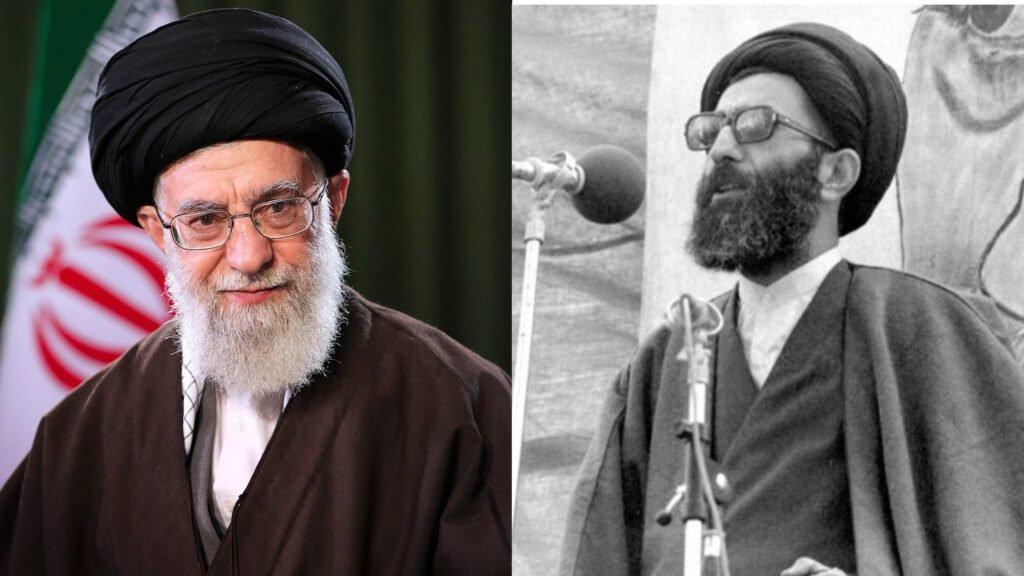
After the death of Iran’s Supreme Leader Ayatollah Ali Khamenei, social media platforms quickly filled with sharply conflicting narratives. Some critics portray him as a leader hostile toward Sunni Islam and blame Iran’s policies in Syria for the deaths of thousands of Sunni civilians. Others argue that such accusations confuse him with Ruhollah Khomeini, the founder of the Islamic Republic, and ignore Khamenei’s repeated calls for Muslim unity.
As often happens when influential leaders die, their legacy becomes a battlefield of interpretation. Political opponents highlight the darkest episodes of their rule, while supporters emphasize their ideology and achievements. The truth, as usual, lies in a more complicated space where theology, politics, and human experience intersect.
Khamenei’s Religious Position on Sunni–Shia Relations
In his public speeches and religious rulings, Khamenei repeatedly promoted the idea of Islamic unity. His statements frequently emphasized that Sunni and Shia Muslims share the same core beliefs: the Qur’an, the Prophet Muhammad, and the foundations of Islamic practice.
One of the most widely cited rulings attributed to him declared it religiously forbidden to insult revered Sunni figures, including the companions of the Prophet and his wives. Historically, such insults have been among the most sensitive issues between Sunni and Shia communities.
This ruling was interpreted by many scholars as an attempt to reduce sectarian tensions and discourage inflammatory rhetoric.
Throughout his leadership, Khamenei framed sectarian divisions as political tools used to weaken the Muslim world. In several speeches, he argued that internal divisions benefit external powers and undermine the strength of Muslim societies.
Yet religious rhetoric alone cannot fully explain political realities, particularly in a region shaped by complex alliances and conflicts.
Iran’s Support for Bashar al-Assad and the Syrian War
Much of the criticism surrounding Khamenei’s legacy arises from Iran’s role in the Syrian civil war, one of the most devastating conflicts in modern Middle Eastern history.
When the war began in 2011, Iran became one of the strongest supporters of Syrian President Bashar al-Assad. Under Khamenei’s leadership, Iran provided financial assistance, military advisers, and strategic coordination with allied militias to support the Syrian government.
This support formed part of a broader alliance that included Russia and Lebanese Hezbollah.
The war caused enormous human suffering. Hundreds of thousands of people were killed and millions displaced. Because Syria’s population is overwhelmingly Sunni, critics often frame the conflict as a Shia-backed alliance supporting a government responsible for killing Sunni civilians.
However, the Syrian conflict was far more complex than a simple sectarian war. Multiple factions fought across the battlefield, including secular rebels, Islamist groups, Kurdish forces, ISIS militants, and international actors such as Russia, Turkey, and the United States.
Even within the Syrian state structure, many soldiers and officials were Sunni Muslims. As a result, many analysts argue that the war was primarily a geopolitical struggle shaped by power politics rather than purely sectarian ideology.
Sectarian Narratives and Regional Rivalries
Despite this complexity, sectarian narratives quickly became dominant across much of the Middle East.
Opponents of Iran frequently described the conflict as part of a broader regional struggle between Shia Iran and Sunni powers such as Saudi Arabia and its allies. This interpretation gained traction because Iran supported several Shia-aligned militias operating in Syria and Iraq.
At the same time, some Sunni-majority states provided political or military backing to opposition groups fighting against Assad.
In reality, alliances in the Middle East often cut across sectarian lines. Iran, for instance, has long supported the Sunni Palestinian group Hamas, while some Sunni states have cooperated strategically with Israel against Iran.
Such contradictions reveal a simple but important truth: regional politics often revolve around power and security interests more than theological divisions.
Confusion Between Khamenei and Khomeini
Another source of confusion in the debate is the frequent mixing of Ruhollah Khomeini with Ali Khamenei.
Khomeini, the leader of the 1979 Iranian Revolution, was a revolutionary ideologue whose writings and speeches shaped the ideological foundations of the Islamic Republic. His rhetoric often reflected the intense political atmosphere of the revolutionary period.
Khamenei, who became Supreme Leader in 1989 after Khomeini’s death, governed in a different geopolitical environment. Analysts often describe his leadership style as more focused on strategic statecraft, even though he continued to operate within the ideological framework created by Khomeini.
Many controversial quotes circulating online are sometimes incorrectly attributed to Khamenei when they originate from other clerics or from earlier revolutionary literature.
A Conversation That Reflects Iran’s Internal Pain
Beyond geopolitics and ideology, the debate surrounding Khamenei also reflects deeply personal experiences of ordinary Iranians.
Shortly after Khamenei’s death, a Sunni Iranian man who had been following me [journalist Anzer Ayoob] on Instagram for years reached out with a message describing his own frustrations and fears about the situation in Iran.
In his message, he expressed anger at the Islamic Republic and said he wished supporters of the Iranian leadership could witness the suffering inside the country.
He wrote that, in his view, the ideology of the Islamic Republic had long been centered on confronting global powers, while many domestic economic and social problems remained unresolved.
“I wish those of you who supported this man could have seen the country of Iran up close,” he wrote, describing what he believed were painful realities experienced by ordinary Iranians.
The man, who said he had emigrated to Russia, also described the difficulty of staying in contact with family members during periods of internet shutdown inside Iran.
According to his message, communication with relatives became impossible for weeks during recent unrest. He also claimed that thousands of people had been killed during the turmoil, though he acknowledged the uncertainty surrounding the exact numbers.
The conversation illustrates how political debates often intersect with deeply personal experiences.
I replied to him in Persian, expressing sympathy for what he had gone through while also maintaining caution about unverified claims.
In my message, I told him that I was truly sorry for the hardships he had experienced, especially the pain of being separated from his family and unable to contact them during internet shutdowns. Being cut off from loved ones during a crisis is something no one deserves to endure.
At the same time, I explained that without clear and verifiable evidence it would be difficult for me to make definitive judgments about the numbers and claims being circulated, particularly because information coming out of Iran is often contested and controlled by different sides.
I also made it clear that my earlier comments about Iran were not meant to dismiss the suffering of ordinary people. Personal pain and broader geopolitical realities can exist at the same time. Acknowledging one does not mean denying the other.
He ended the conversation by reacting to the message with a sad emoji.
Conflicting Reports About Casualties
Reports regarding the scale of violence during recent unrest in Iran remain deeply contested.
Estimates vary widely, partly due to internet shutdowns and restrictions on independent reporting.
Iranian authorities have acknowledged that more than 3,000 people were killed during the unrest. Meanwhile, the U.S.-based organisation Human Rights Activists News Agency (HRANA) reports that it has verified more than 6,000 deaths, while investigating an additional 17,000 cases, suggesting a possible total approaching 22,000.
Some medical sources outside Iran have estimated that the number could be as high as 30,000 or more, although such figures remain difficult to independently verify.
Supporters of the Iranian government argue that many of those killed were victims of armed rebels or foreign-backed groups. Critics blame the state itself for the violence.
The lack of independent verification means that the exact number remains uncertain, but even the lowest confirmed figures represent a significant human tragedy.
Protests and Unity Slogans in India
Following Khamenei’s death, protests and rallies also took place in parts of India, including Kashmir, Kargil, and the Chenab Valley.
In the Doda district of the Chenab Valley, where the Muslim population is overwhelmingly Sunni and the Shia community is almost non-existent, pro-Khamenei rallies were nonetheless organized in which demonstrators raised slogans emphasizing Muslim unity.
Participants chanted slogans such as:
“Iran se awaaz aayi, Shia-Sunni bhai bhai.
Kashmir se awaaz aayi, Shia-Sunni bhai bhai.
Chenab se awaaz aayi, Shia-Sunni bhai bhai.”

The message later appeared in rallies in parts of Kashmir as well.
On social media, several influencers criticized scholars and commentators who attempted to frame the debate along sectarian lines. Some younger users argued that the new generation may eventually move beyond historic Sunni-Shia divisions.
One widely shared comment claimed that “Gen Z will end the Shia-Sunni debate.”
The discussions surrounding Ali Khamenei’s legacy reveal how historical figures can become symbols in much larger ideological debates.
For some, he represents resistance to Western influence and a defender of Islamic political identity. For others, he symbolizes an authoritarian system responsible for political repression and regional conflicts.
The debate over whether he was “anti-Sunni” ultimately reflects broader tensions that have shaped the Middle East for decades.
His speeches promoted Muslim unity, yet Iran’s regional policies remain controversial. Personal stories from Iranians reveal genuine grievances, while political supporters continue to defend the ideological foundations of the Islamic Republic.
In the end, Khamenei’s legacy will likely remain contested — not only in Iran, but across the wider Muslim world where questions of power, identity, and political authority continue to evolve.

Anzer Ayoob is the Founder and Chief Editor to The Chenab Times