


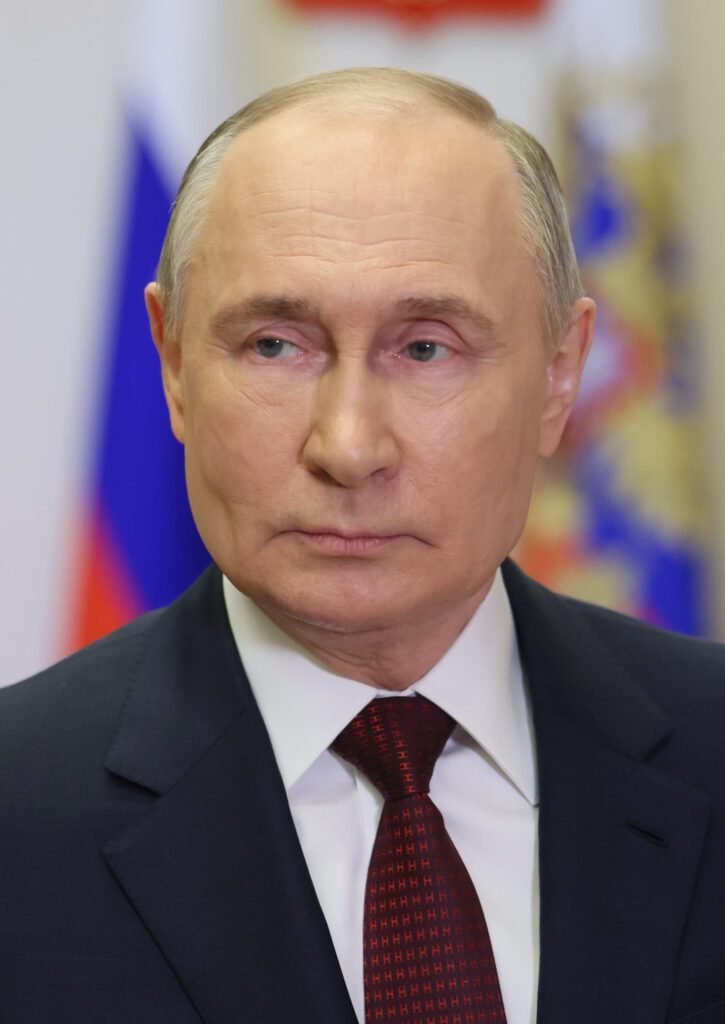
Russian President Vladimir Putin has congratulated Mojtaba Khamenei on his appointment as the new Supreme Leader of the Islamic Republic of Iran. The Russian leader has pledged unwavering support for Tehran during a time of heightened regional instability and conflict.
Russian President Vladimir Putin has congratulated Mojtaba Khamenei on his appointment as Iran’s Supreme Leader and pledged unwavering support for the country.
The Chenab Times has learned that Putin sent a congratulatory telegram to the new Iranian leader on Monday.
According to the Kremlin, Putin expressed confidence that Mojtaba Khamenei would continue his father’s work with honour and unite the Iranian people in the face of severe trials. The Russian president added that he wished to reaffirm unwavering support for Tehran and solidarity with Iranian friends.
The appointment of Mojtaba Khamenei was announced by Iran’s Assembly of Experts, the clerical body responsible for selecting the Supreme Leader. The decision followed the death of Ayatollah Ali Khamenei, who had held the position since 1989, in airstrikes attributed to the United States and Israel last week.
Mojtaba Khamenei, aged 56 and the second son of the late leader, was chosen in what state media described as a decisive vote. He had long been viewed as a potential successor despite holding no formal government office before the appointment. Iranian officials said he was selected over other candidates, including several senior clerics.
Iran’s Islamic Revolutionary Guard Corps has publicly pledged allegiance to the new Supreme Leader, a step considered essential for maintaining internal stability in the theocratic republic located in the Middle East between the Caspian Sea and the Persian Gulf.
The leadership transition occurs as Iran confronts armed aggression and deepening regional conflict. Reports indicate rising oil prices and increased military activity across the Middle East following the strikes that killed the previous leader.
Russia and Iran have maintained close strategic ties in recent years, cooperating in energy, defence and international forums. Putin’s message underscores Moscow’s position as a reliable partner for Tehran, analysts note, at a moment when the Islamic Republic faces external pressures from Western and Israeli policies.
The new Supreme Leader is expected to maintain the hardline policies established under his father, who shaped Iran’s foreign policy and nuclear programme for decades. Iranian state television has broadcast images of Mojtaba Khamenei receiving pledges of loyalty from military and religious figures.
International observers are watching closely to see how the appointment affects ongoing diplomatic efforts and the broader balance of power in the region. The Kremlin statement made no mention of specific policy changes but emphasised the need for courage and dedication in the high office.
Putin’s telegram was addressed to “His Excellency Supreme Leader of the Islamic Republic of Iran Ayatollah Seyyed Mojtaba Hosseini Khamenei.” It was released through Russian state media outlets shortly after the Iranian announcement.
The development has drawn varied reactions globally, with some countries expressing concern over potential escalation while others monitor the situation for impacts on energy markets and security arrangements. Iran, a nation of more than 89 million people, plays a central role in Gulf security and global oil supply routes.


Global Affairs Desk at The Chenab Times covers international developments, global diplomacy, and foreign policy issues through fact-based reporting, explainers, and analytical pieces. The desk focuses on major geopolitical events, diplomatic engagements, and international trends, with an emphasis on verified information, multiple perspectives, and contextual understanding of global affairs.