


Mojtaba KhameneiM
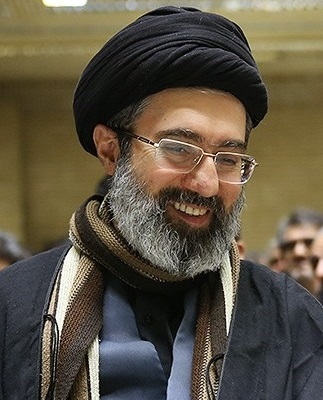
| Mojtaba Khamenei – Facts | |
|---|---|
| Full Name | Mojtaba Hosseini Khamenei |
| Born | 8 September 1969 |
| Birthplace | Mashhad, Iran |
| Nationality | Iranian |
| Occupation | Shia Cleric, Political Figure |
| Religious Rank | Hojjatoleslam (later elevated within clerical hierarchy) |
| Father | Ali Khamenei (Supreme Leader of Iran 1989–2026) |
| Spouse | Zahra Haddad-Adel |
| Known For | Influence within Iran’s political establishment and close ties to the Islamic Revolutionary Guard Corps (IRGC) |
| Sanctions | Sanctioned by the United States in 2019 |
Mojtaba Khamenei: Biography, Political Influence, and Role in Iran
Mojtaba Hosseini Khamenei (born 8 September 1969) is an Iranian Shia cleric and influential political figure best known as the second son of Iran’s long-time Supreme Leader, Ayatollah Ali Khamenei. Over the past two decades, Mojtaba Khamenei has been widely described by analysts and observers as one of the most powerful yet secretive figures within Iran’s political system, despite holding few formal public positions.
Born in the city of Mashhad in northeastern Iran, Mojtaba grew up during a period of political upheaval that culminated in the 1979 Islamic Revolution. His father, Ali Khamenei, was a prominent cleric involved in the revolutionary movement that overthrew the monarchy of Shah Mohammad Reza Pahlavi. As a result, Mojtaba’s upbringing occurred within the emerging elite of the Islamic Republic.
Early Life and Education
Mojtaba Khamenei was born into a clerical family deeply involved in Iran’s revolutionary politics. During his childhood, his father was repeatedly arrested by the Shah’s security services due to his opposition to the monarchy. After the Islamic Revolution established the Islamic Republic in 1979, the Khamenei family moved to Tehran as Ali Khamenei became an influential figure in the new political order.
Mojtaba attended the Alavi School in Tehran, a religious institution known for educating many of Iran’s political elites. After completing secondary education in 1987, he joined Iran’s Islamic Revolutionary Guard Corps (IRGC) during the final years of the Iran–Iraq War. He reportedly served in the Habib bin Muzahir Battalion and participated in several military operations during the conflict.
Following his military service, Mojtaba pursued religious studies in seminaries in Tehran and later in the city of Qom, Iran’s most important center for Shia theological education. His clerical education placed him within Iran’s influential religious establishment.
Role During the Iran–Iraq War
Like many young Iranians of his generation, Mojtaba Khamenei served during the Iran–Iraq War, which lasted from 1980 to 1988. He joined the Islamic Revolutionary Guard Corps in 1987 after completing high school and took part in several military operations during the final phase of the war.
During his service, he developed relationships with individuals who later rose to senior positions within Iran’s security establishment. These connections would later become significant as Mojtaba built influence within the political and military networks surrounding Iran’s leadership.
Rise Within Iran’s Power Structure
Although Mojtaba Khamenei did not initially hold official government office, his influence began to grow during the late 1990s and early 2000s through his position within the Office of the Supreme Leader. In this role, he reportedly worked closely with senior political advisers and security officials, helping coordinate political affairs and acting as an intermediary between various power centers within Iran’s government.
Many analysts have described him as a key gatekeeper to his father, controlling access to the Supreme Leader and helping shape political decisions behind the scenes. His close relationships with senior members of the Islamic Revolutionary Guard Corps and the Basij militia contributed to his growing influence inside the state apparatus.
Influence in Iranian Politics
Mojtaba Khamenei’s political influence became more widely discussed during the 2000s, particularly during the presidency of Mahmoud Ahmadinejad. Some observers alleged that Mojtaba supported Ahmadinejad’s political rise and helped consolidate conservative factions within Iran’s political establishment.
He was also linked by critics to the government’s response to the 2009 Iranian presidential election protests, which followed allegations of electoral fraud. Reformist figures accused him of playing a role in coordinating security responses through the Basij militia and other state institutions, though the full extent of his involvement remains debated among analysts.
Relationship with the IRGC
A defining element of Mojtaba Khamenei’s political reputation has been his close ties to the Islamic Revolutionary Guard Corps (IRGC). The IRGC is one of the most powerful institutions in Iran, overseeing military operations, economic enterprises, and regional security activities.
Through these connections, Mojtaba is believed to have developed strong alliances with influential military commanders and security officials. This network significantly enhanced his political leverage within Iran’s governing system and helped consolidate his position within the inner circle surrounding the Supreme Leader.
International Sanctions
In November 2019, the United States government imposed sanctions on Mojtaba Khamenei as part of a broader effort targeting individuals associated with Iran’s Supreme Leader. According to the U.S. Treasury Department, Mojtaba was sanctioned for representing the Supreme Leader and assisting in implementing policies linked to Iran’s regional activities and domestic governance.
The sanctions reflected international concerns about his influence within Iran’s political and security institutions despite his lack of formal public office.
Personal Life
Mojtaba Khamenei is married to Zahra Haddad-Adel, the daughter of Gholam-Ali Haddad-Adel, a conservative Iranian politician and former speaker of Iran’s parliament. The marriage further strengthened Mojtaba’s connections within Iran’s political elite. The couple has several children and maintains a relatively private family life compared with many other public figures.
Legacy and Political Significance
Mojtaba Khamenei remains one of the most influential figures associated with Iran’s ruling establishment. His political significance stems not from electoral office but from his position within the complex network of religious authorities, security institutions, and political elites that shape decision-making in the Islamic Republic.
Observers frequently describe him as a symbol of the concentration of power within Iran’s clerical and security institutions. His relationships with influential military commanders and conservative political factions have made him a central figure in discussions about Iran’s leadership and future political direction.
Because of his close proximity to the Supreme Leader’s office and his connections across Iran’s political and security structures, Mojtaba Khamenei continues to be an important figure in analyses of Iranian politics, power dynamics, and the long-term evolution of the Islamic Republic.
❤️ Support Independent Journalism
Your contribution keeps our reporting free, fearless, and accessible to everyone.
Or make a one-time donation
Secure via Razorpay • 12 monthly payments • Cancel anytime before next cycle



(We don't allow anyone to copy content. For Copyright or Use of Content related questions, visit here.)
